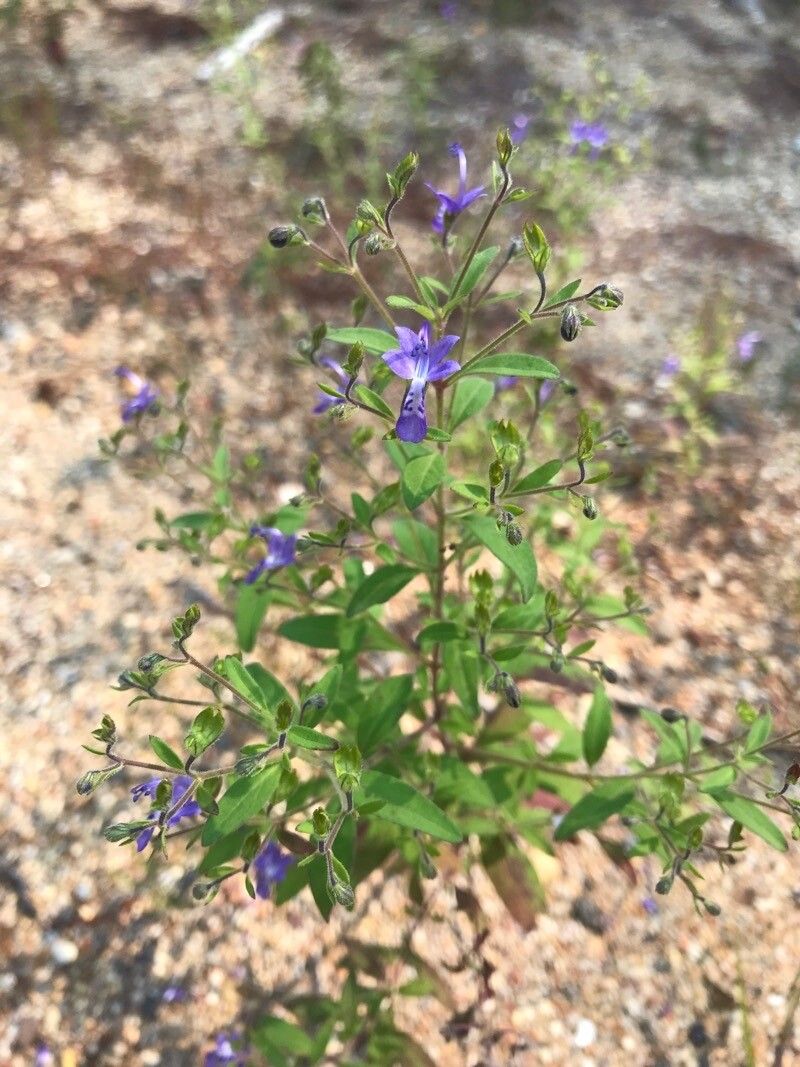
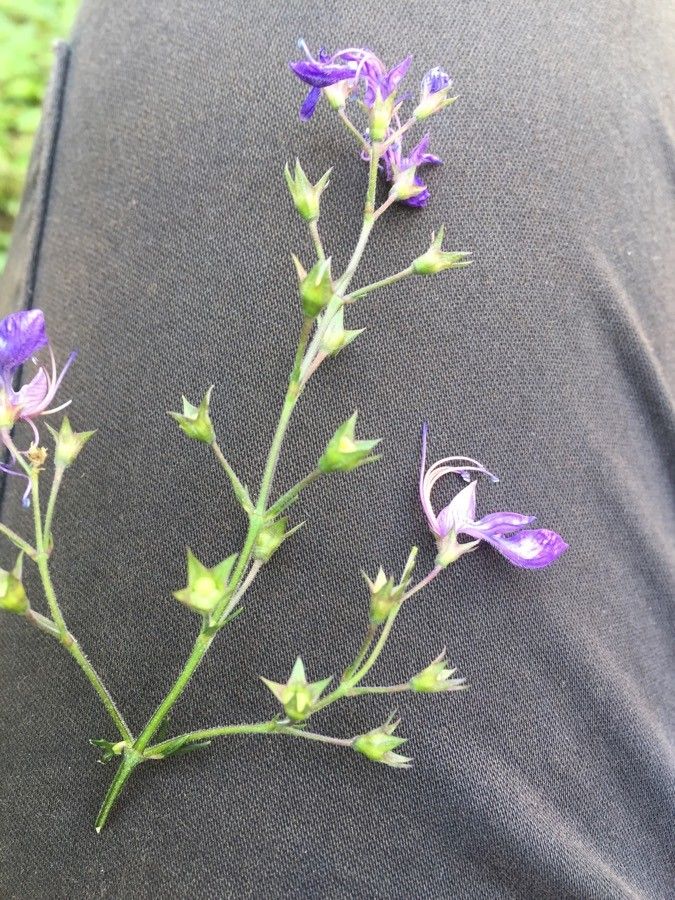
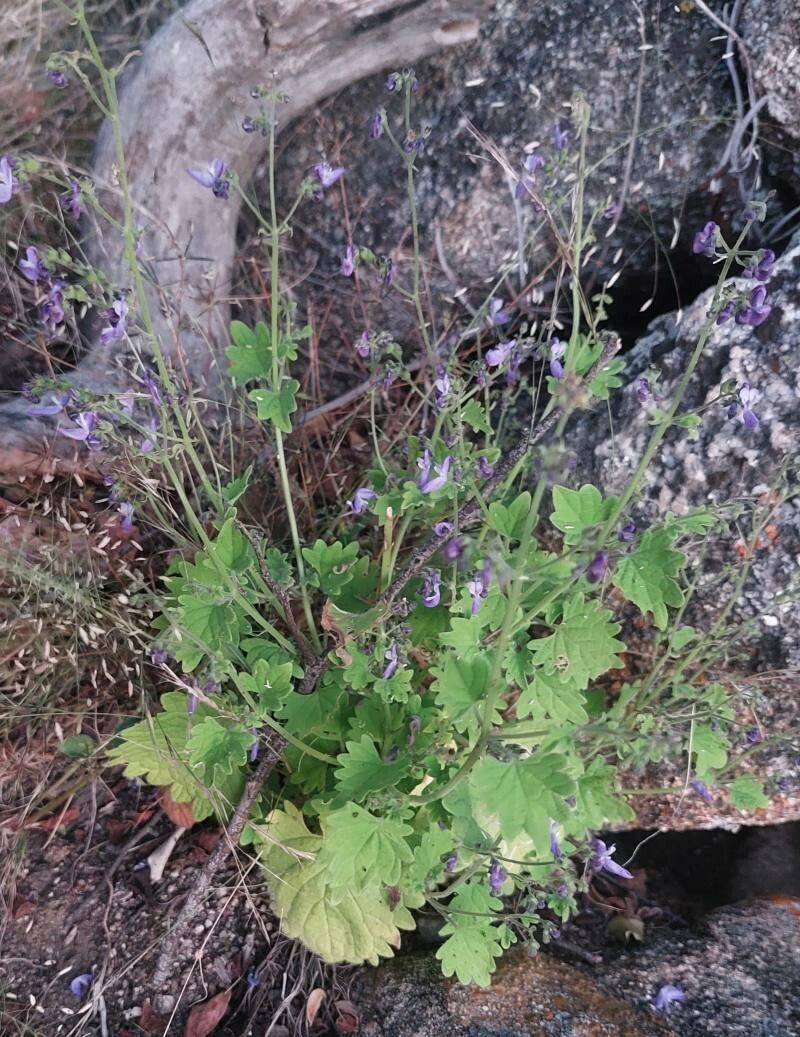
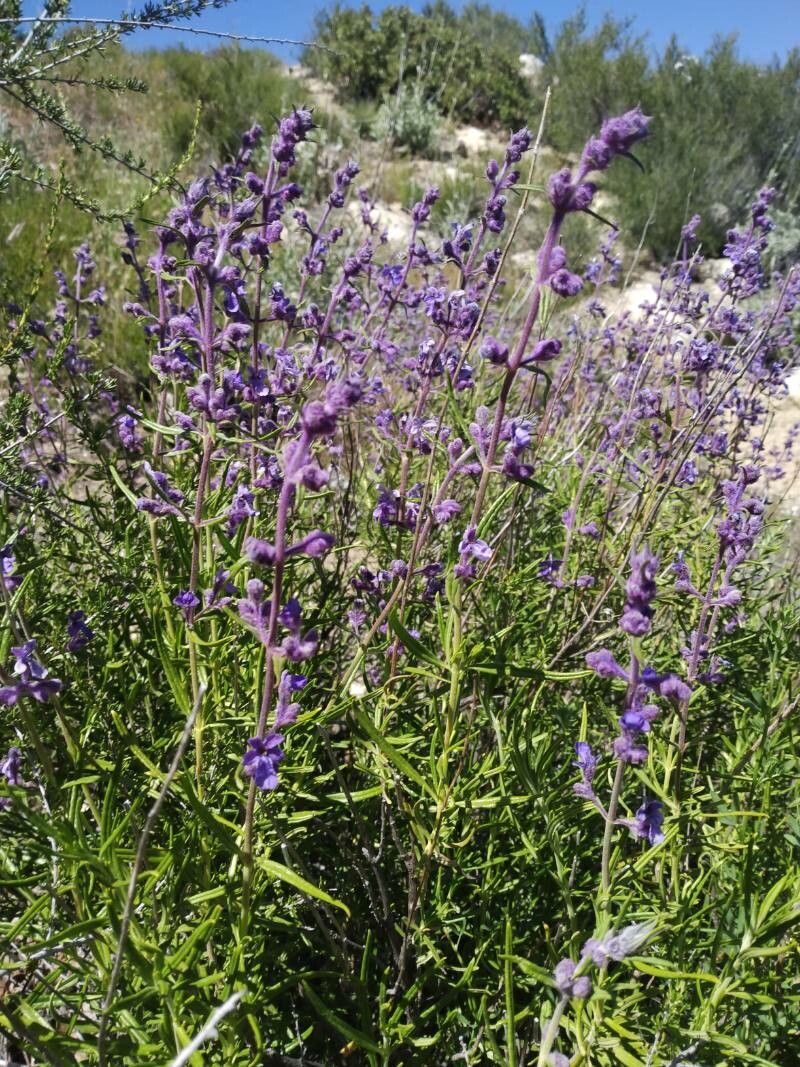
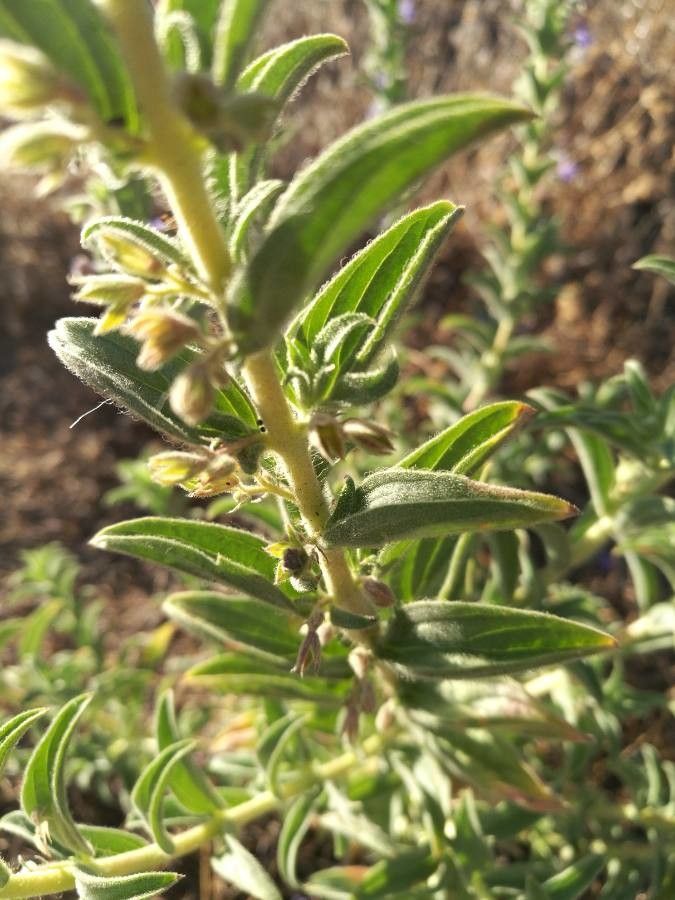
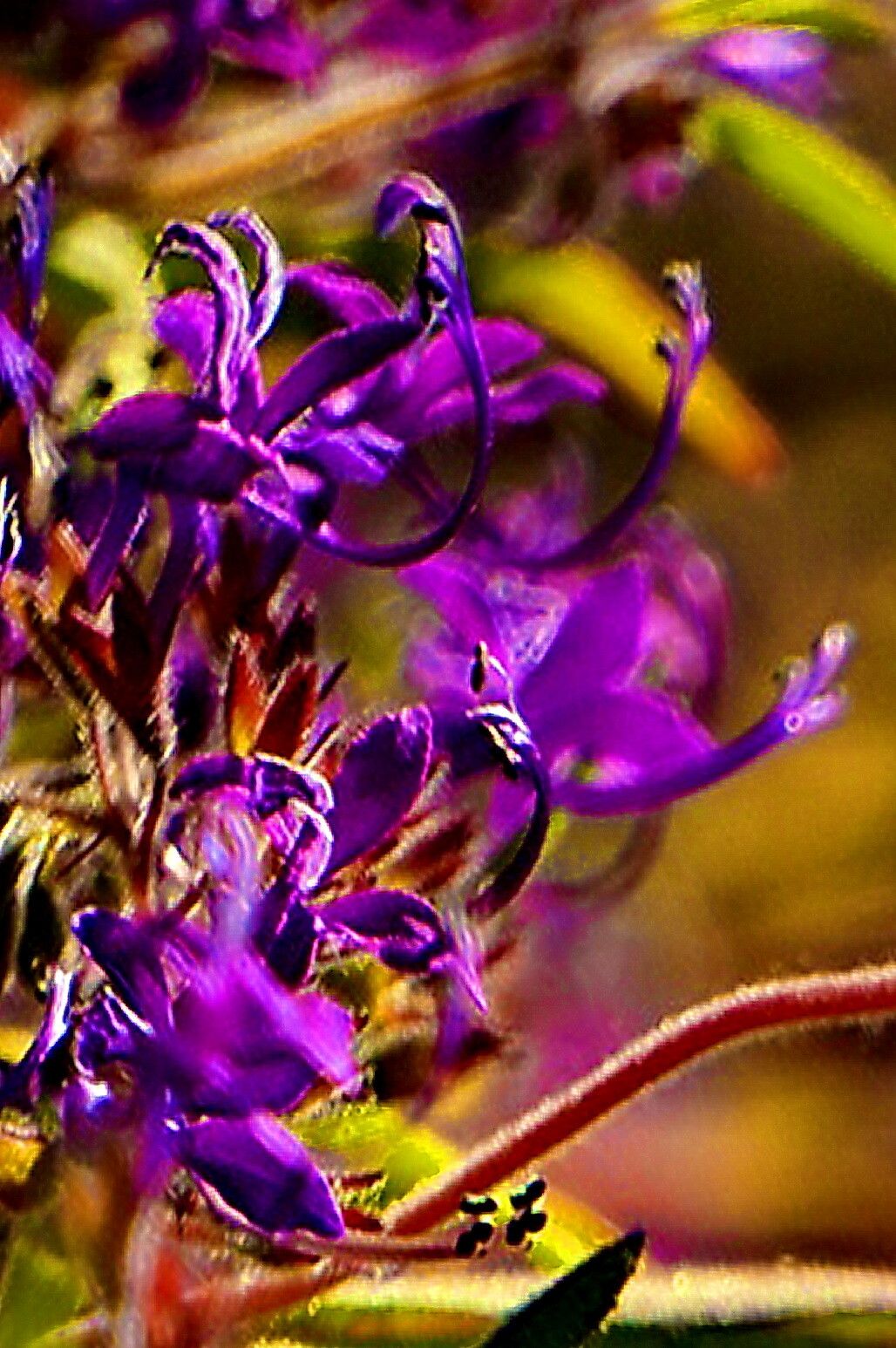
Trichostema dichotomum, commonly known as blue curls, is a perennial herbaceous plant belonging to the mint family (Lamiaceae). Native to the southwestern United States and northern Mexico, this plant thrives in dry, rocky environments such as hillsides and canyons.
The plant can grow up to 1-2 feet tall, featuring a woody base and numerous branches. Its leaves are narrow, lance-shaped with pointed tips, and are arranged oppositely along the stem. The flowers are small, about 1/4 inch in diameter, with bright blue-violet petals that form clusters at the ends of the stems.
Blue curls bloom from late spring through summer, attracting bees, butterflies, and hummingbirds for pollination. Native Americans have historically used the plant for medicinal purposes to treat ailments such as fever and stomach problems.
Trichostema dichotomum is drought-tolerant but requires well-drained soil in full sun or partial shade. It can be propagated by seeds or cuttings but demands careful attention during establishment due to its sensitivity to overwatering.
Overall, Trichostema dichotomum is an attractive ornamental plant that adds color to dry gardens while also providing ecological benefits through its pollinator-friendly flowers.
Forked bluecurls is fairly disease-resistant and typically not prone to illnesses. However, it can be affected by pests and diseases found in its environment. These issues are usually minor. For care, this plant requires moderate maintenance. Regular pruning is needed to preserve an attractive appearance and support healthy growth. Fertilizing can also encourage flowering. Forked bluecurls is well suited for anyone with outdoor space, such as a garden or patio, and does not demand extensive care experience. It may need more attention when grown indoors.
How to keep Trichostema Dichotomum.
Light
Forked bluecurls does best when given ample, all-around light, which is crucial for strong growth and vitality. Its native habitat needs a plentiful amount of illumination, and sharp decreases or excesses can cause poor health, impacting foliage and flowering. Sufficient sunlight throughout the day is necessary at every stage of its life cycle.
Water
Forked bluecurls thrive in environments with periodic rainfall and are adept at efficiently absorbing moisture. While they prefer consistent hydration, they can tolerate short dry periods. To maintain a healthy balance, it is recommended to water them weekly. When grown outdoors, they benefit from natural rain cycles during their active growing season.
Temperature
Forked bluecurls thrives in habitats with temperatures ranging from 68 to 100°F (20 to 38 ℃). This plant prefers warm conditions and may need supplemental heating in colder regions. Seasonal adjustments to care can keep the plant in optimal health.
Fertilizer
When Forked bluecurls has opened most of its blooms to full size, resume fertilizing. During the period of peak bloom, apply fertilizer every three to four weeks, weather permitting. Once the plant begins producing fewer new blooms, stop fertilizing; there’s no point in fertilizing when it can’t produce additional blooms.
Pruning
Forked bluecurls are known for their vibrant blue flowers and fragrant leaves. To encourage growth and maintain their shape, it's best to prune them from early to late spring. Removing any dead wood during this time is important. Light pruning can also enhance bushiness and improve air circulation, reducing the risk of disease. Always use clean, sharp tools when pruning to prevent injury to the plant.
Botanical profile.
- Plant Type
- Herb
- Life Cycle
- Annual, Perennial
- Genus
- Trichostema
- Family
- Lamiaceae
- Hardiness Zone
- 7-11
- Mature Height
- 30 cm to 61 cm
- Mature Spread
- 30 cm
- Leaf Color
- Green
- Leaf Type
- Deciduous
- Flower Color
- Blue, Purple
- Flower Size
- 2.54 cm
- Bloom Time
- Mid summer, Late summer, Early fall
- Planting Time
- Spring
- Harvest Time
- Late summer, Early fall, Mid fall
- Native Area
- Bahamas
Other names.
Reader questions.
How should I water my Forked bluecurls plant?
To water Forked bluecurls, there are various watering tools you can use such as a garden hose with a spray nozzle or a watering can. Forked bluecurls is not too particular about the type of water it receives, as it can survive with rainwater, tap water, or filtered water. However, it is best to avoid watering this plant from above as it can harm the leaves, flowers, and potentially cause diseases. Instead, a drip irrigation system is often the most effective for watering Forked bluecurls, as it delivers water evenly and directly to the soil. If you have a container-grown Forked bluecurls, you can use a cup, watering can, or tap water to directly water the soil.
What are the sunlight requirements for Forked bluecurls?
Forked bluecurls (Trichostema dichotomum) requires full sun exposure, defined as above 6 hours of sunlight daily, to thrive optimally. Observing how sunlight moves through your garden allows you to choose spots that provide a perfect balance of light and shade, ensuring the plants' happiness and healthy growth. It is inherent from its origin that a significant amount of illumination is vital, with any significant reduction or excess leading to poor plant health, affecting both foliage and blooming.
What is the native environment of Forked bluecurls?
Forked bluecurls, or Trichostema dichotomum, thrives in environments where temperatures fluctuate between 68 to 100°F (20 to 38°C). This plant is native to areas that offer warmth, and as such, may require supplemental heating in regions where colder climates prevail. Despite its preference for warmer temperatures, Forked bluecurls possesses strong cold resistance and does not typically require special frost protection measures. However, in cases where winter temperatures are expected to drop below -15°C, cold protection should be provided by covering the plant with soil or straw. Additionally, to prevent drought and water scarcity during winter and early spring, it is advisable to water the plant abundantly before the first freeze in autumn, ensuring the soil is moist when it enters a frozen state.
What should I do if I give too much or too little water to my Forked bluecurls?
To prevent underwatering Forked bluecurls, simply water it more regularly when you notice it lacks moisture. Overwatering can be a bigger problem, as it can lead to diseases and even death. To avoid this, choose a sunny spot with good drainage for your plant. If you overwater your potted Forked bluecurls, consider repotting it in a container with better drainage and loose soils.
How can artificial lighting benefit indoor Forked bluecurls plants?
Indoor Forked bluecurls plants can greatly benefit from artificial lighting, especially when natural sunlight is insufficient, like in winter or less sunny spaces. Artificial lights, such as LEDs which can be tailored to provide specific wavelengths, offer a crucial solution by promoting faster and healthier growth. Full sun plants require 30-50W/sq ft of artificial light, partial sun plants need 20-30W/sq ft, and full shade plants need 10-20W/sq ft. The light source should be placed 12-36 inches above the plant to mimic natural sunlight, and most plants need 8-12 hours of light per day to mimic natural daylight hours.
How does Forked bluecurls respond to low temperatures?
Forked bluecurls is noted for its cold tolerance, generally thriving best when temperatures remain above 20°C. Throughout the winter, it's important to ensure that the temperature does not fall below 0°C. When exposed to temperatures lower than -15°C, Forked bluecurls may not exhibit noticeable changes during winter, yet this condition could lead to a decrease in sprouting or a complete absence of sprouting once springtime arrives. To mitigate this, removing any parts of the plant that have failed to sprout in spring is recommended as an effective solution.
How often do I need to water my Forked bluecurls?
To properly care for your Forked bluecurls, you will need to water it regularly throughout the growing season. In the spring, watering once a week should be sufficient. However, as the season progresses and temperatures rise, you may need to increase watering to two or three times per week. Be mindful not to exceed this rate, as it can harm your plant. Regardless of the watering frequency, it is important to keep the soil relatively moist but not overly wet. If your Forked bluecurls is in a pot, you will need to water it more frequently compared to when it is planted in the ground. This is because the soil in a pot tends to heat up and dry out faster. In most cases, watering a potted Forked bluecurls a few times per week should be enough, while an in-ground plant can be watered once per week.
What symptoms indicate light deficiency in Forked bluecurls?
Symptoms of light deficiency in Forked bluecurls include small and lighter-colored new leaves, leggy or sparse growth, early dropping of older leaves, delayed or halted growth, chlorosis (leaves turning yellow), and sunscald which appears as pale, bleached areas on leaves or stems. Leaf curling and wilting can also occur under extreme sunlight conditions, demonstrating the plant's defense mechanisms or struggles with overexposure. Leaf scorching, characterized by brown, crispy edges on leaves, may appear due to excessive sunlight.
How does Forked bluecurls respond to high temperatures?
During the hotter months, maintaining the temperature below 38°C is paramount for the health of Forked bluecurls. When temperatures soar above 43°C, the plant may exhibit signs of stress, such as leaves becoming lighter in color, curling, and becoming prone to sunburn. In severe cases, the plant might wilt and dry out completely. To address these symptoms, removing sunburned and dried-up portions of the plant is advisable. Relocating the plant to a shaded area, particularly away from the midday and afternoon sun, or providing shade with a cloth can protect it from excessive heat. Furthermore, watering the plant in the morning and evening to maintain soil moisture is crucial during hot periods.
How much water does my Forked bluecurls plant need?
When determining how much water to give your Forked bluecurls, there are a few different approaches you can take. Some gardeners prefer to gauge the moisture level of the soil by feeling it, suggesting that you should water until the top six inches of soil feel moist. Another method is to use a standard measurement, such as providing about two gallons of water per week, taking into account the temperature and how quickly the soil dries out. However, following strict guidelines could result in overwatering if your plant needs less water for some reason. When growing Forked bluecurls in a container, a different method is recommended. It is best to moisten all the dry layers of soil by testing with your finger, or you can water until you see a slight amount of excess water flowing out of the drainage holes in your pot.
What solutions can help Forked bluecurls with inadequate light exposure?
For indoor Forked bluecurls, gradually moving them to a sunnier location each week until they receive at least 6 hours of direct sunlight daily is recommended. Utilizing a south-facing window while keeping curtains open during the day maximizes sunlight exposure. Artificial light, such as desk or professional grow lights, should be used for at least 8 hours daily if the plant is large or not easily movable. Outdoors, moving plants gradually to sunnier spots while avoiding sudden light intensity changes helps prevent sunburn. Reducing obstructions and transplanting smaller plants during their dormant period to locations with ample sunlight and good drainage are key strategies for optimal growth. It's important to note that parts of the plant affected by insufficient light may not recover, but new growth post increased light exposure will be healthy.
How can I know if I'm giving enough water to my Forked bluecurls plant?
Avoiding overwatering for your Forked bluecurls can be a bit tricky. These plants have deep roots that need to be moistened weekly, but they are also highly susceptible to root rot. Too much water can cause browning and wilting, while underwatering is less of a concern as these plants can survive without supplemental watering for some time. However, prolonged lack of water can lead to wilting and dry leaves.