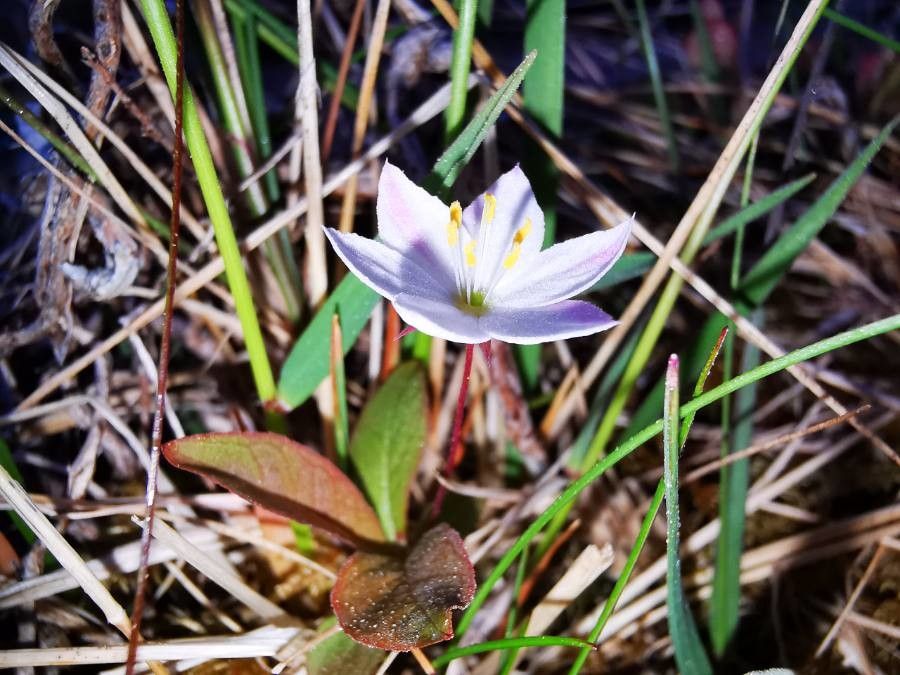
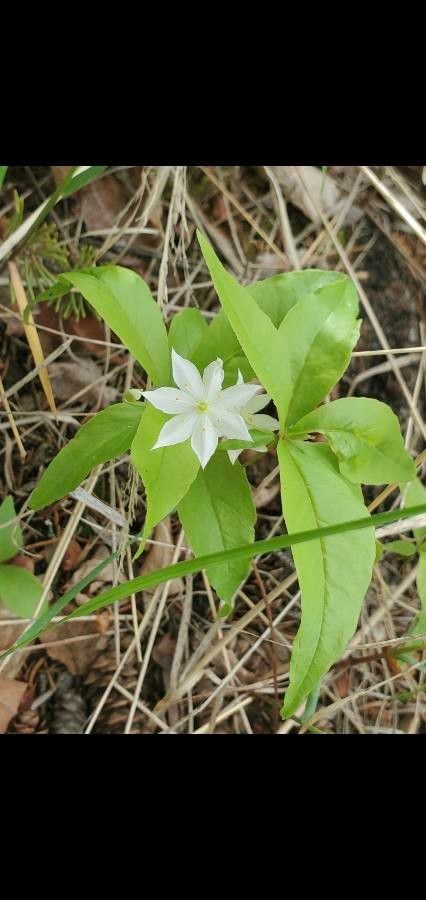
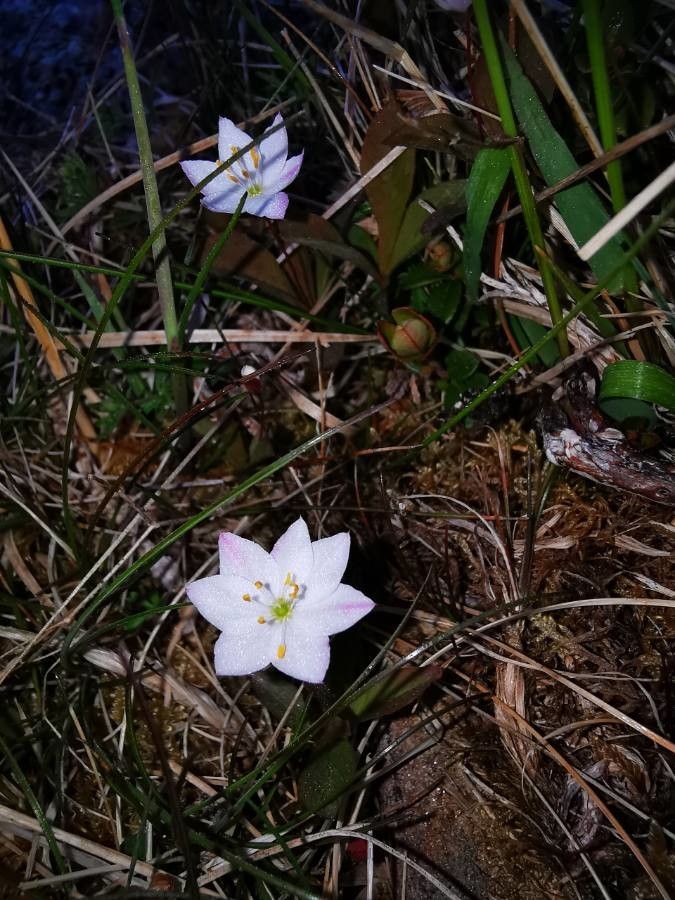
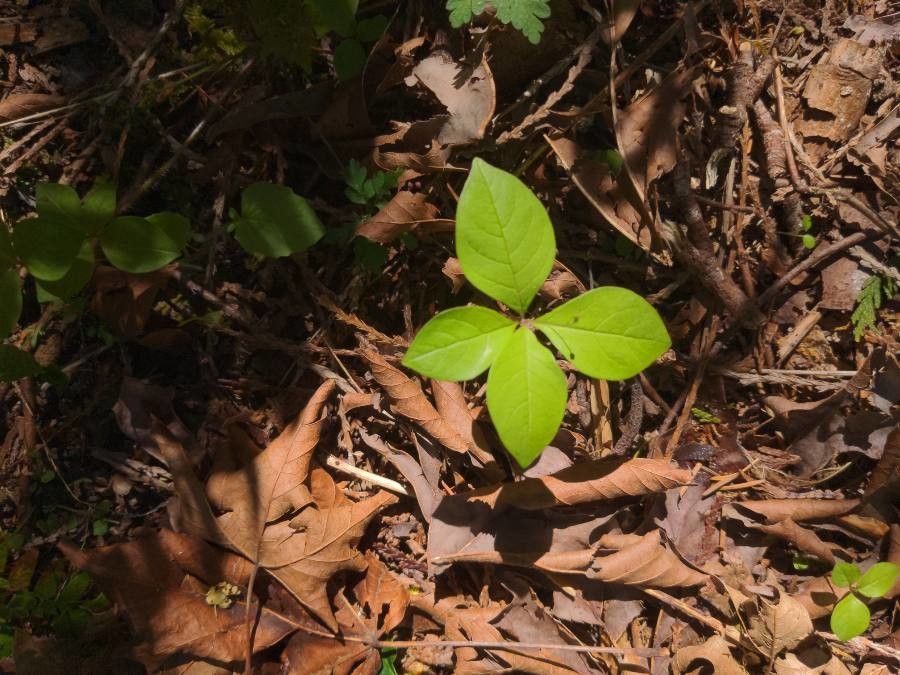
Lysimachia europaea (formerly known as Trientalis europaea) is a flowering plant in the primrose family Primulaceae, called by the common name chickweed-wintergreen or arctic starflower. It is a small herbaceous perennial plant with one or more whorls of leaves on a single slender erect stem. It is about one third of a foot high (10 cm), giving it its generic name.? The broad lanceolate leaves are pale green but take on a copper hue in late summer. The solitary white flowers (1–2 cm, 0.39–0.79 in diameter, usually with 6–8 petals) are reminiscent of small wood anemones and appear in midsummer. The fruits are globular dry capsules but are seldom produced.Lysimachia europaea occurs throughout boreal regions of Europe and Asia, but is absent from eastern North America where it is largely replaced by Lysimachia borealis in corresponding habitats.This is a woodland indicator species, and in Scotland it is found on acid, organic soils, mainly in pine, birch and oak woodland and moorland which has supported woodland in the past, and also sometimes on heaths. The plant is a good competitor, rarely reproducing by seed but a poor colonist forming extensive clonal populations interconnected by rhizomes during the growing season. The rhizomes and above-ground parts are deciduous, the plant forming overwintering tubers. The range of the plant is changing little in Scotland, but it has declined in northern England due to woodland clearance and moor burning, however its precise distribution on the North York Moors is now better known.The flower is the provincial flower of the Värmland province in Sweden and the "county flower" of Nairn.Trientalis europaea is now widely referenced in botanical literature under the name Lysimachia europaea.: 551
Starflower has strong disease resistance and generally does not tend to get ill. However, it can be vulnerable to pests and diseases present in its surroundings. Those infections are usually not severe. For care, this plant needs moderate maintenance. It requires regular pruning to keep a neat appearance and support healthy growth. Fertilizing can also help encourage flowering. Starflower is appropriate for anyone with outdoor space, such as a garden or patio, and does not demand extensive care experience. It may need more attention when grown indoors.
How to keep Trientalis Europaea.
Light
Starflower prefers a mix of sun and shade for healthy growth, though it can do fairly well in more shaded spots. Light encourages the plant to thrive, but it is not necessary during every stage of development. Avoid leaving the plant in excessively bright conditions, and too little light can cause weaker growth and development.
Temperature
Starflower's native habitat is cool and moist, with temperatures ranging from 32 to 77℉ (0 to 25℃). While actively growing, the plant prefers 50 to 80℉ (10 to 27℃). In summer it can tolerate temperatures up to 95℉ (35℃). In winter, make sure temperatures do not fall below 32℉ (0℃).
Fertilizer
Generally, a single fertilizer application in spring is enough for Starflower, but repeated feedings can maximize growth. Feed every 4 to 6 weeks. Fertilization improves the appearance and function of the leaves, helping maintain even color and a healthy texture. It also promotes root development and nutrient uptake for the plant’s long-term health.
Botanical profile.
- Plant Type
- Herb
- Life Cycle
- Perennial
- Genus
- Trientalis
- Family
- Primulaceae
- Hardiness Zone
- 3-9
- Mature Height
- 10 cm to 20 cm
- Mature Spread
- 15 cm to 46 cm
- Leaf Color
- Green, Blue
- Leaf Type
- Deciduous
- Flower Color
- White
- Flower Size
- 1.27 cm
- Bloom Time
- Late spring, Early summer
- Planting Time
- Spring
- Harvest Time
- Mid summer
Other names.