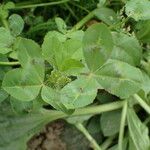
Trifolium alexandrinum
شبدر مصری · برسيم · Egyptian clover · Berseem clover · Berseem
Description
Source: leafsnapTrifolium alexandrinum (Egyptian clover, berseem clover) is an annual clover cultivated mostly in irrigated sub-tropical regions, and used as leguminous crop. It is an important winter crop in Egypt, where it may have been cultivated since ancient times, and was introduced into northern India in the early nineteenth century. It is also grown in the United States, Europe, China and Australia.The plant reaches 30 to 100 cm (12 to 39 in) tall with erect or ascending stems. There are two types of berseem clover, single-cut and multi-cut. Single-cut varieties, like 'Balady', feature a high growing point and have poor recovery once harvested. Multi-cut varieties, like 'Frosty', feature a lower growing point allowing for multiple harvests from a single sowing. Berseem clover is generally frost-sensitive and should be planted only after potential for frost has passed. The exception is 'Frosty' berseem clover which was developed by Grassland Oregon, Inc. and released in 2016. This variety is capable of surviving temperatures as low as 5 °F (−15 °C).Forage Berseem clover is capable of producing up to 8 tons of forage in a single growing season. Berseem clover is similar in forage quality to that of alfalfa.Green manure Berseem clover can also be used as a cover crop suppressing weeds or as a green manure crop providing nitrogen to following crops. As a green manure crop, berseem is capable of providing as much as 280 lbs./acre of nitrogen to following crops.
Care Guide
💧 Water
Originating from Egypt, Egyptian clover thrives with consistent moisture, as long as the soil is not waterlogged. Weekly watering supports its natural hydration needs. Typically grown outdoors, this clover benefits from natural rainfall, making it suitable for regions where additional watering can supplement seasonal precipitation.
☀️ Light Full sun
Egyptian clover comes from bright, open habitats and performs best in full sunlight. While it can tolerate partial shade, it prefers direct sun for optimal growth. This plant, which may be annual or biennial, is noted for its sun-loving habit.
🌡️ Temperature 15–37.8°C
Egyptian clover adapts well to temperature changes and can tolerate higher heat and greater temperature swings. In hot weather, it is important to maintain proper watering and offer suitable shade to prevent sunburn. Its tolerance of low temperatures is relatively weak. While it can endure some cold, extremely cold conditions can cause frost damage.
💨 Humidity
🪴 Soil 6-7
🌱 Fertilizer
Frequent, dilute applications of fertilizer help Egyptian clover develop healthy foliage. Fertilize about once a month during the summer. Nitrogen is essential for the leaves, and providing nitrogen-rich sources helps Egyptian clover thrive.
🪴 Pot & Repot
✂️ Pruning
Egyptian clover is an annual legume known for its nitrogen-fixing abilities. To maintain its health, prune the plant in early to late spring. This involves removing dead stems and thinning out overcrowded areas to improve air circulation and encourage robust growth. Always use clean, sharp tools for pruning to prevent infections and promote vigorous regrowth.
🌿 Propagating
🐛 Diseases & pets
☠️ Toxicity
Characteristics
- Plant Type
- Herb
- Life Cycle
- Annual, Perennial
- Genus
- Trifolium
- Family
- Fabaceae
- Hardiness Zone
- 8-11
- Mature Height
- 30 cm to 61 cm
- Mature Spread
- 20 cm to 40 cm
- Leaf Color
- Green, Blue
- Leaf Type
- Semi-evergreen
- Flower Color
- White
- Flower Size
- 1.02 cm to 2.03 cm
- Bloom Time
- Mid spring, Late spring, Early summer
- Planting Time
- Spring
- Harvest Time
- Summer
- Native Area
- Egypt, Turkey, Iraq, Syria, Iran, Lebanon