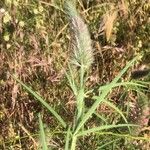
Trifolium angustifolium
Narrow clover · Narrow-leaf clover · Narrowleaf crimson clover · White Clover · Narrow-leaved clover
Description
Source: leafsnapTrifolium angustifolium is a species of clover known by the common names narrowleaf crimson clover, narrow clover and narrow-leaved clover.
🎭 A four-leaf clover brings great luck, and people say that wearing one in your hat will let you see fairies.
Care Guide
💧 Water
Narrowleaf crimson clover is well-suited to Mediterranean climates, as it prefers consistent moisture throughout its growing season and can tolerate brief periods of drought. To maintain optimal hydration and encourage lush growth and vibrant flowers, it should be watered weekly. When grown outdoors, it thrives when its watering schedule aligns with its natural cycles of growth and dormancy.
What's the best way to water my Narrowleaf crimson clover?
Watering Narrowleaf crimson clover is easy, as you have several options for watering tools. You can use a garden hose with a spray nozzle, a watering can, or any other common watering tool. The plant is not too particular about the source of water, so rainwater, tap water, or filtered water will all work. It is best to avoid watering from overhead to prevent damage to leaves and flowers, as well as the risk of disease. A drip irrigation system is often the most effective method for watering, as it provides even and direct watering to the soil. For container-grown Narrowleaf crimson clover, you can use a cup, watering can, or tap to water directly at the soil.
What should I do if I give too much or too little water to my Narrowleaf crimson clover?
When Narrowleaf crimson clover is underwatered, the solution is simple: water it more regularly. However, overwatering can be a bigger problem if not noticed early. Overwatering can cause diseases that lead to the decline and death of the plant. To prevent this, choose a growing location with plenty of sunlight to dry the soil and good drainage to prevent waterlogging. If your potted Narrowleaf crimson clover is overwatered, consider changing to a new pot with better drainage and loose soils.
How often should I give water to my Narrowleaf crimson clover?
Narrowleaf crimson clover requires regular watering during the growing season. In the spring, watering once per week is sufficient. However, as the season progresses and temperatures rise, you may need to water two to three times per week. It is important not to exceed this frequency as it can harm the plant. Additionally, the soil should be kept moist but not soaked, regardless of the watering schedule. When it comes to container-grown narrowleaf crimson clover, watering needs may be higher. Potted soil tends to dry out faster, so watering a few times per week is usually necessary compared to once per week for plants in the ground.
How much water does my Narrowleaf crimson clover require?
Determining the appropriate amount of water for your Narrowleaf crimson clover can be done in several ways. One method involves feeling the soil to assess moisture levels. In this approach, you should water the plant until the top six inches of soil feel moist. Another option is to use a specific measurement to determine the water quantity. Generally, providing about two gallons of water per week is recommended, but this can vary depending on factors like temperature and soil moisture. However, be cautious not to overwater if your plant requires less water. When growing Narrowleaf crimson clover in a container, a different approach is needed. You should water enough to moisten all dry soil layers, which can be confirmed by inserting your finger into the soil to check moisture levels. Alternatively, you can water until you see a small amount of excess water draining from the pot's holes.
How do I know if I'm giving enough water to my Narrowleaf crimson clover?
Avoiding overwatering your Narrowleaf crimson clover can be a bit challenging. These plants have deep roots that need to be watered weekly, but they are also very prone to root rot. Overwatering can cause browning in the plants. Underwatering is less of a concern as these plants can survive without additional watering for some time, but if you wait too long, they will start to wilt and their leaves may become dry.
☀️ Light Full sun
The narrowleaf crimson clover flourishes when exposed to ample sunlight, as it requires a considerable amount of light for healthy growth. It can, however, tolerate lower light conditions, though this may impair the plant’s overall vigor and development. Its typical habitat features plentiful light. Both excessive shade and too much sun can hinder its growth.
What are the sunlight requirements for Narrowleaf Crimson Clover?
Narrowleaf Crimson Clover requires full sun, defined as more than 6 hours of sunlight daily, for optimal growth. It can also grow in partial sun, which means about 3-6 hours of sunlight a day. Observing how sunlight moves through your garden helps in choosing spots that balance light and shade effectively for your plants. However, both excessive shade and too much direct sunlight can negatively impact the plant's development.
How does sunlight affect the growth of Narrowleaf Crimson Clover?
Sunlight is crucial for the healthy growth of Narrowleaf Crimson Clover, providing the substantial illumination it requires. While it can tolerate lower light conditions, insufficient sunlight may compromise its health and growth. Its natural inclination towards environments abundant in light indicates that maintaining the right balance of sunlight is key. Excessive shade or overexposure to sunlight can impede its development.
Can artificial lighting be used for Narrowleaf Crimson Clover?
Yes, artificial lighting is a viable solution for Narrowleaf Crimson Clover, especially when natural sunlight is inadequate, like in winter or less sunny locations. Indoor plants can benefit from artificial lights to ensure optimal growth. LED lights are recommended due to their ability to be customized to provide specific wavelengths needed by plants. The intensity of artificial light required varies by plant type: full sun plants need 30-50W/sq ft, partial sun plants need 20-30W/sq ft, while full shade plants require 10-20W/sq ft. Properly positioning the light source and mimicking natural daylight hours, typically 8-12 hours a day, are crucial for healthy plant growth.
What symptoms indicate light deficiency in Narrowleaf Crimson Clover?
Symptoms of light deficiency in Narrowleaf Crimson Clover include new leaves growing smaller, leggy or sparse growth due to elongated spaces between leaves or stems, faster leaf drop to conserve resources, delayed or ceased plant growth, pale or irregularly colored new leaves indicating a lack of chlorophyll, and conditions like chlorosis or sunscald, which damage the plant's ability to photosynthesize effectively. These symptoms reveal the plant's struggle to adapt to low light conditions.
What solutions can help improve light exposure for Narrowleaf Crimson Clover?
To enhance light exposure for Narrowleaf Crimson Clover, gradually move plants to sunnier locations, ensuring they receive at least 6 hours of direct sunlight daily. Indoors, use south-facing windows or artificial lights, like desk lamps or professional grow lights, for at least 8 hours a day. Outdoors, careful relocation to sunnier spots while avoiding sudden changes in light intensity can prevent sunburn. Reducing obstructions, such as pruning trees, or transplanting smaller plants to bright locations with good drainage, are effective strategies. It's notable that parts of the plant damaged by insufficient light may not recover, but new growth will be healthy following improved light conditions.
🌡️ Temperature 0–37.8°C
Narrowleaf crimson clover is native to regions with mild-to-warm temperatures and performs best at 68 to 100 °F (20 to 38 ℃). In areas with drastic seasonal climate shifts, seasonal temperature amendments may be required. Adjust accordingly to achieve optimal growth.
What is the origin and optimal growing temperature for Narrowleaf crimson clover?
Narrowleaf crimson clover, scientifically known as Trifolium angustifolium, originates from environments that provide mild-to-warm temperatures. It flourishes best in temperature ranges between 68 to 100 °F (20 to 38 °C). For optimal growth, it's important to adjust seasonal temperatures accordingly, especially in areas experiencing drastic climate shifts. Despite its strong cold resistance, in areas where winter temperatures are expected to drop below -40°C, steps should be taken to protect the plant from frost by covering it with materials such as soil or straw and ensuring the soil around it remains moist before the first freeze in autumn.
How does Narrowleaf crimson clover react to low temperatures?
Narrowleaf crimson clover is notably cold-tolerant and performs best when temperatures stay above 20°C. During winter, ensuring it remains above 0°C is crucial. If temperatures fall below -40°C, the plant might not show noticeable changes immediately. However, such extreme cold can lead to decreased sprouting or potentially no sprouting at all come springtime. To mitigate this, any parts of the plant that have failed to sprout in spring should be removed to promote new growth.
What are the effects of high temperatures on Narrowleaf crimson clover and how can they be mitigated?
During the summer months, it is important to keep Narrowleaf crimson clover below 38°C. Temperatures exceeding 43°C can cause the plant's leaves to lighten in color, become prone to curling, susceptible to sunburn, and in severe cases, cause the entire plant to wilt and dry out. To help the plant cope with high temperatures, trim away sunburned and dried-up parts. Relocate the plant to a spot that is shaded during the midday and afternoon sun, or use a shade cloth to provide protection. Watering the plant in the morning and evening will help keep the soil moist and temperature regulated.
💨 Humidity
🪴 Soil 6-7
🌱 Fertilizer
When most of Narrowleaf crimson clover's blooms have opened to full size, resume fertilizing. At peak bloom, apply fertilizer once every three to four weeks, as weather permits. When the plant begins producing fewer new blooms, stop fertilizing; there's no need to feed it if it cannot produce additional flowers.
🪴 Pot & Repot
✂️ Pruning
Narrowleaf crimson clover features slender leaves and vibrant crimson flowers. To promote growth and improve air circulation, prune the plant from early to late spring. Remove any dead stems and spent flowers to encourage further blooming and prevent reseeding. Always use clean tools while pruning to prevent infections and enhance the plant's health and appearance.
🌿 Propagating
🐛 Diseases & pets
☠️ Toxicity
Characteristics
- Plant Type
- Herb
- Life Cycle
- Annual
- Genus
- Trifolium
- Family
- Fabaceae
- Hardiness Zone
- 2-11
- Mature Height
- 10 cm to 61 cm
- Mature Spread
- 15 cm to 30 cm
- Leaf Color
- Green, Light Green
- Leaf Type
- Deciduous
- Flower Color
- Pink
- Flower Size
- 1.02 cm to 5.08 cm
- Bloom Time
- Late spring, Early summer, Mid summer
- Planting Time
- Spring, Summer, Autumn
- Harvest Time
- Mid summer, Late summer, Early fall
- Native Area
- Libya, Egypt, Turkey, Austria, Montenegro, Slovenia, Morocco, Croatia, Belarus, Russia, Iraq, Jordan, Romania, Portugal, France, Tunisia, Cyprus, Bulgaria, Armenia, Greece, Ukraine, Lebanon, Serbia, Syria, Italy, Spain, Israel, Iran, Albania, Azerbaijan, Algeria, Turkmenistan