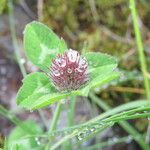
Trifolium glomeratum
Ball clover · Bush clover · Cluster clover · Smooth-head trefoil · Clustered clover
Description
Source: leafsnapTrifolium glomeratum is a species of clover known by the common names clustered clover and bush clover. It is native to Eurasia and North Africa and it is known elsewhere as an introduced species. It easily takes hold in disturbed areas, becoming a common weed. It is an annual herb growing decumbent to upright in form with mostly hairless herbage. The leaves are made up of oval leaflets up to 1.2 centimeters in length. The inflorescences occur in leaf axils, each a headlike cluster of many flowers. Each flower has a calyx of sepals with triangular points that bend outward, and a pink corolla.
Care Guide
💧 Water
Clustered clover, a plant native to moderate climates, thrives in moisture-rich environments. It needs consistently moist soil and should be watered weekly. During the growing season, it benefits from rainwater, allowing it to stay hydrated without becoming waterlogged. As an herbaceous plant, clustered clover manages to maintain the right balance of moisture.
How should I water my Clustered clover plant?
To water Clustered clover, you can use a variety of common watering tools like a garden hose with a spray nozzle or a watering can. These plants are not too particular about the type of water they receive, so rainwater, tap water, or filtered water will all suffice. Avoid watering from above as it can harm the leaves and flowers and may lead to disease. A drip irrigation system is often the best way to water Clustered clover, as it applies water evenly and directly to the soil. If you have a container-grown Clustered clover, you can use a cup, watering can, or tap water to water it directly at the soil.
What should I do if I give my Clustered clover too much water or too little water?
To remedy underwatering for Clustered clover, simply increase the frequency of watering when you notice it lacks moisture. However, overwatering can be a bigger problem. It can cause diseases that lead to the decline and death of the plant. To prevent this, choose a location with plenty of sunlight to dry the soil and ensure good drainage to avoid waterlogged soils. If your potted Clustered clover is overwatered, consider changing it to a new pot with better drainage. When repotting, use loose soil and a pot that drains efficiently.
How frequently should I give water to my Clustered clover?
Clustered clover needs regular watering throughout the growing season. In spring, water it once per week. As the season gets warmer, increase watering to two to three times per week. However, be careful not to exceed this rate, as it can harm the clover. Keep the soil relatively moist but not wet. Watering potted clustered clover is slightly different. Potted soil can dry out faster, so water it more frequently. In most cases, water a potted clustered clover a few times per week, compared to just once per week for an in-ground plant.
How much water does my bundle of clover need?
Determining how much water to give to your Clustered clover can be done in a few different ways. Some gardeners prefer to gauge the moisture of the soil by feeling it. This method involves watering until the first six inches of soil feel moist. On the other hand, you may choose to use a specific measurement as a guideline. Typically, Clustered clover requires about two gallons of water per week, but this can vary depending on factors like temperature and soil dryness. However, it's important to avoid overwatering if your plant doesn't need the full two gallons. When growing Clustered clover in a container, you'll need to adjust your approach. In this case, you should water enough to moisten all the dry layers of soil. You can test this by sticking your finger in the soil to check for moisture or allow excess water to trickle out of the pot's drainage holes.
How can I know if I'm giving enough water to my Clustered clover?
Avoiding overwatering your Clustered clover can be tricky. These plants have deep roots, so they need the soil to be moistened weekly. However, Clustered clover are highly prone to root rot and can develop browning if overwatered. Underwatering is less likely to harm your Clustered clover since they can survive without extra watering for a while. However, if you wait too long to water them, they may wilt and develop dry leaves.
☀️ Light Full sun
Clustered clover strongly favors plentiful sunlight. This preference aids its healthy growth and vigor. Its native surroundings provide ample sun, which also allows it to adapt well to locations with lower light. However, excessive exposure to intense sun or too little sunlight can hinder its growth.
What are the sun requirements for Clustered Clover?
Clustered clover thrives best under conditions that mimic its natural habitat, which is abundant in sunlight. These plants require full sun, which means they should receive above 6 hours of sunlight daily, or partial sun, about 3-6 hours of sunlight. It's important to observe the movement of sunlight through your garden to find spots that offer an ideal mix of light and shade, ensuring your plants grow healthily.
What essentials do I need to know about growing Clustered Clover?
Clustered clover has a strong preference for being in the sun, which is crucial for its growth and vitality. In its natural setting, it receives plenty of sunlight, but it can also adapt to environments with less light. However, too much intense sun or too little solar exposure can negatively affect its growth. Indoor plants can benefit from artificial lighting, especially when natural sunlight is not sufficient. LED lights are a good option as they can be tailored to the plant's needs, with full sun plants requiring 30-50W/sq ft, partial sun plants 20-30W/sq ft, and full shade plants 10-20W/sq ft. The light should be placed 12-36 inches above the plant and turned on for 8-12 hours daily to mimic natural daylight hours.
What are some symptoms of inadequate light in Clustered Clover, and how can I address them?
When Clustered clover does not receive enough light, it may display symptoms such as smaller new leaves, leggy or sparse growth, faster leaf drop, slower or no new growth, lighter-colored new leaves, chlorosis, sunscald, leaf curling, wilting, and leaf scorching. To correct light deficiency indoors, gradually move your plants to a sunnier spot, ensuring they get at least 6 hours of direct sunlight daily or use artificial lighting like desk lamps or professional grow lights for at least 8 hours daily. For outdoor plants, adjust the location to a sunnier spot gradually to prevent sunburn. Removing obstructions that block sunlight or transplanting smaller plants during their dormant period to a brighter location can also help.
What additional care measures should I take for Clustered Clover in different lighting conditions?
To ensure Clustered Clover's optimal growth under various lighting conditions, indoor plants may require supplemental artificial light. This can be provided by keeping a desk or ceiling lamp on for at least 8 hours a day or investing in professional grow lights for sufficient exposure. Outdoor plants should be gradually moved to increase their sunlight intake without causing shock or sunburn. If plants are located in a spot with inadequate sunlight, consider reducing obstructions like pruning branches of nearby trees, or for smaller plants, transplanting to a brighter location with ample sunlight and good drainage. Remember, parts of the plant that have suffered from insufficient light may not recover, but new growth should be healthy following these adjustments.
🌡️ Temperature 20–35°C
Clustered clover originates from regions where the average temperature falls between 68 and 95 °F (20 to 35 °C). It grows best when kept within that temperature range. As seasons change and temperatures fluctuate, its care may need to be modified.
What is the ideal temperature range for growing Clustered Clover?
Clustered clover, scientifically known as Trifolium glomeratum, flourishes in environments with average temperatures ranging from 68 to 95°F (20 to 35°C). This temperature range is ideal for its growth, and adjustments in care may be necessary as seasons change and temperatures fluctuate. While the plant has some degree of cold tolerance, specific care should be provided when temperatures are expected to drop below freezing point.
How does Clustered Clover react to cold temperatures, and what measures should be taken?
Clustered clover possesses moderate tolerance to low temperatures but thrives best when the temperature remains above 20°C. During winter, it is crucial to keep the temperature above 0°C to avoid damage. If temperatures fall below -5°C, the leaves may begin to droop, leading to wilting or even loss of leaves in severe cases. To protect the plant from frost, trim off any frost-damaged parts and wrap the plant with non-woven fabric or cloth. Additionally, constructing a wind barrier can help protect it from cold winds.
What are the effects of high temperatures on Clustered Clover, and how can they be mitigated?
In the summer, it's important to ensure that the temperature around Clustered clover does not exceed 35°C. Temperatures above 38°C can lead to lighter leaf color, dry and withered leaf tips, curled leaves, and increased susceptibility to sunburn. To mitigate these effects, trim away any sunburned or dried-up parts. Moving the plant to a location with shade during the midday and afternoon sun or using a shade cloth can also be beneficial. Moreover, watering the plant in the morning and evening will help keep the soil moist and assist in preventing damage caused by high temperatures.
💨 Humidity
🪴 Soil 6-7
🌱 Fertilizer
Clustered clover benefits from frequent, light fertilizer applications to encourage healthy foliage growth. You should fertilize Clustered clover about once a month during the summer. Nitrogen is vital for leaf development, and providing nitrogen-rich sources helps Clustered clover thrive.
🪴 Pot & Repot Every 12 months
✂️ Pruning
Clustered clover has small flowers that grow in clusters. For healthy growth, it's important to prune it from early to late spring. Regular pruning helps by removing dead stems, improving air circulation, and increasing sunlight exposure. This encourages vigorous blooms and helps prevent diseases and pests, resulting in a robust and attractive plant.
🌿 Propagating
🐛 Diseases & pets
☠️ Toxicity
Characteristics
- Plant Type
- Herb
- Life Cycle
- Annual
- Genus
- Trifolium
- Family
- Fabaceae
- Hardiness Zone
- 9
- Mature Height
- 10 cm to 30 cm
- Mature Spread
- 10 cm to 30 cm
- Leaf Color
- Green, Light Green
- Leaf Type
- Deciduous
- Flower Color
- Pink, Purple
- Flower Size
- 0.76 cm to 1.02 cm
- Bloom Time
- Mid spring, Late spring, Early summer
- Planting Time
- Spring, Summer, Autumn
- Harvest Time
- Summer
- Native Area
- Turkey, Tunisia, Montenegro, Cyprus, Bulgaria, Greece, Morocco, Serbia, Lebanon, Portugal, Italy, Spain, Albania, Iran, Ireland, United Kingdom, Algeria, Azerbaijan, France