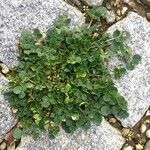
Trifolium repens
شبدر سفید، · White clover · Dutch clover · White Dutch clover · Ladino clover
Description
Source: leafsnapTrifolium repens, commonly known as white clover, is a perennial plant belonging to the legume family. Native to Europe, it has been widely naturalized in many regions across the globe. The plant features trifoliate leaves that are green and oval-shaped, each displaying a characteristic white V-shaped marking in the center. Its flowers, small and either white or pinkish-white, are arranged in dense spherical clusters at the ends of long stalks. White clover is a valuable forage crop for livestock, offering high-quality nutrition due to its rich protein content. It also contributes to soil fertility by fixing nitrogen from the air into its roots, which can then be utilized by other plants. Traditionally, the plant has been used for medicinal purposes, such as treating coughs, colds, and respiratory infections, thanks to its anti-inflammatory properties. White clover naturally grows in fields, meadows, and lawns, where it forms dense mats that help prevent soil erosion. It is also commonly used as a cover crop or green manure crop due to its ability to enhance soil health. Overall, Trifolium repens plays an important ecological and agricultural role, making it an essential component of many ecosystems worldwide.
💡 Trifolium repens, commonly known as white clover, is often associated with luck. In Britain and the United States, four-leaf clovers are considered symbols of good fortune. This belief stems from the idea that these clovers only grew in the Garden of Eden. In some countries, the suit of clubs in a deck of playing cards is believed to represent the lucky white clover.
🌳 Surprisingly, white clover has been shown to indicate the presence of nuclear radiation. During the Cold War, it was observed that white clover's normally white flowers could become pink as a result of radiation-induced trifoliation. Besides this, white clover is a valuable, protein-rich feed for livestock and is prized by bees for its nectar, aiding honey production.
🎭 Hope, trust, love, good luck
Care Guide
💧 Water Every 3 days
White clover grows best in temperate climates, where it requires consistent moisture and evenly moist soil. Once established, it can tolerate moderate drought conditions. To encourage optimal growth, water the plant weekly. During extended dry spells, provide additional irrigation to maintain its lush foliage and flowering.
When should I water my White Clover?
Watering white clover correctly is vital for its health and growth. You should water when the top inch of soil is dry to the touch, indicating the plant needs water. White clover's leaves will also show signs such as becoming thin, dry, or brittle when they need water. The leaves should ideally be a vibrant green, and any deviation towards yellow or a lighter green may signal dehydration, although this could also be a symptom of overwatering. A droopy or limp appearance, despite adequate light, suggests the plant is under-watered. During summer or dry, windy conditions, white clover may require more frequent watering. However, be cautious of overwatering, as it can lead to root rot and other issues, while underwatering can hinder the plant's growth and overall vitality.
How should I water my White Clover?
White clover thrives with consistent moisture but is susceptible to overwatering. The ideal watering method involves deep, infrequent watering sessions that allow the soil to fully soak and encourage water to reach the roots, followed by a period of drying out to prevent root rot. Employing a moisture meter to check soil moisture can be effective; water when the topsoil is dry. Use a watering can with a fine spout to gently water the base of the plant without wetting the leaves, which can lead to fungal diseases. For potted plants, bottom-watering encourages deeper root growth and minimizes foliage wetting. Adjust this approach based on white clover's specific needs, environmental conditions, and whether it's potted or in the ground.
How much water does White Clover really need?
White clover's water needs vary based on multiple factors including pot size, plant size, and root depth. With a shallow root system, the plant generally requires frequent but modest amounts of water—approximately 0.5-1 liter for small pots and 2-3 liters for larger pots per watering session. Proper hydration is indicated by vibrant leaves and evenly moist soil. To check, the soil should be slightly damp to a finger's touch at a depth of a couple of inches. Avoid overwatering to prevent root rot, yet ensure the soil doesn't become overly dry, which can lead both to stunted growth and vitality loss. Watering should aim for a balance to maintain healthy growth, with adjustments made for varying conditions.
What kind of water is best for White Clover?
White clover prefers rainwater or distilled water, as these are free from toxins and chemicals that might be present in tap water. However, if tap water is used, it's crucial to let it sit for 24-48 hours to evaporate any chlorine, due to the clover's sensitivity to chlorine which can inhibit its growth. Although white clover isn't specifically sensitive to fluoride found in municipal water supplies, ensuring the water is at room temperature and free of harsh minerals like sodium or boron is beneficial. Using the correct type of water and treatment methods, such as letting tap water sit or using a filter, will support the plant's optimal growth and vitality.
How do White Clover's watering needs change with the seasons?
White clover's watering needs vary across seasons. In spring, during its active growth phase, consistent soil moisture is vital; water regularly. Summer may see a natural dormancy; reduce watering, allowing the soil to dry slightly between sessions. In autumn, as the plant prepares for dormancy, gradually decrease watering frequency but keep the soil lightly moist. Winter sees white clover in dormancy with minimal moisture requirements; water sparingly, allowing the topsoil to dry out between watering. Seasonal changes necessitate adjustments in watering frequency and volume to support the plant's health and lifecycle.
☀️ Light Full sun
White clover performs best in spots that get plenty of sunlight for most of the day, though it can tolerate some shade. In its natural surroundings it favors well-lit areas, which support vigorous growth. Yet both excessive and insufficient sunlight can cause it to become unhealthy.
What are the sunlight requirements for white clover?
White clover thrives best when exposed to full sun, meaning it requires above 6 hours of sunlight daily. It can also adapt to partial sun conditions, which amounts to about 3-6 hours of sunlight. Observing how sunlight moves through your garden and choosing spots that offer a balance of light and shade are crucial for the happiness of your plants. Additionally, white clover can tolerate some degree of shade, making it versatile in different lighting conditions. It's important to provide abundant sunlight for the majority of the day to encourage vigorous growth, but be mindful of overexposure or underexposure to sunlight as it can lead to unhealthy conditions.
How can artificial lighting be used for white clover?
For indoor white clover plants or those in less sunny spaces, artificial lighting serves as an important solution for providing adequate light, especially in winter or areas lacking natural sunlight. LED lights are recommended due to their ability to be customized to meet specific plant light wavelength needs. Full sun plants should receive 30-50W/sq ft, partial sun plants 20-30W/sq ft, and full shade plants 10-20W/sq ft of artificial light. The light source should be placed 12-36 inches above the plant to mimic natural sunlight, and the duration should mimic natural daylight hours, generally 8-12 hours per day, depending on the plant species.
What are the common symptoms of light deficiency in white clover?
White clover shows several symptoms when exposed to inadequate lighting. These include small leaves, leggy or sparse growth, faster leaf drop, slower or no new growth, and lighter-colored new leaves. Symptoms of excessive sunlight exposure, such as chlorosis, sunscald, leaf curling, wilting, and leaf scorching, can also occur, indicating a need for balanced light exposure. These symptoms highlight the plant's responses to both underexposure and overexposure to sunlight, emphasizing the importance of monitoring and adjusting light conditions for optimal health.
How can I address sunlight-related issues for my white clover?
To address sunlight-related issues in white clover, consider the following solutions based on the plant's location: Indoor plants may require a gradual increase in sunlight exposure or the use of artificial light to ensure at least 6 hours of direct sunlight daily. Keeping a plant near a south-facing window or using desk, ceiling, or professional grow lights can help. For outdoor plants, gradually moving them to sunnier spots each week helps them adapt without causing sunburn. Removing obstructions or transplanting smaller plants during their dormant period can also increase sunlight exposure. It's important to note that while parts of the plant that have suffered from insufficient sunlight may not recover, new growth can be healthy with improved light conditions.
🌡️ Temperature 0–35°C
White clover is a temperate plant that grows well in temperatures between 32 and 95 ℉ (0 and 35 ℃). It prefers cooler conditions and can tolerate light frost. In summer, shade and supplemental watering can help it cope with high temperatures.
What are the essential growing conditions for white clover?
White clover, or Trifolium repens, is a temperate plant that flourishes in temperatures ranging from 32 to 95°F (0 to 35°C), favoring cool climates and tolerating light frost. It possesses a strong resistance to cold, rarely requiring special frost protection measures. During the hot summer months, white clover benefits from shade and supplemental watering to regulate temperature and maintain moisture, especially if temperatures are expected to rise significantly. In preparation for winter, especially if temperatures may drop below -35°C, it is advised to cover the plant with protective materials like soil or straw and to water it abundantly before the first freeze, ensuring the soil is moist going into the freezing period. This helps prevent the plant from experiencing drought and water scarcity during the colder months.
How does white clover respond to low temperatures, and what measures should be taken?
White clover is notably cold-tolerant, thriving best in temperatures above 0°C and should ideally be kept above -30°C during winter. In cases where temperatures plummet below -35°C, the clover might not show immediate damage but could experience reduced sprouting or fail to sprout at all come spring. To mitigate this issue, any parts of the plant that haven't sprouted by spring should be removed to encourage new growth and maintain the health of the clover.
What are the effects of high temperatures on white clover and how can they be mitigated?
When the summer heat pushes temperatures above 35°C, reaching up to 41°C or higher, white clover may show signs of distress such as leaves becoming lighter in color, curling, and being susceptible to sunburn, which in severe cases can lead to the wilting and drying out of the plant. To counteract these effects, it's recommended to trim away any sunburned or dried parts of the plant. Relocating the clover to an area with more shade or using a shade cloth can provide necessary protection from the midday and afternoon sun. Additionally, to ensure the soil remains moist, watering the plant in the early morning and late evening is advised.
💨 Humidity normal (40-60%)
This plant will thrive in moderate humidity, which is probably the level in your home. However, misting it a few times a week can be very beneficial. Make sure the room has good ventilation.
🪴 Soil 6-7
🌱 Fertilizer
A single fertilizer application in spring is typically enough for White clover, though several feedings can boost growth. Feed every month to a month and a half. Fertilizing improves the leaves' appearance and function, helping maintain even color and a healthy texture. It also encourages root development and nutrient uptake, supporting the plant's long-term health.
🪴 Pot & Repot
To thrive, white clover needs excellent drainage in pots. This ensures its roots don't become waterlogged, promoting healthy growth and reducing the risk of rot.
✂️ Pruning
White clover is a low-growing perennial plant characterized by its trifoliate leaves and white flowers. To encourage dense growth, prune the plant in the spring, remove any dead parts, and mow regularly to control its spread. Pruning enhances air circulation, reduces the risk of disease, and promotes vigorous growth, ensuring a thriving white clover.
🌿 Propagating
🐛 Diseases & pets
☠️ Toxicity
Clover, itself is not poisonous, but it sometimes harbors a fungus that is toxic to horses.
Characteristics
- Plant Type
- Herb
- Life Cycle
- Perennial
- Genus
- Trifolium
- Family
- Fabaceae
- Hardiness Zone
- 3-10
- Mature Height
- 10 cm to 30 cm
- Mature Spread
- 91 cm
- Leaf Color
- Green, White, Variegated
- Leaf Type
- Deciduous, Semi-evergreen
- Flower Color
- White, Pink
- Flower Size
- 0.76 cm to 1.27 cm
- Bloom Time
- Late spring, Summer
- Planting Time
- Spring, Summer, Autumn, Winter
- Harvest Time
- Summer, Early fall
- Native Area
- Egypt, India, Austria, Turkey, Sweden, Slovakia, Montenegro, Pakistan, Croatia, Slovenia, Morocco, Belarus, Uzbekistan, Russia, Iraq, Germany, Iceland, Estonia, Romania, Latvia, Belgium, Moldova, Portugal, Netherlands, France, Tajikistan, Tunisia, Czech Republic, Cyprus, Bulgaria, Poland, Armenia, Greece, Ukraine, Serbia, Lebanon, Lithuania, Norway, Afghanistan, Syria, Kyrgyzstan, Kazakhstan, Italy, Spain, Switzerland, Denmark, Mongolia, Finland, Iran, Albania, Ireland, United Kingdom, Hungary, Algeria, Azerbaijan, Turkmenistan