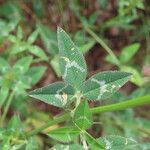
Trifolium vesiculosum
Arrowleaf clover
Description
Source: wikipedia (CC BY-SA)Trifolium vesiculosum, the arrowleaf clover, is a species of flowering plant in the family Fabaceae. It is native to southeastern and eastern Europe, the northern Caucasus, Turkey, Syria, and Lebanon, and has been introduced to other locales, including the United States and Australia. A cool-season annual, it is a large species reaching 1 m (3 ft) with 5 cm (2 in) leaves.
🎭 A four-leaf clover brings great luck, and people say that wearing one in your hat will let you see fairies.
Care Guide
💧 Water
Arrowleaf clover, which originates from moderate climates, is adaptable to different moisture levels. It thrives when consistently watered, requiring weekly hydration for optimal health. As an outdoor plant commonly found in fields and meadows, arrowleaf clover effectively manages water uptake during the growing season.
How should I water my Arrowleaf clover?
Watering Arrowleaf clover is easy and flexible. You can use various common tools like a garden hose with a spray nozzle or a watering can. The type of water you use, whether it's rainwater, tap water, or filtered water, doesn't matter much to this plant. However, it's best not to water it from above as this can harm the leaves, flowers, and possibly cause disease. Setting up a drip irrigation system is often the most effective way to water Arrowleaf clover, as it ensures the water reaches the soil evenly and directly. If you have Arrowleaf clover in a container, you can follow a similar approach but change the tools you use, such as a cup, watering can, or tap, to apply water directly to the soil.
What should I do if I give too much or too little water to my Arrowleaf clover?
The solution to underwatering Arrowleaf clover is simple: water it more regularly when you notice it's dry. However, overwatering can be a bigger problem if you don't catch it early. Overwatering can cause diseases that can lead to the plant's decline and death. To prevent this, choose a growing location with plenty of sunlight, which will dry the soil, and good drainage so excess water doesn't pool. If you overwater Arrowleaf clover in a pot, you may need to switch to a new pot with better drainage. When repotting, use loose soils and a pot that drains efficiently.
How many times should I water my Arrowleaf clover plant?
Arrowleaf clover needs regular watering throughout the growing season. In the spring, water it once a week. As the season progresses and temperatures rise, you may need to water two to three times per week. However, be careful not to exceed this rate as it can harm the plant. Regardless of watering frequency, make sure the soil remains moist but not wet. When it comes to potted Arrowleaf clover, watering needs are different. Potted plants generally require more frequent watering as the soil in the pot can dry out faster. In most cases, plan to water a container-grown Arrowleaf clover a few times per week, compared to just once per week for an in-ground plant.
How much water does my clover need?
Determining how much water to give your Arrowleaf clover can be done in a few different ways. One method is to feel the soil for moisture and water until the first six inches are moist. Another approach is to use a set measurement, like two gallons per week, which can vary based on heat and soil dryness. However, this method may overwater if the plant requires less. When growing in a container, moistening all dry soil layers is the goal. You can test this by feeling the soil with your finger or watering until excess water drains from the pot.
How can I know if I'm watering my Arrowleaf clover enough?
Avoiding overwatering for Arrowleaf clover can be challenging because their deep roots need weekly soil moistening. However, these plants are highly vulnerable to root rot, which can cause browning. Underwatering is less common as Arrowleaf clover can survive without extra watering for some time, yet prolonged absence of moisture may lead to wilting and dry leaves.
☀️ Light Full sun
Arrowleaf clover grows best with abundant light, reflecting its origin in open, sunlit environments. It does not require any tolerance to shade. At every stage of development, ample sunlight plays an important role in promoting healthy growth. Both too much light and too little light can significantly affect its overall health and development.
What are the sun requirements for Arrowleaf clover?
Arrowleaf clover requires full sun, which means above 6 hours of sunlight daily, to thrive best. It can also tolerate partial sun, about 3-6 hours of sunlight. It's important to watch how sunlight moves through your garden to find spots that provide the perfect balance of light and shade, ensuring the plants' happiness.
Are there any specific light needs for Arrowleaf clover during its growth stages?
Yes, the Arrowleaf clover thrives best under conditions of ample light exposure, which is essential for its healthy growth throughout all stages. This plant, originating from open, sun-exposed habitats, does not require shade tolerance. Both overexposure and insufficient light can significantly affect its health and development. When natural sunlight is not enough, especially in winter or less sunny spaces, using artificial lighting can be beneficial. Optimal growth under artificial lighting involves selecting the correct type of light, determining the appropriate distance and duration of lighting to mimic natural sunlight conditions.
What are the symptoms of light deficiency in Arrowleaf clover?
When Arrowleaf clover is cultivated indoors with inadequate light, it may exhibit symptoms such as smaller new leaves, leggy or sparse growth, faster leaf drop, slower or halted growth, pale new leaves, chlorosis, leaf curling, wilting, and leaf scorching. These symptoms indicate the plant's struggle with the light conditions, affecting its overall health and development.
What solutions are suggested for Arrowleaf clover experiencing light deficiency?
For indoor Arrowleaf clover plants, gradually moving them to a sunnier location each week until they receive at least 6 hours of direct sunlight daily is recommended. Using artificial light, such as a desk or ceiling lamp for at least 8 hours daily or investing in professional plant grow lights, can also aid in providing ample light. Outdoor plants should be moved gradually to sunnier spots to adapt without the risk of sunburn. Reducing environmental obstructions, such as pruning trees to allow more sunlight through, and transplanting smaller plants during their dormant period to locations with more sunlight, can significantly improve conditions for light-deficient plants. However, it's important to note that parts of the plant that have been severely affected by insufficient sunlight may not recover, but new growth should be healthy with improved light exposure.
🌡️ Temperature 15–35°C
Arrowleaf clover is native to regions with temperatures between 68 and 95 °F (20 to 35 ℃). The plant favors milder conditions, so adjustments may be necessary during extreme seasons to ensure its growth.
What is Arrowleaf Clover?
Arrowleaf clover, known botanically as Trifolium vesiculosum, is a plant native to areas with a temperature range of 68 to 95°F (20 to 35°C). It prefers milder conditions for growth and has strong cold resistance, making it adaptable to various climates without needing special frost protection measures in winter. However, it is advised to provide cold protection if temperatures are expected to drop below -15°C by covering the plant with soil or straw. Additionally, watering the plant abundantly before the first freeze in autumn to keep the soil moist is recommended to prevent drought during winter and early spring.
How does Arrowleaf clover react to low temperatures?
Arrowleaf clover is notably cold-tolerant, performing best when the temperature remains above 20°C. During winter, it's important to maintain temperatures above 0°C to ensure the plant's well-being. If temperatures fall below -15°C, Arrowleaf clover may not show immediate distress but could experience decreased sprouting or fail to sprout in the spring. To mitigate any damage, remove parts of the plant that have failed to sprout once spring arrives.
How should I care for Arrowleaf clover under high temperature conditions?
To care for Arrowleaf clover during the summer when temperatures soar, it's essential to keep the plant below 35°C to prevent heat stress. Temperatures exceeding 38°C can cause the leaves to lighten in color, curl, and become prone to sunburn, which in severe cases can result in the entire plant wilting and drying out. To protect the plant, trim away any sunburned or dried parts, relocate it to a shaded area, or provide shade using a cloth during the midday and afternoon hours. Watering in the morning and evening will help maintain soil moisture and keep the plant healthy under high temperatures.
💨 Humidity
🪴 Soil 6-7
🌱 Fertilizer
When most Arrowleaf clover blooms have opened to full size, it's time to resume fertilizing. At the bloom peak, start fertilizing again every three to four weeks, as the weather allows. Then, once the clover begins producing fewer new blooms, stop fertilizing; there's no reason to fertilize when the plant can no longer make more blooms.
🪴 Pot & Repot
✂️ Pruning
Arrowleaf clover is known for its rapid growth and ability to fix nitrogen. To keep the plant healthy, it should be pruned between early and late spring. This helps remove dead stems and improves air circulation. Regular pruning promotes healthy growth, prevents disease, and helps maintain the plant's size. It's important to avoid heavy pruning in the fall or winter, as this can stress the plant.
🌿 Propagating
🐛 Diseases & pets
☠️ Toxicity
Characteristics
- Plant Type
- Herb
- Life Cycle
- Annual
- Genus
- Trifolium
- Family
- Fabaceae
- Hardiness Zone
- 7-9
- Mature Height
- 30 cm to 46 cm
- Mature Spread
- 0.91 m to 1.22 m
- Leaf Color
- Green, Dark Green
- Leaf Type
- Deciduous
- Flower Color
- White, Purple
- Flower Size
- 2.54 cm
- Bloom Time
- Mid spring, Late spring, Early summer
- Planting Time
- Spring
- Harvest Time
- Summer
- Native Area
- Hungary, Turkey, Italy, Spain, Serbia, Romania, Montenegro, Bulgaria, Albania, Greece, Croatia, France