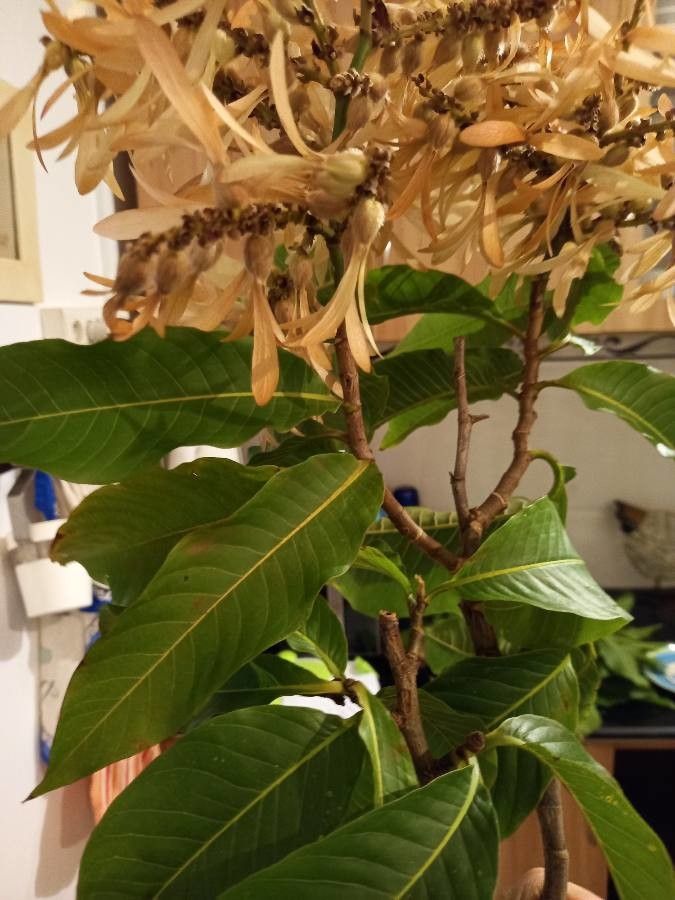
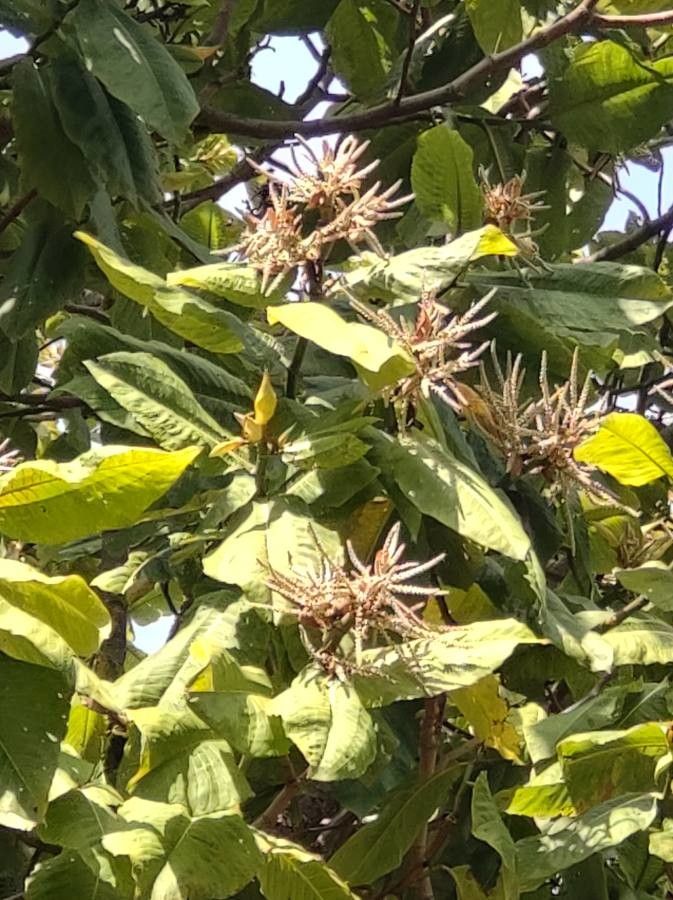
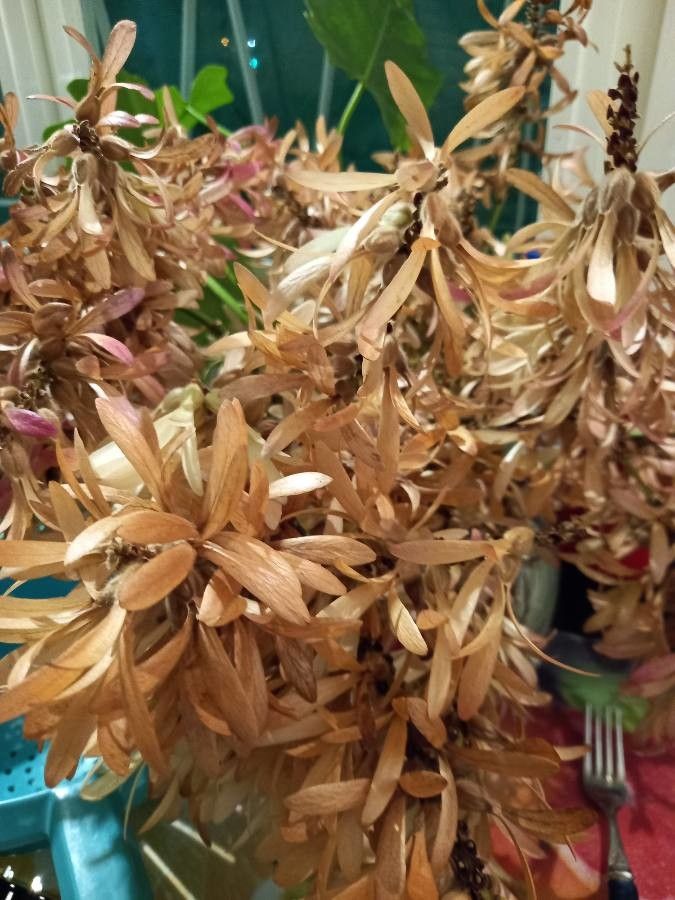
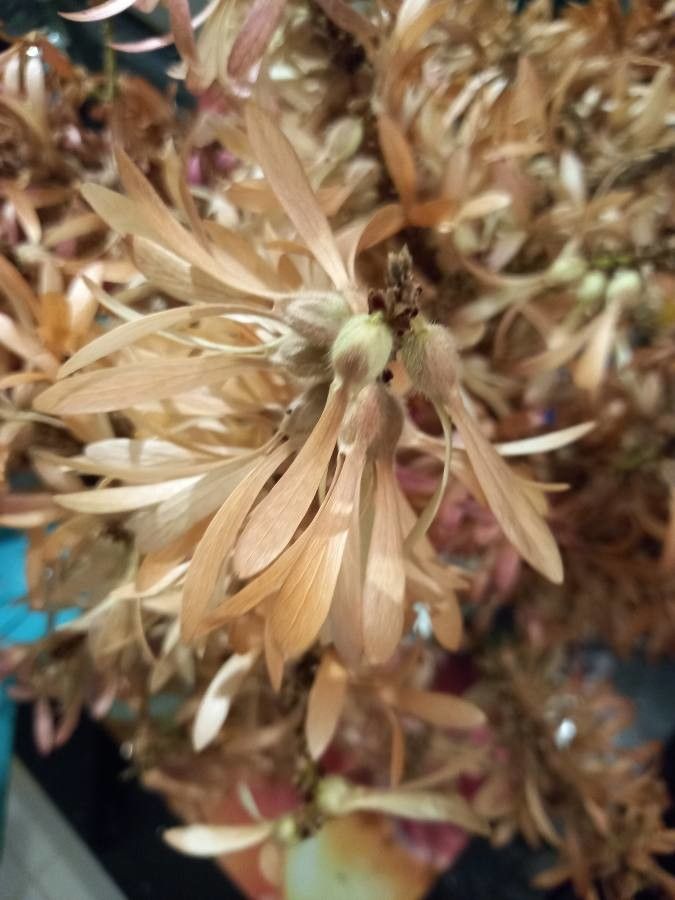
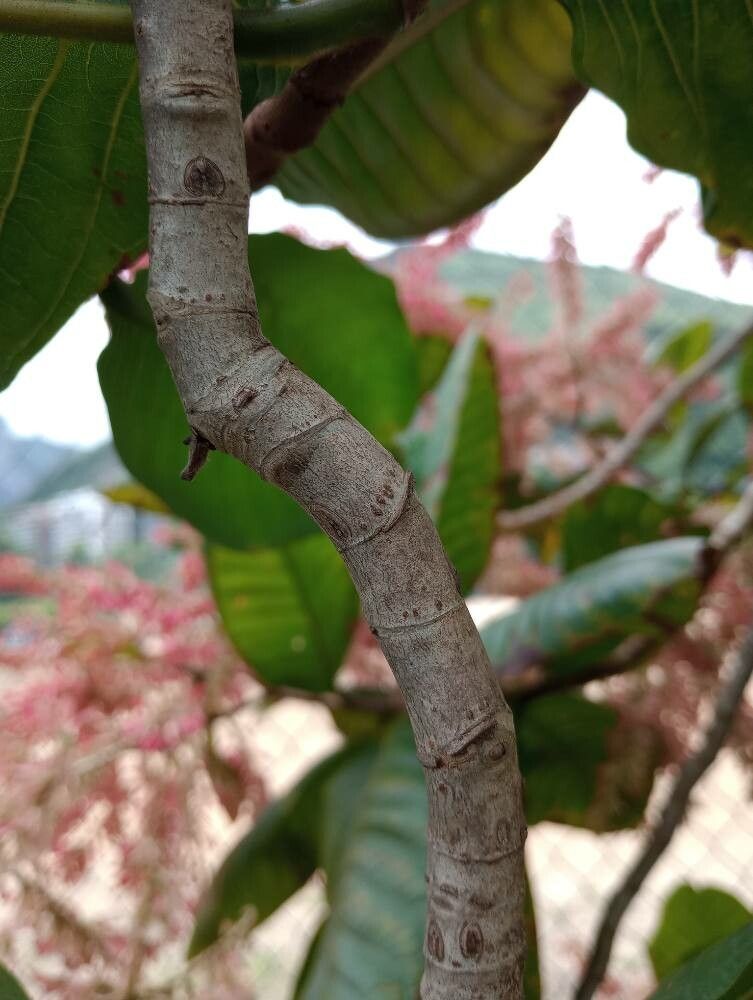
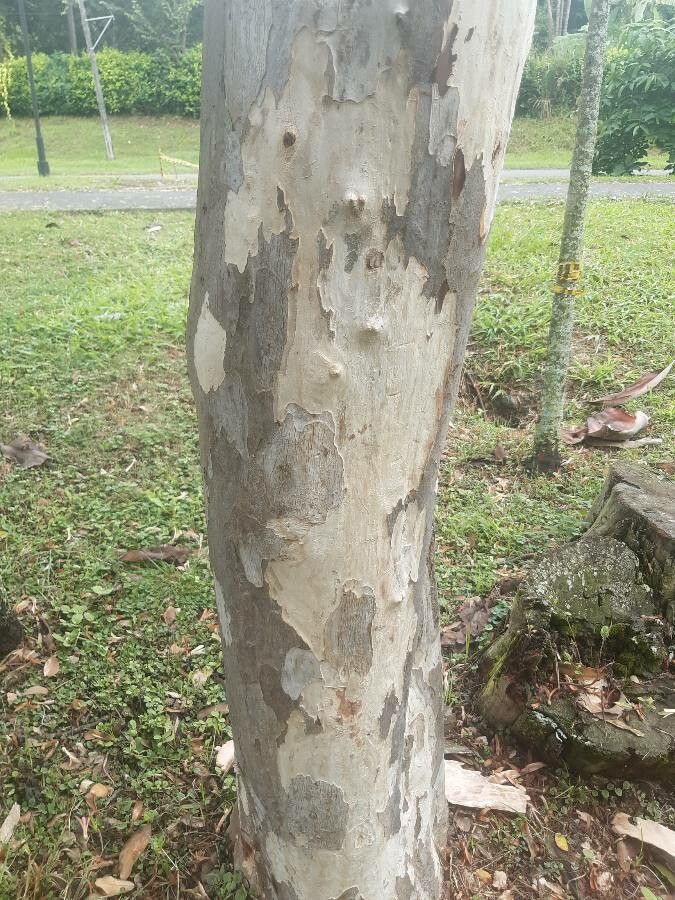
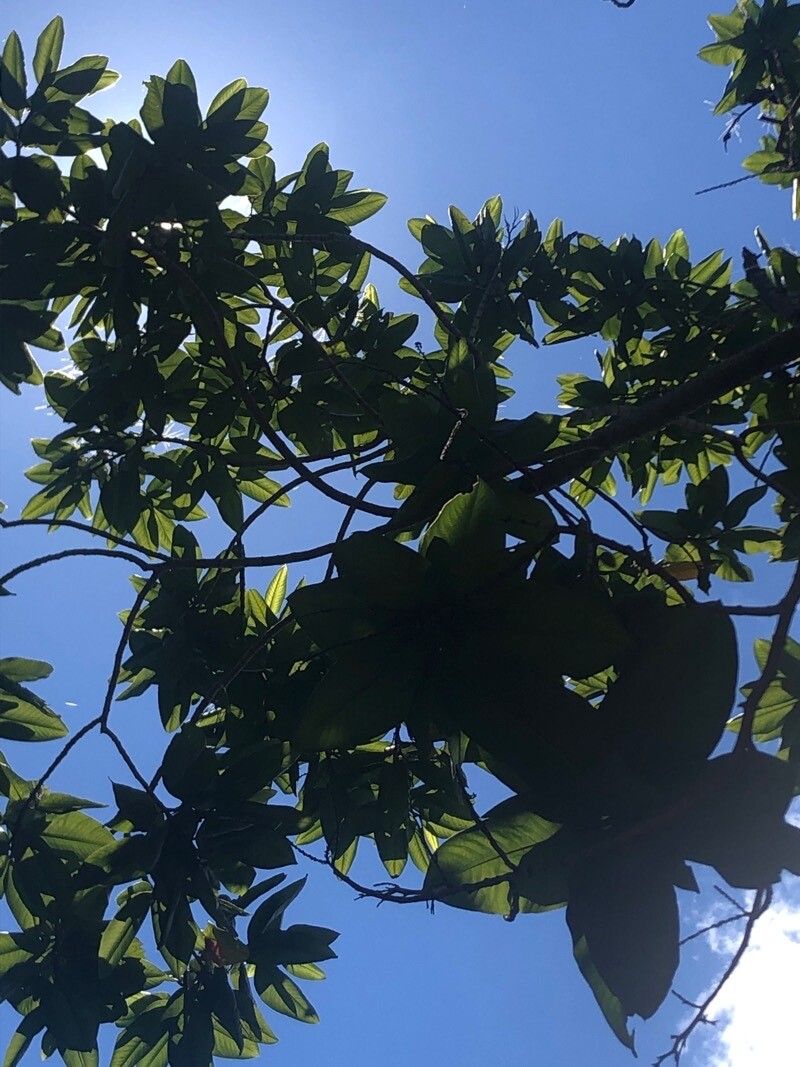
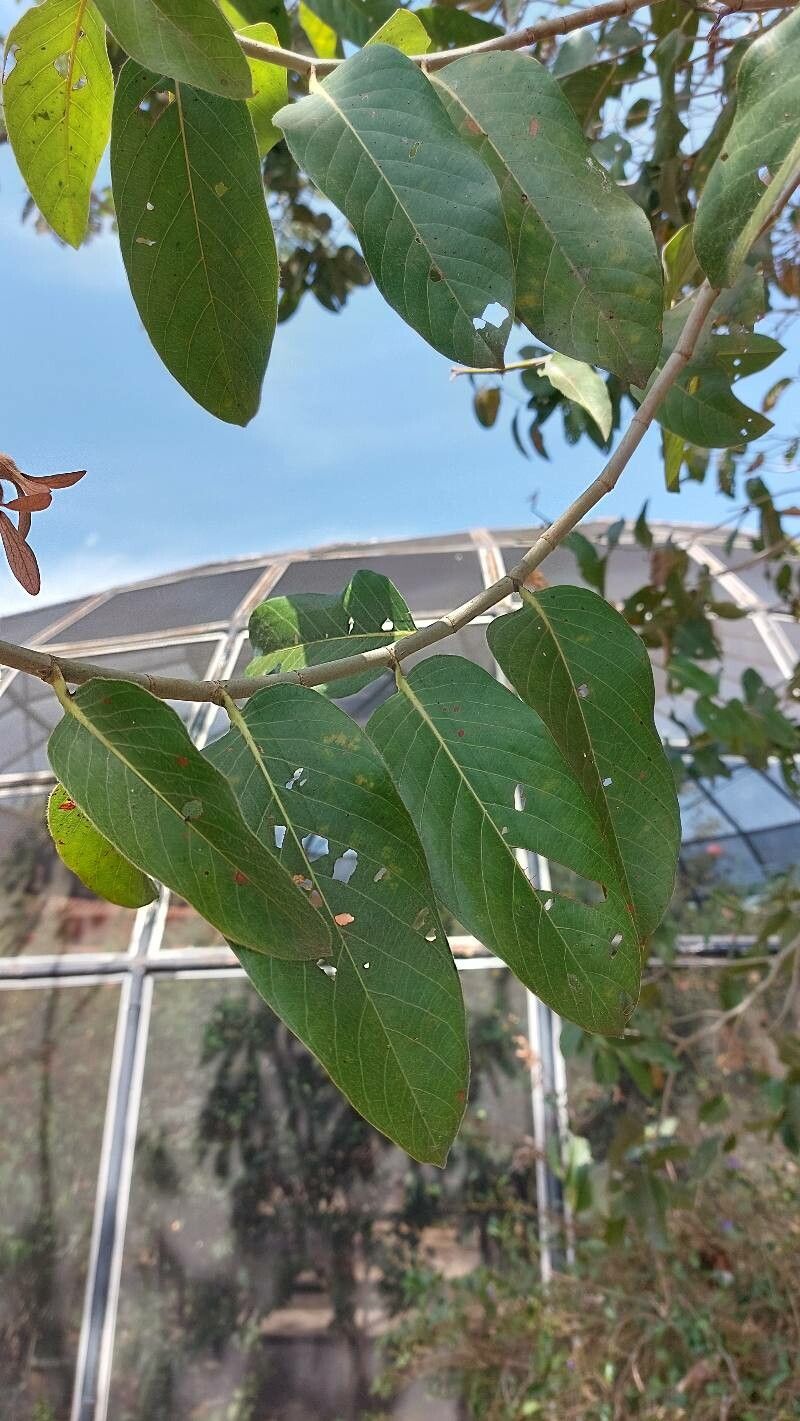
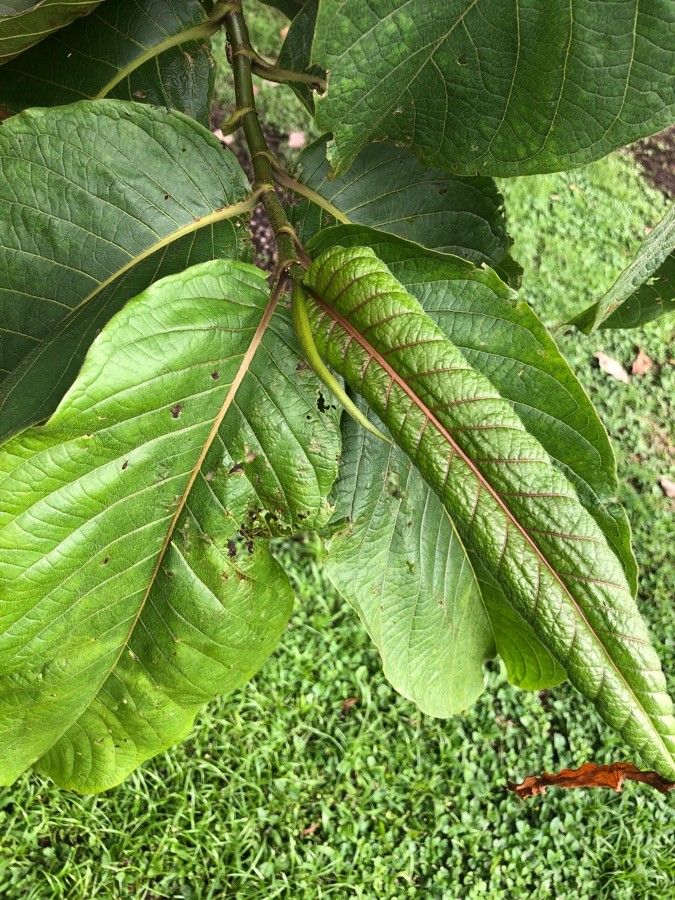
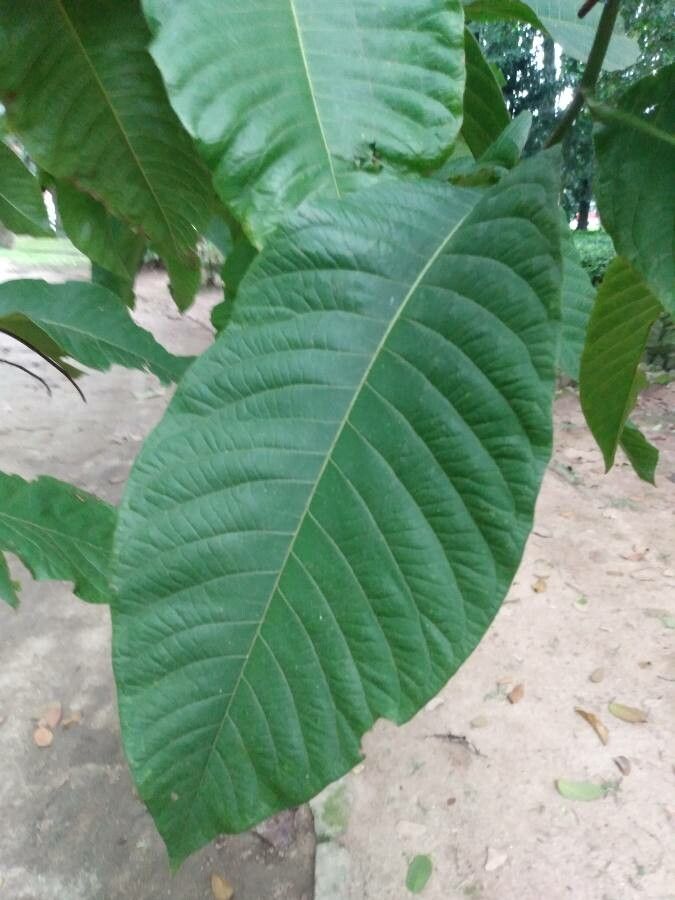
Triplaris americana is a species of flowering plant in the knotweed family known by many common names, including ant tree or pau-formiga ("ant tree"), guacamayo, guayabo zancón, hormiguero, palo de Santa María, tachí, vara santa, pau-de-novato, formigueiro, taxizeiro, and devil tree. It is native to Central and South America, occurring from Panama to Brazil. It is also cultivated as an ornamental for its showy pink flowers.The ant tree grows up to 30 meters in height, with a trunk up to 30 centimeters in diameter and ochrea up to 12 centimeters in length. Its smooth bark is a mottled gray color. The leaves are oval to oblong and measure up to 40 centimeters long by 20 wide, with undersides that are sometimes woolly with brown fibers. The male flowers are around 2 millimeters long, while the female flowers are up to 5 centimeters long. This tree is dioecious, and has a skewed sex ratio with many more female plants than male.This tree grows in riparian habitat types, and is a colonizer of disturbed habitat. It has been introduced to areas outside its native range, including Hawaii and southern Africa.This species of tree is a myrmecophyte and it has a mutualistic relationship with ants, including Pseudomyrmex triplarinus. This kind of ant lives within the tree, feeding on substances produced by it and defending it against invaders. This tree is known as a "novice tree" (pau-de-novato) because only one unfamiliar with the tree would touch it, soon discovering that the ants are aggressive and venomous.This tree is considered a noxious weed in southern Africa. The fruits are dispersed on the wind and the seedlings easily take hold and become invasive, growing in the local habitat and displacing native plants.
Ant Tree is resistant to disease and is generally not susceptible to illnesses. In terms of care, this plant is fairly low-maintenance. When grown outdoors, it requires minimal watering, and larger plants typically do not need pruning. Smaller plants, however, should be pruned after they have finished blooming. Ant Treet is appropriate for anyone with an outdoor area, such as a garden or deck, and does not demand extensive care experience.
How to keep Triplaris Americana.
Light
Ant Tree comes from open habitats, such as sunny meadows and forest edges, which supply plentiful light. It performs best in Full Sun but will tolerate Partial Sun, adjusting well to a range of sunlight conditions.
Temperature
The Ant Tree comes from tropical areas, where the climate is generally warm and humid. Consequently it is adapted to high temperatures and moisture. It does not tolerate sudden temperature shifts and prefers a steady thermal environment, so indoor temperature fluctuations should be avoided. It typically cannot endure cold conditions and needs warmer temperatures to grow. If the ambient temperature falls too low, growth may stop or the plant may die.
Fertilizer
The ideal time to fertilize an Ant Tree is in early spring, as it comes out of dormancy. This supports overall growth and flower development. Fertilizing improves the foliage, stems, and branches, and encourages large, vibrant, long-lasting flowers. It helps move nutrients from the roots to the flowers and enhances the plant’s health and resistance to disease.
Pruning
Triplaris americana is known for its fast growth and distinctive umbrella-shaped canopy. To keep it healthy and pest-free, effective pruning is essential. This involves removing dead branches, thinning the canopy to increase airflow, and shaping the tree. Pruning should be done in early spring, using sharp, sterile tools to prevent injury and disease.
Botanical profile.
- Plant Type
- Tree
- Life Cycle
- Perennial
- Genus
- Triplaris
- Family
- Polygonaceae
- Hardiness Zone
- 10-12
- Mature Height
- 14.94 m to 24.99 m
- Mature Spread
- 7.92 m to 11.89 m
- Leaf Color
- Forest Green, Dark Green
- Leaf Type
- Deciduous
- Flower Color
- Red
- Flower Size
- 0.25 cm to 0.51 cm
- Bloom Time
- Mid spring, Late spring, Early summer
- Planting Time
- Spring, Summer
- Harvest Time
- Mid summer, Late summer, Early fall
- Native Area
- Colombia, Mexico, Bolivia, Venezuela, Peru, Guyana, Brazil, Ecuador, Suriname, Panama
Other names.