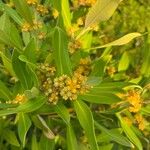
Tristaniopsis laurina
Kanuka · Water-gum · Kanooka
Description
Source: leafsnapTristaniopsis laurina, commonly known as the Water Gum or Kanooka, is a medium-sized evergreen tree native to Australia. Belonging to the Myrtaceae family, it can grow up to 20 meters tall. The tree features a straight trunk with smooth bark that comes in shades of gray or brown. The leaves of Tristaniopsis laurina are glossy, dark green, and oval-shaped with pointed tips. They are alternately arranged along the branches. The small, yellowish-green flowers appear from late spring through summer. Tristaniopsis laurina prefers moist soil conditions but can withstand periods of drought once established. It thrives in full sun or partial shade and is often used as an ornamental plant in landscaping due to its attractive foliage. The Water Gum has several practical uses, including timber production for furniture making and construction purposes such as flooring or decking, thanks to its durability against decay caused by moisture exposure. In summary, Tristaniopsis laurina is a versatile plant that offers both aesthetic appeal and practicality. Its attractive foliage makes it an excellent choice for gardeners seeking beauty, while its durable timber serves functional purposes.
Care Guide
💧 Water Every 7 days
The water gum, a plant native to temperate regions of Australia, is known for its drought tolerance. It typically needs watering every 2-3 weeks. When planted outdoors near waterways, it thrives in moist soil and benefits from increased humidity during its active growth season.
☀️ Light Full sun
Water gum performs best in sites with full sun but can tolerate less bright conditions. Sunlight is vital for its healthy development and supports its various growth stages. Its native environment is generally found in places with high sun exposure. Too little light can cause stunted growth, while too much can scorch the leaves.
What are the sunlight requirements for Water Gum?
Water Gum requires full sun, meaning it needs more than 6 hours of sunlight daily, but it can also tolerate partial sun, approximately 3-6 hours of sunlight. Observing how sunlight moves through your garden helps in choosing locations that offer the right balance of light and shade, ensuring the plants thrive. The overall health and growth of Water Gum are significantly influenced by sunlight, as it is native to areas with substantial sun exposure. Inadequate sunlight may cause stunted growth, whereas too much sunlight can lead to leaf burn.
How does artificial lighting support Water Gum's growth?
Artificial lighting is crucial for the optimal growth of Water Gum, especially when natural sunlight is insufficient, like in winter or less sunny spaces. It promotes faster, healthier growth, with LED lights being a popular choice due to their customization to specific plant needs. Full sun plants require 30-50W/sq ft of artificial light, partial sun plants need 20-30W/sq ft, and full shade plants need 10-20W/sq ft. The artificial light should be placed 12-36 inches above the plant and kept on for 8-12 hours per day to mimic natural daylight conditions.
What are the symptoms of inappropriate light conditions in Water Gum?
Symptoms of inadequate light in Water Gum include small, new leaves, leggy or sparse growth, faster leaf drop, slower or no new growth, and lighter-colored new leaves indicating a shortage of chlorophyll and essential nutrients. Excessive sunlight can cause chlorosis, where leaves turn yellow, sunscald marked by pale or necrotic patches, leaf curling as a defense against too much light, wilting from excessive water loss, and leaf scorching seen as brown, dry patches on leaves.
What solutions can mitigate light-related issues in Water Gum?
To mitigate light-related issues in Water Gum, gradually move plants to sunnier locations to receive at least 6 hours of sunlight daily. For indoor plants, use a south-facing window or artificial lighting, keeping lights on for at least 8 hours. Outdoors, ensure plants are moved gradually to avoid sunburn. Removing obstructions like pruning branches can increase sunlight exposure. If necessary, transplant smaller plants during their dormant period to a location with ample sunlight and good drainage. Note that parts of the plant affected by poor light may not recover, but new growth should be healthy after adjusting light exposure.
🌡️ Temperature 20–35°C
Water gum is native to areas where temperatures are usually between 68 and 95 °F (20 to 35 ℃). It favors these warmer climates and may require temperature adjustments as the seasons change.
What climates do water gums thrive in?
Water gums are native to environments with temperatures generally ranging from 68 to 95 °F (20 to 35 °C). They prefer warmer climates and may require seasonal adjustments to maintain the ideal temperature. Water gums possess some degree of cold tolerance and typically do not need extra protection when temperatures stay above 0°C. However, when temperatures are expected to fall below freezing, it is important to implement temporary cold protection measures, such as wrapping the plant in plastic film, fabric, or other suitable materials, which should be removed once temperatures rise again.
How to care for water gum in low temperatures?
Water gum has a moderate tolerance to low temperatures but thrives best when the temperature remains above 20°C. During the winter, it's important to ensure the temperature doesn't fall below 0°C. If temperatures drop below -5°C, the leaves might begin to droop; they can recover in mild cases, but severe temperature drops can cause leaves to wilt and eventually drop off. To protect the water gum from cold damage, trim off any frost-damaged parts. Before cold weather hits again, wrap the plant with non-woven fabric or cloth and construct a wind barrier to shield it from cold winds.
How to manage water gum in high temperatures?
In summer, it's crucial to keep water gum below 35°C to prevent stress. Temperatures above 38°C can lead to lighter leaf color, dryer and withered leaf tips, curling leaves, and increased susceptibility to sunburn. To care for a water gum during high temperatures, trim away the sunburned and dried-up parts. Move the plant to a shaded area to protect it from the midday and afternoon sun, or use a shade cloth. Additionally, water the plant in the morning and evening to maintain soil moisture.
💨 Humidity
🪴 Soil 5-7
🌱 Fertilizer
Timing is essential for fertilizing Water gum. Apply fertilizer in early spring and continue every month until early summer. The fertilizer encourages attractive blooms and supplies energy during both dormant and active growth phases.
🪴 Pot & Repot
✂️ Pruning
Water gum benefits greatly from winter pruning, which involves removing dead wood and thinning branches to improve air circulation. Pruning during the plant's dormant period helps to minimize stress, encourages vigorous growth in the spring, and maintains overall health and appearance. By preventing overgrowth, this practice ensures the plant remains well-maintained and attractive.
🌿 Propagating
🐛 Diseases & pets
☠️ Toxicity
Characteristics
- Plant Type
- Tree
- Life Cycle
- Perennial
- Genus
- Tristaniopsis
- Family
- Myrtaceae
- Hardiness Zone
- 9
- Mature Height
- 14.94 m
- Mature Spread
- 7.92 m
- Leaf Color
- Green
- Leaf Type
- Evergreen
- Flower Color
- Yellow
- Flower Size
- 1.02 cm to 1.52 cm
- Bloom Time
- Summer
- Planting Time
- Spring, Summer, Autumn
- Harvest Time
- Late summer, Early fall, Mid fall