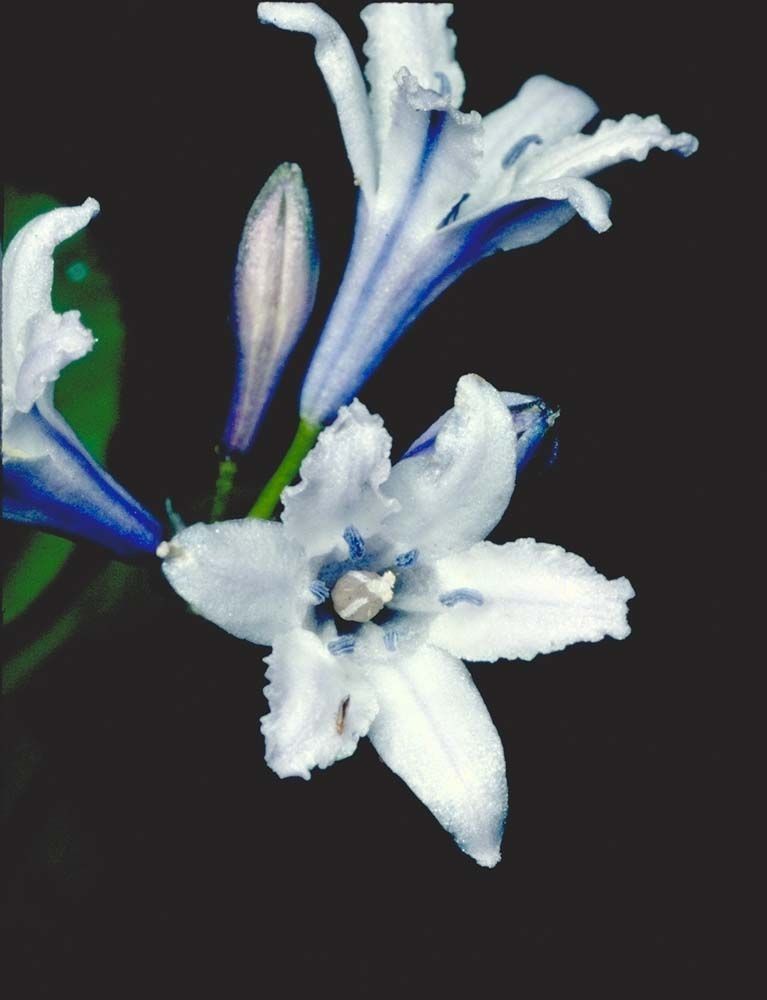
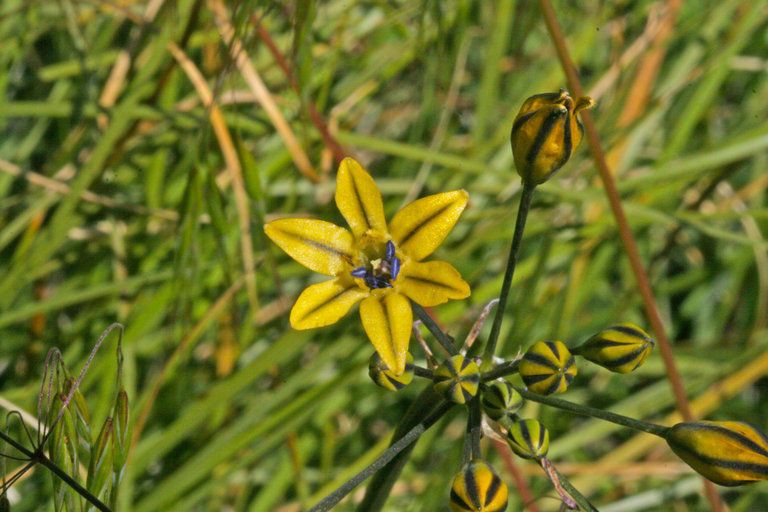
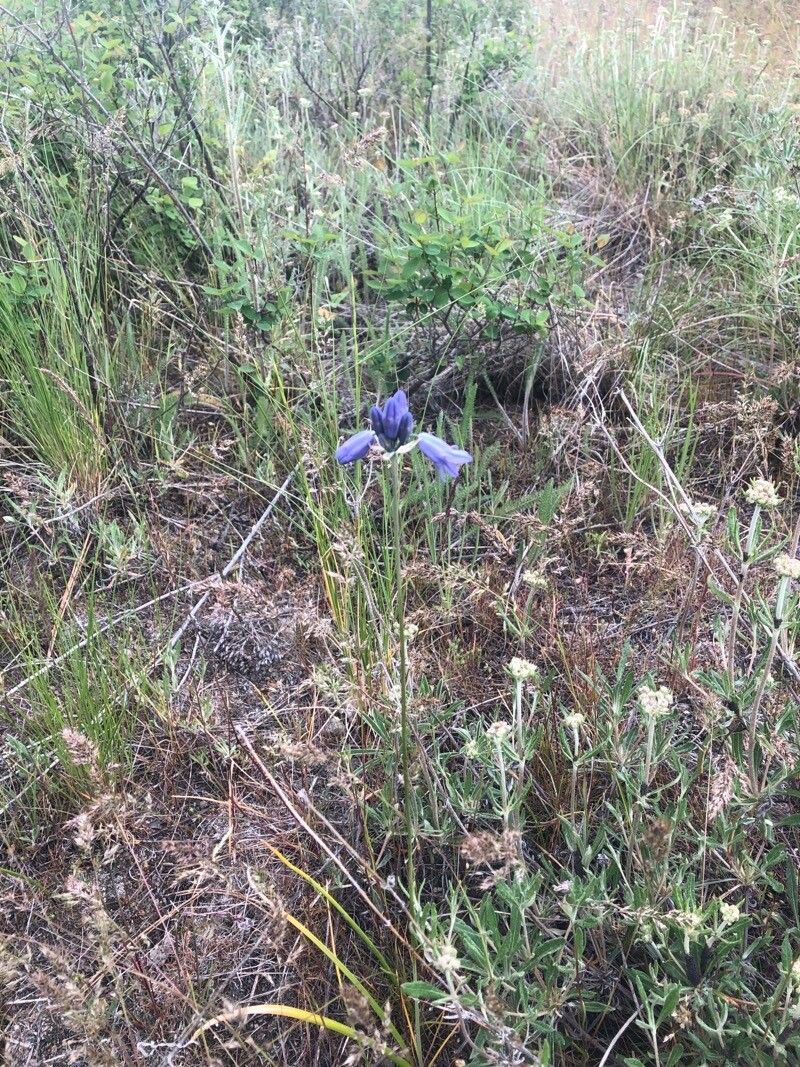
Triteleia bridgesii, commonly known as Ithuriel's spear, is a perennial herbaceous plant in the Asparagaceae family. Native to western North America, it thrives in various habitats, including meadows, grasslands, and open woodlands.
This plant reaches up to 60 cm in height and features narrow leaves that can grow up to 30 cm long. Its flowers, which bloom from late spring through early summer, are arranged in a loose cluster atop the stem. Each flower has six blue-violet petals with white centers.
Triteleia bridgesii is an easy-to-grow plant that prefers well-drained soil and thrives in full sun or partial shade. It can be propagated by dividing bulbs or sowing seeds.
Native American tribes have used Triteleia bridgesii medicinally to treat ailments such as headaches, fever, and stomach problems.
Overall, Triteleia bridgesii is a beautiful ornamental plant with stunning blue-violet flowers that can enhance any garden or landscape. It also holds cultural significance for indigenous communities in western North America.
Bridges' brodiaea is fairly disease-resistant and typically not prone to illnesses. That said, it can be affected by pests and diseases present in its environment. These problems are usually minor. As for care, this plant needs moderate maintenance. Regular pruning is necessary to keep a tidy appearance and support healthy growth. Fertilizing can also encourage flowering. Bridges' brodiaea is suitable for anyone with outdoor space, such as a garden or patio, and does not demand much care experience. It may require more attention when cultivated indoors.
How to keep Triteleia Bridgesii.
Light
Bridges' brodiaea is a sun-loving perennial herbaceous plant native to open habitats, commonly thriving in meadows and grasslands. It prefers full sun but can also tolerate partial sun.
Water
Bridges' brodiaea thrives in well-drained soils with moderate moisture levels and can adapt to periods of dryness. To maintain optimal soil conditions, it should be watered weekly. Typically grown outdoors, bridges' brodiaea benefits from natural rainfall during its growing season, which helps support its water cycle and overall health.
Temperature
Bridges' brodiaea can tolerate a broad range of temperatures, but its range may still be constrained by various combinations of moisture and heat. It performs best in warm summer climates with sufficient rainfall or regular watering. Extended stretches of cloudy, rainy weather or prolonged high temperatures can raise the risk of Bridges' brodiaea dying. In winter, shielding the plant from the cold can enhance its chances of survival.
Fertilizer
For Bridges' brodiaea, the primary time to fertilize is early spring, when the flowers are forming. The correct fertilizer promotes better blooms and helps Bridges' brodiaea produce attractive flowers. Fertilizing in early spring guarantees strong flowers during the season and supplies energy for dormant growth phases.
Pruning
Bridges' brodiaea, known for its star-shaped flowers, needs very little pruning. The best time to prune is right after it finishes flowering, from early to late spring. You should remove any spent blooms and damaged leaves to encourage growth and improve bulb development. Use clean, sharp tools for pruning to help maintain the plant's shape and promote strong blooms in future seasons.
Botanical profile.
- Plant Type
- Herb
- Life Cycle
- Perennial
- Genus
- Triteleia
- Family
- Asparagaceae
- Hardiness Zone
- 6-9
- Mature Height
- 30 cm to 61 cm
- Mature Spread
- 15 cm to 30 cm
- Leaf Color
- Green
- Leaf Type
- Deciduous
- Flower Color
- White
- Flower Size
- 2.03 cm to 3.05 cm
- Bloom Time
- Late spring, Early summer
- Planting Time
- Spring
- Harvest Time
- Mid summer, Late summer