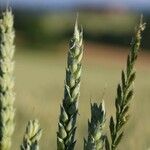
Triticum aestivum
گندم · Σίτος ο μαλακός · Wheat · Common Wheat · Bread Wheat
Description
Source: leafsnapCommon wheat (Triticum aestivum), also known as bread wheat, is a cultivated wheat species. About 95% of wheat produced worldwide is common wheat; it is the most widely grown of all crops and the cereal with the highest monetary yield.
🌳 One might be surprised to find that the common crop wheat has some notable uses. Although it is best known as a staple for feeding people around the world, its by-product, straw, is used as a building material for environmentally friendly straw-bale houses. Additionally, the gluten proteins in wheat enable the production of edible films and coatings for agricultural applications, illustrating innovation in sustainable practices.
🎭 Fecundity, Finances
Care Guide
💧 Water
Wheat, which originates from moderate climates, thrives in evenly moist soil and benefits from weekly watering to support its growth. Although it becomes drought-resistant once established, wheat flourishes best with consistent moisture. Typically grown outdoors, wheat's growth cycles are synchronized with seasonal rainfall, allowing it to adapt to a variety of climates.
What should I do if I give my wheat too much or too little water?
To ensure optimal growth, proper watering is essential for this beautiful ornamental grass. If it is planted in the ground, watering issues can be addressed and resolved. However, in a container, excessive or insufficient water can quickly lead to the demise of the grass. Insufficient water can cause growth stagnation, while overwatering can result in yellow leaves with brown tips. Underwatering may cause drooping leaves, weak seed head production, and browning. If you suspect improper watering, the first step is to determine if it is receiving too much or too little water. If it is receiving too much water, cease watering immediately. It may take weeks for heavy soils to dry out, so patience is necessary. Once new growth is observed, test the soil for moisture and make a decision on whether it needs more water or not. The solution for insufficient watering is simple: provide a deep watering and observe if the grass perks up. It is important to emphasize that long, deep watering is always preferable to frequent shallow waterings. This is because it encourages the growth of deep roots, making the grass more resilient to drought and less susceptible to damage from watering.
How frequently should I give water to my Wheat plant?
The watering needs of Wheat vary depending on where it is planted. Generally, watering this grass every week is recommended. In hot climates, watering once or twice a week during the summer may be necessary. In moderate climates, watering once every seven days or more may be enough. Grass in containers usually need more frequent watering than grasses in the ground. However, the location of the grass also matters, as shaded grasses require less frequent watering than in-ground grasses. Wheat should only be watered when the soil is dry. To determine if the soil is dry, you can press your finger a couple of inches into the soil or weigh the grass with a portable scale. When the roots lack sufficient water, the blades may appear folded and thinner than usual. Despite its drought tolerance, regular, deep waterings will result in a beautiful color. In the wild, Wheat grows in open scrubland, where it experiences extreme heat, bright sun, and intermittent rain. Although it is drought resistant, it still needs care and attention. When first planted, Wheat requires more frequent watering until it has established deep roots. For Wheat in pots, the soil tends to dry out quickly, especially if exposed to hot, direct sun. Therefore, it is recommended to test the soil every 3 to 4 days and water only when it feels dry. Wheat in the ground generally requires less watering, but this depends on the type of soil. Clay soil holds water for a long time and may feel dry on the surface while still retaining moisture below ground. On the other hand, sandy soils that drain quickly will need to be watered more often.
What should I watch out for when I water my Wheat during different seasons, climates, or while it's growing?
To determine if you are watering your grass enough, observe the rate of growth. Wheat typically doubles in size during the hottest months. If the weather is hot but the grass isn't growing well, adjust your watering schedule. In winter, you may only need to water once a month, but check the soil for moisture. During the warmest months, grass requires more water, but during winter and cooler months, the need for water decreases significantly. Remember to let the soil dry completely before watering Wheat.
☀️ Light Full sun
Wheat is a type of plant that flourishes when regularly exposed to sunlight. It can still achieve the best growth even with periods of less intense sunlight. The plant was originally found in areas with plenty of sun, encouraging strong development. Nevertheless, light that is too much or too little can potentially damage the plant's general health and yield.
What are the sunlight requirements for wheat (Triticum aestivum)?
Wheat requires full sunlight for optimal growth, thriving with continuous exposure to the sun's rays. It can also manage with periods of less intense sun, but ensuring it gets enough light is crucial for its health and productivity. Full sun is defined as above 6 hours of sunlight, while partial sun refers to about 3-6 hours of sunlight per day. It's important to observe how sunlight moves through your garden and select spots that offer the right balance of light and shade for your plants.
How does artificial lighting support wheat growth indoors?
Indoor wheat plants benefit significantly from adequate lighting, especially when natural sunlight is limited. Artificial lights, such as LEDs that provide specific wavelengths, can mimic natural sunlight conditions. For full sun plants, 30-50W/sq ft of light is recommended, while partial sun plants need 20-30W/sq ft, and full shade plants require 10-20W/sq ft. Position the light source 12-36 inches above the plant and ensure it receives 8-12 hours of light per day to promote healthy growth.
What are the symptoms of inadequate light for indoor wheat?
Wheat grown indoors with insufficient light may show signs like smaller new leaves compared to older ones, leggy or sparse growth, faster leaf drop, slower or no new growth, and lighter-colored new leaves. These symptoms indicate that the plant is in survival mode due to poor lighting, affecting its health and hindering its ability to photosynthesize and grow optimally.
What are the common issues caused by too much sunlight on wheat?
Excessive sunlight can cause several issues for wheat, including chlorosis, where leaves lose their green color and turn yellow; sunscald, which results in pale or necrotic areas on the plant tissue; leaf curling, as a defense mechanism to reduce water loss; wilting, due to increased water loss through transpiration; and leaf scorching, characterized by brown, dry edges on leaves. These problems highlight the importance of managing sunlight exposure to maintain plant health.
How can I address sunlight-related growth issues in wheat?
To address sunlight-related issues in wheat, gradually acclimate your plants to the desired light conditions. For indoor plants, move them weekly towards sunnier spots until they receive at least 6 hours of direct sunlight, use south-facing windows, keep curtains open during the day, or utilize artificial lighting for at least 8 hours daily. Outdoors, avoid sudden light intensity changes to prevent sunburn. Minimizing obstructions, such as pruning trees, can also improve sunlight access. For smaller plants, consider transplanting during their dormant period to a location with better sunlight and drainage.
🌡️ Temperature 0–35°C
Wheat originates from temperate areas, needing a temperature of 68 to 95 °F (20 to 35 ℃) for the best growth. If temperatures deviate from this range, it may necessitate adjustments to the growing season.
What is the optimal growth temperature for wheat?
Wheat, with its botanic name Triticum aestivum, is native to temperate regions and thrives optimally when the temperature is between 68 to 95°F (20 to 35°C). To ensure healthy growth, seasonal adjustments might be needed if temperatures deviate from this ideal range. Since wheat exhibits strong cold resistance, special frost protection measures are generally not required during winter. Nonetheless, in extreme conditions where winter temperatures are anticipated to plummet below -40°C, providing cold protection by covering the plant with soil or straw is advisable. Also, watering the plant generously before the first autumn freeze is recommended to keep the soil moist, helping to prevent drought and water scarcity during the colder months.
What should be done if wheat experiences very low temperatures?
Wheat is notably cold-tolerant, flourishing best when the temperature remains above 20°C and ideally should be kept above 0°C during winter. However, in instances where temperatures fall below -40°C, wheat might not exhibit noticeable changes during the winter, but a decrease in sprouting or a complete failure to sprout might occur in spring. In such cases, the recommended course of action is to remove any parts of the wheat plant that have failed to sprout in spring.
How should wheat be cared for during high temperatures?
During the summer, it's crucial to maintain wheat's temperature below 35°C. Exceeding 41°C can lead to several detrimental effects such as leaves becoming lighter in color, curling, susceptibility to sunburn, and, in severe cases, the plant might wilt and dry out completely. To mitigate these issues, trim away the sunburned and dried-up parts of the plant. Relocating the plant to a spot that offers shade during the midday and afternoon sun, or using a shade cloth, can prevent further damage. Additionally, watering the plant in the morning and evening helps maintain soil moisture, which is vital for the plant's survival during high temperatures.
💨 Humidity normal (40-60%)
This plant will thrive in moderate humidity, which is probably the level in your home. However, misting it a few times a week can be very beneficial. Make sure the room has good ventilation.
🪴 Soil 6-7
🌱 Fertilizer Every 30 days
Three fertilizer applications are important for wheat to grow at its best: before planting, a month subsequent to the appearance of the seedling, and a last application after 1 to 1.5 months from the second treatment. Certain types of wheat can benefit from extra fertilization during planting to enhance quick growth.
Why is it necessary to put fertilizer on my wheat?
Some plants can get all the nutrients they need on their own without fertilizers, but wheat benefits from fertilization to increase its harvest yield. Like other plants, wheat uses nutrients to support its growth and internal processes that lead to edible seeds or grains. Nutrients are crucial for plants to grow, bloom, perform photosynthesis, and ultimately produce seeds or fruits. Without enough nutrients, wheat may have fewer branches on its stem, smaller seeds, and lower protein content in the final product.
When should I fertilize my Wheat for the best results?
Spring is generally the best time to fertilize wheat. Most types of wheat respond well to a fertilization schedule consisting of three major treatments during the growing season. The first treatment should be applied before planting the seeds, the second about a month after the seedlings emerge, and the final treatment about 1 to 1.5 months after the second one. Additionally, certain types of wheat benefit from an extra fertilizer boost at the time of planting. Nutrients are crucial for all stages of the growth cycle. Since some types of wheat can reach harvest in as little as a month, it is important to provide them with enough nutrients to grow to their full size as quickly as possible.
When is it not a good idea to fertilize my Wheat?
To keep Wheat healthy and strong, regular feeding is important. However, there are risks associated with over-fertilizing or fertilizing at the wrong time. Avoid fertilizing when the soil is excessively dry or during extremely hot or cold weather. Take care to prevent fertilizers from coming into direct contact with seeds as it can hinder their germination. Additionally, check if your fertilizer is safe for direct contact with the plant and determine if it may harm the leaves and fruits. Some fertilizers are only suitable for use in the soil near the plants and should not be applied over the tops of actively growing plants.
What kind of fertilizer should I use for my Wheat?
Soil tests are crucial in determining the nutrients present or lacking in the soil, especially for commercial or large-scale operations where the outcome of a crop has significant financial consequences. Depending on the soil type in your area and the type of Wheat you plan to grow, different nutrients may be required. Fertilizers should provide sufficient phosphorus, along with smaller amounts of nitrogen and potassium. Additionally, secondary nutrients and micronutrients like sulfur, copper, manganese, and zinc are vital for a successful plant growth.
How can I help my Wheat grow better?
The method of applying fertilizer will depend on factors such as the scale of the operation, the tools available, and the type of fertilizer being used. Fertilizers generally come in two formats: liquid or dry. Liquid fertilizers can be chemical or natural (like fish fertilizer or compost tea), while dry fertilizers include compost, manure, and powdered or granular fertilizers. Some dry fertilizers need to be diluted in water before use. Once you have determined the type and format of fertilizer to use, the next important step is to determine how much to apply for your wheat crop. Detailed formulas are available to help you calculate the correct application to achieve a high yield without over-fertilizing. For larger operations, tractor-attached applicators can be used to spread dry fertilizer or evenly spray liquid fertilizer. Home gardeners can apply fertilizer manually or with commonly available garden tools. It is important to water thoroughly after applying any dry fertilizer to ensure it soaks into the soil.
🪴 Pot & Repot
✂️ Pruning
Wheatgrass requires little maintenance, and the tray of wheatgrass will be ready to harvest before you know it. There are no blossoms or pollination issues to worry about, and you won't have to bother about pruning or pest and disease control.
🌿 Propagating
🐛 Diseases & pets
☠️ Toxicity
Characteristics
- Plant Type
- Grass
- Life Cycle
- Annual
- Genus
- Triticum
- Family
- Poaceae
- Hardiness Zone
- 2-10
- Mature Height
- 1.22 m
- Mature Spread
- 8 cm to 15 cm
- Leaf Color
- Green
- Leaf Type
- Deciduous
- Flower Color
- Cream
- Flower Size
- 1.02 cm to 1.52 cm
- Bloom Time
- Late spring, Early summer
- Planting Time
- Spring, Summer
- Harvest Time
- Mid summer
- Native Area
- India, Turkey, Israel, Iran, Pakistan