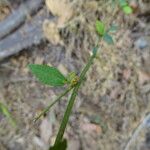
Triumfetta rhomboidea
Chinese-bur · Chineseshrub · Paroquet-bur · Chinese burr · Diamond burbark
Description
Source: leafsnapTriumfetta rhomboidea, commonly known as diamond burbark or Chinese bur, is a shrub that is extensively naturalised in tropical regions. It is thought that to have come to Australia from China. Its bark—sometimes called burbark--makes a kind of jute. The taxon was first formally described in 1760 by botanist Nikolaus von Jacquin.
Care Guide
💧 Water
Diamond burbark thrives in environments with high humidity and regular rainfall, and it also shows a moderate tolerance to drought. To keep the plant healthy, water it every 2-3 weeks, ensuring the soil never completely dries out. It is best to cultivate diamond burbark outdoors, where mulching can help retain moisture during hot months.
How should I water my Diamond burbark tree?
To ensure excellent root development, it is recommended to place a garden hose at the base of the plant. Avoid spraying the leaves directly, especially if the plant is outdoors and exposed to direct sunlight. Using bubblers or soaker hoses is another option for moistening the roots. When adding or removing plants, soaker hoses that cover the entire garden or bed can help push the roots deeper. After watering, ensure excess water is drained and wait for the soil to dry before watering again. Watering at ground level is important to prevent diseases. Additionally, on a sunny day, it may be beneficial to spray the entire bush with water. Whether the plant is potted or in the ground, deep watering is preferred over light sprinkling for Diamond burbark.
What should I do if I give too much or too little water to Diamond Burbark?
If your Diamond burbark is overwatered, you may notice yellow, wilted leaves that eventually drop off. The plant may appear dull and unhealthy, with mushy stems. In this case, it's important to adjust your watering schedule. Wilting can also be a sign of under watering, which can cause the leaves to turn crispy and dry. When the soil is dry and simply watering is not enough, give the plant a thorough watering. However, even with enough water, the Diamond burbark may continue to have dry, yellow leaves due to damage to the root system. Once the plant returns to normal, the yellowing leaves should stop. When caring for your Diamond burbark indoors, always check the moisture levels and avoid overwatering. Look out for black spots, and if present, allow the soil to dry by withholding water for a few days. Overwatering can lead to root rot, so if you notice discolored and slimy roots, consider transferring the plant to a different pot. To prevent root rot, avoid excessively soggy soil. When planting your Diamond burbark outdoors, make sure to check the soil with your fingers. If it feels too dry, it might indicate that the plant is underwatered. Adequate watering is necessary to help the plant recover.
How frequently should I water my Diamond burbark tree?
The Diamond burbark prefers deep and infrequent watering, especially when planted in pots. To ensure proper hydration, soak them with a gallon of water each time. Keep in mind that pots have limited water storage and the soil tends to dry out faster. In colder regions, watering is needed every 3 to 5 days. Water the plant early in the morning when the soil is dry, regardless of whether it's indoors or outdoors. You can check the moisture level by examining the soil. If the top 2-3 inches are dry, it's time for a full watering. During hot days, check the soil moisture daily as the heat can quickly dry it out. It's also important to irrigate the soil if you have a garden. In hot climates, watering once a week is sufficient. Only water when about 2 to 3 inches of soil become too dry. Take into account the amount of rainfall and avoid overwatering to prevent root rot. Diamond burbarks typically grow during spring and fall. Applying mulch around 3 to 4 inches deep when they are outdoors helps conserve water. In sandy soil, more frequent watering is necessary because it drains faster. On the other hand, clay soil requires less frequent watering, allowing the plant to dry out for 2-3 days without developing root rot. It may be helpful to mark the watering dates on your calendar and be vigilant for drooping leaves as an indicator of potential delays.
How much water should I give my Diamond burbark?
The Diamond burbark generally requires about a gallon of water on a regular schedule. For potted plants, water them deeply until you see water dripping out of the bottom of the pot. Then, allow the soil to dry before watering again. You can use a water calculator or moisture meter to determine how much water your plant has received in a week. During the flowering period, provide plenty of water, but allow the moisture to evaporate afterwards to prevent root rot. If the Diamond burbark is planted outdoors and receives adequate rainfall, it may not need additional watering. However, when the Diamond burbark is young or newly planted, ensure it receives 1-2 inches of rain per week. As the Diamond burbark grows, it can rely solely on rainfall. Only during extremely hot weather or when there is no rainfall for 2-3 weeks should you consider giving the Diamond burbark a thorough watering during cooler parts of the day to prevent heat damage. Additional watering will be necessary during extended dry spells.
Do I need to change how often I water my Diamond burbark depending on the time of year or the weather?
The Diamond burbark plant prefers to be outdoors and relies on rainfall for watering, although you may need to water more during dry periods. In the spring and fall, keep the soil moist but not soggy, as alternating dry and moist conditions are beneficial for growth. During the summer, hot weather can cause water to evaporate quickly, so additional watering may be necessary if there is a lack of rain. Generally, the Diamond burbark requires less water in the winter when it goes dormant, and a well-draining soil mixture can help with water evaporation. Once the plant begins to leaf out in the spring, you can stop watering as the fall and winter rains will sustain it during dormancy. Good drainage is crucial for this plant, especially when flowering, and it's important to avoid cold and wet roots. Water the plant deeply once or twice a week, ensuring the entire root system is soaked. Shallow sprinkles should be avoided as they can encourage fungal growth and not reach the roots effectively. Even during dormancy, don't let the plants dry out completely in the fall or winter. Avoid overwatering, as the plant does not tolerate sitting in water for long periods and poor soil drainage can be fatal, particularly in winter. Applying mulch can help conserve water and promote healthy blooms.
☀️ Light Full sun
Diamond burbark is found in open habitats, like sunny meadows and forest edges, where light is abundant. It does best in Full Sun but can also tolerate Partial Sun, adapting well to different light conditions.
What are the sunlight requirements for Diamond burbark?
Diamond burbark requires full sun, which means it needs above 6 hours of sunlight daily. It can also tolerate partial sun, defined as about 3-6 hours of sunlight each day. This adaptability makes it suitable for various garden spots, providing a perfect balance of light and shade to ensure the plant's happiness. Originating from sunny meadows and forest edges, Diamond burbark thrives in environments that offer ample light.
How can artificial lighting support Diamond burbark's growth indoors?
When natural sunlight is insufficient, especially in winter or less sunny spaces, artificial lighting can be crucial for Diamond burbark’s growth. Adequate lighting is vital for indoor plants, and artificial lights, such as LED lights, are recommended because they can provide the specific wavelengths needed. For optimal growth, full sun plants require 30-50W/sq ft of artificial light, partial sun plants need 20-30W/sq ft, and full shade plants should have 10-20W/sq ft. The light source should be placed 12-36 inches above the plant to mimic natural sunlight, and most plants need 8-12 hours of light per day.
What symptoms indicate Diamond burbark is receiving suboptimal light?
Symptoms of suboptimal light for Diamond burbark include small and lighter-colored new leaves, leggy or sparse growth, faster leaf drop, and slower or no new growth. These indicate the plant is struggling with the amount of light it's getting. Excessive sunlight exposure can cause symptoms like chlorosis, where leaves lose their green color, sunscald with pale or necrotic areas on the plant tissue, leaf curling, wilting from increased water loss, and leaf scorching with brown, dry edges on leaves.
What are effective solutions for Diamond burbark experiencing light deficiency or excessive sunlight?
For indoor Diamond burbark, gradually increase sunlight exposure to at least 6 hours daily or use artificial light for plants that are large or not easily movable, ensuring at least 8 hours of light daily. Outdoors, move plants gradually to sunnier locations to avoid sunburn, using a south-facing window or professional grow lights. Minimize obstructions by pruning trees or relocating plants to sunnier spots. Transplant smaller plants during their dormant period to locations with better sunlight and drainage. Note that while parts of the plant damaged by light issues may not recover, new growth will be healthy with improved light conditions.
🌡️ Temperature 20–37.8°C
Diamond burbark comes from tropical areas, where the weather is generally warm and humid. Consequently, it is adapted to high temperatures and humidity. It dislikes sudden temperature changes and prefers a steady thermal environment, so avoiding temperature fluctuations indoors is important. It typically cannot tolerate cold and needs warmer conditions to grow. If the ambient temperature falls too low, the plant may stop growing or even die.
💨 Humidity
🪴 Soil 6-7
🌱 Fertilizer
Fertilizing is essential for caring for Diamond burbark. Regular feeding during the growing season supplies energy for its showy leaves and supports overall growth. Neglecting fertilization can lead to unhealthy foliage, reduced ornamental value, and stunted or weak growth that is more prone to breakage.
🪴 Pot & Repot
✂️ Pruning
Diamond Burbark is a hardy shrub characterized by its diamond-shaped leaves and yellow flowers. To maintain its health and promote blooming, prune the shrub in early spring. Begin by removing any dead branches and thinning out dense areas to enhance air circulation, which reduces the risk of disease. Make sure to use clean, sharp tools to facilitate healthy regrowth.
🌿 Propagating
🐛 Diseases & pets
☠️ Toxicity
Characteristics
- Plant Type
- Shrub
- Life Cycle
- Perennial
- Genus
- Triumfetta
- Family
- Malvaceae
- Hardiness Zone
- 9-11
- Mature Height
- 1.52 m
- Mature Spread
- 30 cm to 91 cm
- Leaf Color
- Green, Dark Green
- Leaf Type
- Deciduous
- Flower Color
- Yellow
- Flower Size
- 0.51 cm to 0.51 cm
- Bloom Time
- Summer, Early fall, Mid fall
- Planting Time
- Spring, Summer, Autumn
- Harvest Time
- Late summer, Fall, Early winter
- Native Area
- Sri Lanka, Burkina Faso, Belize, Madagascar, Pakistan, Dominican Republic, Nigeria, Guinea-Bissau, Uganda, Tanzania, Benin, Paraguay, Sierra Leone, Indonesia, Haiti, Cameroon, Mozambique, Ethiopia, Central African Republic, Malawi, Honduras, Peru, Bangladesh, Laos, China, Colombia, Japan, Togo, Senegal, Eswatini, Côte d'Ivoire, Ecuador, Gambia, Congo (DRC), Egypt, Angola, Malaysia, Namibia, Rwanda, Eritrea, Yemen, Kenya, Jamaica, Zimbabwe, Mali, Cuba, Cambodia, Equatorial Guinea, Liberia, Burundi, Venezuela, Brazil, Ghana, Botswana, Congo, Nepal, South Africa, Zambia, Sudan, Guinea, Trinidad and Tobago, Bolivia, Vietnam, Myanmar, Guyana, Bhutan, Nicaragua, Thailand, Gabon