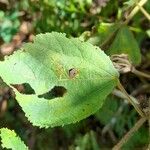
Triumfetta semitriloba
Burweed · Sacramento-bur · Sacramento Burrbark · Sacramento burbark · Mosote
Care Guide
💧 Water
☀️ Light Full sun
Diamond burbark is found in open habitats, like sunny meadows and forest edges, where light is abundant. It does best in Full Sun but can also tolerate Partial Sun, adapting well to different light conditions.
🌡️ Temperature 20–37.8°C
Diamond burbark comes from tropical areas, where the weather is generally warm and humid. Consequently, it is adapted to high temperatures and humidity. It dislikes sudden temperature changes and prefers a steady thermal environment, so avoiding temperature fluctuations indoors is important. It typically cannot tolerate cold and needs warmer conditions to grow. If the ambient temperature falls too low, the plant may stop growing or even die.
💨 Humidity
🪴 Soil 6-7
🌱 Fertilizer
Fertilizing is essential for caring for Diamond burbark. Regular feeding during the growing season supplies energy for its showy leaves and supports overall growth. Neglecting fertilization can lead to unhealthy foliage, reduced ornamental value, and stunted or weak growth that is more prone to breakage.
🪴 Pot & Repot
✂️ Pruning
The Sacramento burbark is a hardy shrub known for its dense foliage and bright yellow flowers. To promote growth, prune it in early spring by removing dead stems and thinning out branches to improve airflow and shape. Regular pruning not only enhances the shrub's health but also improves the quality of its blossoms. Always use sterilized tools to ensure clean cuts and quick healing.
🌿 Propagating
🐛 Diseases & pets
☠️ Toxicity
Characteristics
- Plant Type
- Shrub
- Life Cycle
- Perennial
- Genus
- Triumfetta
- Family
- Malvaceae
- Hardiness Zone
- 9-11
- Mature Height
- 1.52 m
- Mature Spread
- 30 cm to 91 cm
- Leaf Color
- Green, Dark Green
- Leaf Type
- Deciduous
- Flower Color
- Yellow
- Flower Size
- 0.51 cm to 0.51 cm
- Bloom Time
- Summer, Early fall, Mid fall
- Planting Time
- Spring, Summer, Autumn
- Harvest Time
- Late summer, Fall, Early winter
- Native Area
- Sri Lanka, Burkina Faso, Belize, Madagascar, Pakistan, Dominican Republic, Nigeria, Guinea-Bissau, Uganda, Tanzania, Benin, Paraguay, Sierra Leone, Indonesia, Haiti, Cameroon, Mozambique, Ethiopia, Central African Republic, Malawi, Honduras, Peru, Bangladesh, Laos, China, Colombia, Japan, Togo, Senegal, Eswatini, Côte d'Ivoire, Ecuador, Gambia, Congo (DRC), Egypt, Angola, Malaysia, Namibia, Rwanda, Eritrea, Yemen, Kenya, Jamaica, Zimbabwe, Mali, Cuba, Cambodia, Equatorial Guinea, Liberia, Burundi, Venezuela, Brazil, Ghana, Botswana, Congo, Nepal, South Africa, Zambia, Sudan, Guinea, Trinidad and Tobago, Bolivia, Vietnam, Myanmar, Guyana, Bhutan, Nicaragua, Thailand, Gabon