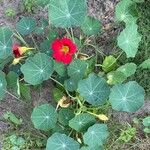
Tropaeolum minus
لادن · Bush nasturtium · Dwarf nasturtium
Description
Source: leafsnapTropaeolum minus, the dwarf nasturtium is a species of perennial plant in the Tropaeolaceae family. It is endemic to mountainous regions of Ecuador and Peru.
Care Guide
💧 Water Every 5-7 days
The dwarf nasturtium, native to South and Central America, thrives in moderate humidity and is drought-tolerant, requiring watering only about every three weeks. Indoors, it produces vibrant flowers and needs consistently moist, well-draining soil to prevent root rot.
☀️ Light Full sun
Dwarf nasturtium comes from open habitats, such as sunny meadows and forest edges, which supply plenty of light. It does best in full sun but can also tolerate partial sun, adjusting well to different light levels.
🌡️ Temperature 15–37.8°C
The dwarf nasturtium shows strong adaptability to a variety of climate conditions, from sweltering summers to cold winters. Still, it has a preferred temperature range for healthy growth. When temperatures become too high, the plant can suffer from heat and humidity stress, which may kill it. In areas where temperatures approach the lower edge of its cold tolerance, taking steps to insulate the plant is important to protect it.
💨 Humidity
🪴 Soil 6-7
🌱 Fertilizer
Timing is important for fertilizing Dwarf nasturtium. Fertilize in early spring and keep doing so monthly until early summer. Fertilizer encourages attractive blooms and supplies energy during both dormant and active growth phases.
🪴 Pot & Repot
✂️ Pruning
Dwarf nasturtiums benefit from light pruning. In early spring, remove any dead stems and regularly pinch off spent blooms to encourage continuous flowering. It's best to intervene minimally, as tidying the plant helps improve air circulation, reduces the risk of disease, and promotes a vibrant display throughout the growing season.
🌿 Propagating
🐛 Diseases & pets
☠️ Toxicity
This plant is known to be added to food as seasonings. Nasturtiums show no records of toxic ingestion if taken in small amounts. Take precautions and only take processed products of this only.
Characteristics
- Plant Type
- Vine
- Life Cycle
- Perennial
- Genus
- Tropaeolum
- Family
- Tropaeolaceae
- Hardiness Zone
- 8-11
- Mature Height
- 15 cm to 30 cm
- Mature Spread
- 30 cm to 61 cm
- Leaf Color
- Light Green, Dark Green
- Leaf Type
- Semi-evergreen
- Flower Color
- Red, Orange, Yellow
- Flower Size
- 2.03 cm to 4.06 cm
- Bloom Time
- All year round
- Planting Time
- Spring
- Harvest Time
- All year round
- Native Area
- Ecuador, Peru