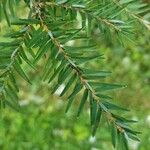
Tsuga heterophylla
Pacific hemlock · Western hemlock · Western hemlock-spruce · West Coast hemlock · Hemlock spruce
Description
Source: leafsnapTsuga heterophylla, commonly known as the Western Hemlock, is a coniferous tree species native to the western coast of North America. It is a tall and slender tree that can grow up to 70 meters in height and 2 meters in diameter. The Western Hemlock features a narrow crown with drooping branches, giving it an elegant appearance. The leaves of Tsuga heterophylla are needle-like, varying in length from 1 to 2 cm. Arranged spirally on the branches, they have two white stripes on their undersides. The cones produced by this tree are small (3 to 4 cm long) and egg-shaped. Western Hemlock is an important timber species, valued for its straight trunk, fine-grained wood, and resistance to decay. It also plays a crucial ecological role by providing habitat for various wildlife species such as deer, elk, bears, and birds. Tsuga heterophylla prefers moist soils with good drainage but can tolerate dry soils once established. It thrives in cool climates with high rainfall but can also endure some drought conditions. Overall, Tsuga heterophylla is a beautiful plant with significant ecological importance and commercial value due to its timber production capabilities. It is an essential component of North American forest ecosystems, benefiting both humans and wildlife.
🌳 The western hemlock is a versatile plant that can be adapted to different gardening styles through pruning. When pruned as an ornamental shrub, it adds charm to informal or cottage gardens. If you allow it to grow into a larger specimen tree, it serves as a striking focal point in these settings. Smaller versions of the western hemlock are ideal as ground cover or as evergreen borders in rock gardens. With a bit of shaping, it can also drape elegantly over garden trellises.
🎭 Eliminate sexual urges *poison*
Care Guide
💧 Water Every 7 days
Western hemlock, a native of the Pacific Northwest's temperate rainforests, thrives in consistently moist soil. To prevent waterlogging, water it every 1-2 weeks. As an outdoor evergreen, this plant benefits from mulching to help retain moisture, especially during periods of active growth, which promotes healthy foliage.
How should I water my Western hemlock?
Watering your Western hemlock is a simple task. To do this, you can use your garden hose to slowly soak the soil. This is particularly effective for mature trees that require a lot of water. However, if you have smaller trees, a watering can or other smaller tool may suffice. It's important to avoid watering the leaves too much as this can cause disease, especially in young plants.
What should I do if I give my Western hemlock too much water or too little?
Overwatering can be caused by poor soils for Western hemlock plants. If the soil doesn't allow effective drainage, the plant will start to decline. To fix this, you can either improve the soil's drainage or move the plant to a better location. If you're growing the plant in a pot, you may need to repot it with looser soils and a container that has better drainage. Overwatering can also make the plant more susceptible to diseases, so it's important to treat any diseases promptly. On the other hand, if the plant is underwatered, simply increase the frequency of watering and the plant will recover. To identify if your Western hemlock is overwatered, check the foliage, especially the new growth. Overwatered plants may have discolored or easily breakable new growth. Standing water or slow drainage in the growing area can also indicate excessive moisture in the soil. Similarly, underwatered plants may have sparse, brown leaves. Considering recent rainfall or consistently high temperatures can help you determine the cause of these symptoms.
How often do I need to water my Western hemlock tree?
A mature Western hemlock is quite resilient when it comes to water. It can survive solely on rainfall and becomes drought tolerant. During the hottest months, it may need watering once a week, but the rest of the year, watering may not be necessary. The only time you should regularly water is if the tree was recently planted to help the roots establish. However, it's crucial to avoid overwatering as Western hemlock does not handle excessive water well. When unsure, it's safer to avoid watering too much rather than risking damage.
How much water does my Western hemlock tree require?
During the peak of summer, it is necessary to water your Western hemlock. Normally, this plant requires about one inch of water per week. However, the amount may vary depending on rainfall. If it has rained one inch or more during the week, you don't need to water your Western hemlock. On the other hand, if you have recently planted a Western hemlock, it will require more water during its initial period of growth. In general, this means watering it once every one to two weeks for the first few seasons of growth.
How do I water my Western hemlock throughout the year?
The Western hemlock tree primarily needs the most water in the summer when it's hottest. During this time, you should water it about once a week if there is no rainfall. In other seasons, this tree can often survive without any water. Occasionally, in spring and fall, you may need to water it if the weather is extremely hot, but this is uncommon. Unlike many other plants, the Western hemlock doesn't go into full dormancy in winter, so it continues to grow during the coldest months. However, its water needs during winter are relatively low since the cool temperatures don't cause the soil to dry out quickly.
☀️ Light Partial sun
The western hemlock prefers filtered light, yet it can tolerate both full sun and deep shade. Its native, dense-forest habitat helps it cope with a variety of light conditions. Still, too much sun can scorch its leaves, while very low light can slow its growth.
What are the sunlight requirements for Western Hemlock?
Western Hemlock requires partial sun, meaning about 3-6 hours of sunlight daily, but it can also thrive in full sun or full shade conditions, which means it can handle more than 6 hours of sunlight. Its adaptability stems from its origin in thick forests, where it is used to a range of light conditions. However, it's crucial to watch how sunlight moves through your garden to find the perfect spot, as excessive sunlight might lead to leaf scorching, while insufficient light could slow its growth.
Can artificial lighting be used for Tsuga heterophylla and how?
Yes, artificial lighting can be a suitable supplement for Tsuga heterophylla, especially when natural sunlight is insufficient, like during winter or in less sunny spaces. Indoor plants can benefit from artificial lights such as LEDs, which can be customized to provide the wavelengths needed for optimal growth. For plants requiring full sun, about 30-50W/sq ft is recommended, partial sun plants need 20-30W/sq ft, and full shade plants should receive 10-20W/sq ft. The light source should be placed 12-36 inches above the plant, mimicking natural sunlight, and it's important to align the duration of artificial lighting with the plant's natural daylight hours, typically 8-12 hours per day.
What are the symptoms of light deficiency in Western Hemlock?
Symptoms of light deficiency in Western Hemlock include smaller new leaves, leggy or sparse growth, faster leaf drop, halted or slowed new growth, and lighter-colored or yellow new leaves. These symptoms can indicate that the plant is not receiving enough light, leading it to conserve resources and enter survival mode. Conversely, too much sunlight can cause chlorosis, sunscald, leaf curling, wilting, and leaf scorching, displaying the plant's struggle with excessive light exposure.
What solutions can address light-related issues for Western Hemlock, both indoors and outdoors?
To address light-related issues for Western Hemlock, gradually accustom your plants to sunlight by moving them to sunnier spots weekly, ensuring they receive 3-6 hours of direct sunlight each day. For large or immobile indoor plants, consider providing additional artificial light, keeping a lamp on for at least 8 hours daily or using professional grow lights. Outdoors, gradually move plants to optimal sunlight spots, avoiding sudden changes to prevent sunburn. If necessary, reduce obstructions such as overhanging trees by pruning. For smaller plants, transplant them during their dormant period to a location with better sunlight and drainage, ensuring a healthier growth post-adjustment.
🌡️ Temperature 0–32.2°C
Western hemlock prefers a temperature range of 32 to 90 ℉ (0 to 32 ℃) and can tolerate a minimum of -13 ℉ (-25 ℃). In its native habitat, it occurs in cool, humid climates with moderate temperatures. During spring and summer, avoid exposing the plant to direct sunlight and high heat; in fall and winter, protect it from freezing temperatures.
What temperature range is ideal for Western hemlock?
Western hemlock (Tsuga heterophylla) thrives in a temperature range of 32 to 90°F (0 to 32°C) and can tolerate a minimum temperature of -13°F (-25°C). These plants are best suited to cool, humid climates with moderate temperatures, indicative of their native growth environments. To ensure their health, it's advisable to shield them from direct sunlight and high temperatures during the warmer months and to protect them from freezing temperatures in the colder seasons.
Is Western hemlock cold-tolerant?
Yes, Western hemlock is highly cold-tolerant and does not require additional frost protection measures during winter. To prep them for colder weather, it's recommended to water the plants generously before the first freeze in autumn. This ensures the soil remains moist and enters a frozen state, which helps prevent drought and water scarcity for the plant during the winter and early spring.
How does low temperature affect Western hemlock, and what solutions are recommended?
Although Western hemlock is extremely cold-tolerant, it's crucial to keep winter temperatures above -35°C to prevent damage. If the temperature dips below this threshold, the branches may become brittle and dry come springtime, with no new shoots emerging. To address this, it's recommended to prune away any dead branches that have failed to produce new leaves in the spring.
What should be done if Western hemlock is exposed to high temperatures?
Western hemlock struggles with high temperatures, particularly those exceeding 32°C, which can cause significant leaf drop or even result in the plant withering and dying. To mitigate this, trim away any sunburned and dried parts of the plant. Relocating the plant to a shaded location or using a shade cloth during peak sun hours can also help. Additionally, watering the plant in the morning and evening will keep the soil consistently moist.
💨 Humidity
🪴 Soil 5-6
🌱 Fertilizer
Western hemlock has specific nutrient needs and does not require heavy fertilization. Spring is the best time to apply fertilizer for optimal growth. Providing nutrients improves its health, strengthens resistance to pests and diseases, and supports a long lifespan.
Why is it necessary to add fertilizer to my Western hemlock?
In order to promote healthy growth in Western hemlock, it is important to fertilize the plant in the spring. It is also worth noting that these plants have long lifespans and require support. By adding nutrients to the soil, the overall health of the plant can be improved, which in turn enhances its ability to resist common pests and diseases. This is crucial as these issues can hinder growth and potentially reduce the lifespan of the plant.
When should I fertilize my Western hemlock tree?
The amount of nutrients provided by the growing medium may not be sufficient for healthy growth. Western hemlock, unlike garden annuals and perennials, does not need a lot of additional nutrients. It is best to fertilize Western hemlock in the spring, before new growth starts to appear.
When is it not a good idea to fertilize my Western hemlock?
While some plants benefit from regular fertilization, Western hemlock is not one of them. It actually requires very few additional nutrients, and too much fertilizer can actually harm it by causing it to die back. Therefore, you should only apply fertilizer in the spring and avoid doing so in the other seasons (summer, fall, and winter). Additionally, refrain from adding any fertilizer or organic matter to the soil during those seasons.
What kind of fertilizer does my Western hemlock tree need?
When it comes to fertilizing your Western hemlock plant, the age of the plant is important to consider. However, it's worth noting that Western hemlock doesn't need a lot of extra nutrients. To support healthy root development and growth, it's best to use a balanced plant food. Avoid fertilizers with high nitrogen content.
How can I feed my Western hemlock plant?
When fertilizing Western hemlock, timing and technique are equally important. Apply the fertilizer once in the spring near the plant's base, being careful not to get any on the trunk. If using granulated fertilizer, cover the pellets with a thin layer of soil to enhance absorption into the soil.
🪴 Pot & Repot 2-3 years
When repotting Western hemlock, choose a pot 1-2 inches (2.5–5.1 cm) larger with ample drainage. Use a well-draining potting mix. Repot in spring or fall, ensuring that the root ball is slightly lower than the rim of the pot. Water thoroughly after repotting and place in a warm spot with indirect sunlight.
✂️ Pruning
Western hemlock is a conifer appreciated for its delicate foliage and upright structure. For optimal results, prune during early to late winter, focusing on removing any unhealthy branches and shaping the tree thoughtfully. This process enhances air circulation and light exposure. However, be careful not to over-prune, as it can disrupt the tree's natural form and increase stress.
🌿 Propagating
🐛 Diseases & pets
☠️ Toxicity
Characteristics
- Plant Type
- Tree
- Life Cycle
- Perennial
- Genus
- Tsuga
- Family
- Pinaceae
- Hardiness Zone
- 3-7
- Mature Height
- 39.93 m
- Mature Spread
- 10.06 m
- Leaf Color
- Green, Blue, White
- Leaf Type
- Evergreen
- Flower Color
- Yellow, Green, Red
- Flower Size
- 0.25 cm to 0.51 cm
- Bloom Time
- Late spring, Early summer
- Planting Time
- Spring
- Harvest Time
- Mid summer, Late summer, Early fall