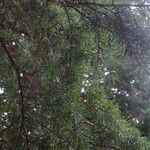
Tsuga mertensiana
Mountain hemlock · Hemlock Spruce · Alpine hemlock · Black hemlock
Description
Source: leafsnapTsuga mertensiana, commonly known as the mountain hemlock, is a coniferous tree species native to the western United States and Canada. This slow-growing evergreen can reach heights of up to 60 feet and is characterized by a narrow conical shape. Its needles are short, bluish-green, and feature two white stripes on their undersides. Mountain hemlocks are typically found at high elevations in subalpine forests, where they thrive in cool, moist environments. They are well-adapted to endure harsh winter conditions, such as heavy snowfall and strong winds. The wood of Tsuga mertensiana is highly prized for its strength, durability, and resistance to decay. It is often utilized in construction and furniture making due to these qualities. Ecologically, mountain hemlocks are vital, providing habitat for various wildlife species, including birds and small mammals. Additionally, they play a crucial role in regulating water flow by absorbing water from snowmelt during spring runoff. In summary, Tsuga mertensiana is an essential species that significantly contributes to its ecosystem while also offering valuable resources for human use.
🎭 Eliminate sexual urges *poison*
Care Guide
💧 Water Every 7 days
Mountain hemlock, native to high-altitude regions, thrives in well-drained soils with moderate moisture. It needs watering every 1-2 weeks, but it's important to avoid waterlogging. Its needle-like leaves help it conserve water effectively, reflecting its adaptation to its natural alpine environment.
☀️ Light Full sun
Mountain hemlock does best in locations where it gets full sun exposure all day. It can, however, tolerate areas with less intense but consistent sunlight. Irregular light can harm its health, resulting in reduced growth or possible disease.
What are the sunlight requirements for Mountain Hemlock?
Mountain Hemlock requires a sufficient amount of sunlight to thrive, ideally exposed to the full spectrum of the sun throughout the day. It can adapt to environments with less intense, yet consistent sunlight. For optimal growth, it should be observed how sunlight moves through your garden, ensuring spots provide the right balance of light and shade. Specifically, full sun signifies above 6 hours of sunlight, while partial sun is about 3-6 hours of sunlight. The right balance is crucial for the plant's happiness and health, highlighting the importance of choosing appropriate spots for planting.
How does inadequate lighting affect Mountain Hemlock, and what artificial lighting solutions are available?
Inadequate lighting can lead to several issues for Mountain Hemlock, such as muted growth or potential disease. When natural sunlight is insufficient, especially in winter or less sunny spaces, artificial lighting becomes a vital solution. It promotes faster, healthier growth by providing the necessary wavelengths of light. For indoor plants, using the right type of artificial light, such as LED lights which can be customized for specific plant needs, is recommended. Full sun plants need 30-50W/sq ft of artificial light, partial sun plants 20-30W/sq ft, and full shade plants 10-20W/sq ft. The light source should be placed 12-36 inches above the plant and turned on for 8-12 hours per day to mimic natural daylight hours.
What are the symptoms of light deficiency in Mountain Hemlock, and how can it be managed?
Symptoms of light deficiency in Mountain Hemlock include smaller new leaves, leggy or sparse growth, faster leaf drop, slower or no new growth, lighter-colored new leaves, chlorosis, sunscald, leaf curling, wilting, and leaf scorching. To manage these symptoms indoors, gradually move plants to sunnier locations where they can receive at least 6 hours of direct sunlight daily. Use artificial light as needed, such as keeping a desk or ceiling lamp on for at least 8 hours daily. Outdoors, plants should be gradually moved to optimal sunlight locations to avoid sunburn. Where sunlight is blocked, such as by trees, consider pruning to increase light exposure. For smaller plants, transplanting during their dormant period to a location with ample sunlight and good drainage can be beneficial. Remember, parts of the plant affected by insufficient sunlight may not recover, but new, healthy growth can be achieved with increased light exposure.
🌡️ Temperature 10–32.2°C
Mountain hemlock naturally occurs in regions where temperatures range from 50 to 90 °F (10 to 32 °C), showing a preference for relatively mild conditions. If grown indoors, adjustments may be necessary according to seasonal changes. Make sure the temperature never drops below 50 °F (10 °C).
What is the ideal temperature range for growing Mountain Hemlock?
Mountain hemlock thrives in environments where the temperature ranges from 50 to 90 °F (10 to 32 °C), which indicates a preference for relatively mild temperatures. For indoor cultivation, temperature adjustments might be necessary to align with seasonal changes. It's crucial to ensure that the temperature does not fall below 50 °F (10 °C). Despite its strong cold resistance, in areas where winter temperatures are expected to drop below -25°C, cold protection is advised, for instance, by wrapping the trunk and branches with insulating materials.
How does Mountain Hemlock respond to low and high temperatures, and how should you care for it?
Mountain hemlock is quite cold-tolerant and performs best when temperatures stay above 10°C. However, during winter, it's important to keep it above -15°C. If temperatures fall below -25°C, the branches might not show damage initially, but they can become brittle and dry by spring, potentially leading to a lack of new shoots. In such cases, pruning dead branches in spring encourages healthy growth. Conversely, in high temperatures, specifically above 35°C, the leaves may discolor, and the plant can suffer from sunburn. To manage this, trim the affected parts, relocate the plant to a shaded area during peak sun hours, or use a shade cloth, and ensure to water it during cooler parts of the day to keep the soil moist.
What is the botanical name of Mountain Hemlock?
The botanical name of Mountain Hemlock is Tsuga mertensiana. It's a species known for its adaptability to various temperature conditions but thrives in specific temperature ranges and requires particular care to protect against extreme weather conditions.
💨 Humidity
🪴 Soil 5-6
🌱 Fertilizer
Mountain hemlock has specific nutrient needs and does not require heavy fertilization. Spring is the best time to apply fertilizer for optimal growth. Supplying nutrients improves its health, strengthens resistance to pests and diseases, and helps maintain its long lifespan.
🪴 Pot & Repot Every 2 years
✂️ Pruning
Mountain hemlock is characterized by its dense foliage and pyramidal shape. To improve air circulation and promote new growth, it is best to prune it from early to late winter. By using selective pruning techniques, you can maintain the tree's structure without causing stress, which is beneficial for the plant's health and enhances the overall look of your garden.
🌿 Propagating
🐛 Diseases & pets
☠️ Toxicity
Characteristics
- Plant Type
- Tree
- Life Cycle
- Perennial
- Genus
- Tsuga
- Family
- Pinaceae
- Hardiness Zone
- 6-8
- Mature Height
- 14.94 m
- Mature Spread
- 6.1 m
- Leaf Color
- Blue, Green, Silver, Gray
- Leaf Type
- Evergreen
- Bloom Time
- Mid spring, Late spring
- Planting Time
- Spring, Summer
- Harvest Time
- Late summer, Early fall, Mid fall