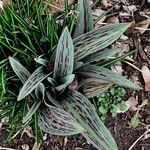
Tulipa greigii
Greig’s Tulip
Description
Source: leafsnapTulipa greigii is a species of tulip native to the mountainous regions of Central Asia. This perennial plant grows from bulbs and produces large, showy flowers in vibrant shades of red, orange, yellow, and pink. Its broad leaves often feature distinctive purple or brown markings. Tulipa greigii thrives in well-drained soil with full sun to partial shade and blooms in the spring. Because of its striking colors and unique leaf markings, Tulipa greigii is commonly used as an ornamental plant in gardens and as cut flowers in floral arrangements. Additionally, some cultures have traditionally used this plant for medicinal purposes. The bulbs are believed to have anti-inflammatory properties that are effective in treating various ailments, including fever, coughs, and sore throats.
Care Guide
💧 Water Every 7 days
Tulips originally come from central Asia and grow best in well-drained soil with moderate watering, typically about once a week. They thrive outdoors in the spring when natural rainfall supports their growth, minimizing the need for additional watering.
☀️ Light Full sun
Tulip is a sun-loving, perennial herbaceous plant native to open habitats, often thriving in meadows and grasslands. It prefers full sun but can also tolerate partial sun.
How much sunlight is required for Tulipa greigii (Tulip) to thrive?
Tulipa greigii, commonly known as Tulip, thrives under specific sunlight conditions. It requires 'Full sun' which means it needs more than 6 hours of sunlight daily to flourish optimally. Alternatively, it can also grow under 'Partial sun' conditions, which implies about 3-6 hours of sunlight each day. It's essential to observe the movement of sunlight through your garden to identify spots that offer a perfect balance of light and shade, ensuring the happiness and health of your Tulip plants.
🌡️ Temperature 0–32.2°C
Tulip can tolerate a broad range of temperatures, but its distribution may still be constrained by different combinations of moisture and heat. It does best in warm summer climates when there is sufficient rainfall or watering. Extended periods of cloudy, rainy weather or prolonged high temperatures increase the chance of Tulip dying. In winter, protecting it from cold can boost the plant's survival rate.
What is the botanical name of Tulip?
The botanical name of Tulip is Tulipa greigii.
💨 Humidity
🪴 Soil 6-7
🌱 Fertilizer
For Tulip, the primary time to fertilize is in early spring when the flowers are developing. The correct fertilizer promotes stronger blooms and helps Tulip produce attractive flowers. Fertilizing in early spring guarantees excellent flowers during the season and supplies energy for dormant growth phases.
🪴 Pot & Repot 2-3 years
To ensure optimal bulb development, repot tulips every 2-3 years during their dormant period in spring, after the leaves have died back. Choose a container that is at least twice the width of the bulb. After repotting, use well-draining soil and water sparingly to aid in recovery and prevent root rot.
✂️ Pruning
Tulips have striking flowers and variegated leaves, requiring minimal pruning. To help the bulbs store energy, promptly remove spent flowers, and cut away yellow foliage in early spring. Avoid cutting green leaves, as this can hinder growth. Proper timing for pruning enhances blooming and ensures healthy, vibrant displays each year.
🌿 Propagating
🐛 Diseases & pets
☠️ Toxicity
Characteristics
- Plant Type
- Herb
- Life Cycle
- Perennial
- Genus
- Tulipa
- Family
- Liliaceae
- Hardiness Zone
- 3-8
- Mature Height
- 49 cm
- Mature Spread
- 20 cm
- Leaf Color
- Green, Dark Green
- Leaf Type
- Deciduous
- Flower Color
- Red, Orange, Yellow
- Flower Size
- 7.62 cm to 11.43 cm
- Bloom Time
- Early spring, Mid spring
- Planting Time
- Winter, Spring
- Harvest Time
- Late spring, Early summer
- Native Area
- Uzbekistan, Tajikistan, Kazakhstan, Kyrgyzstan