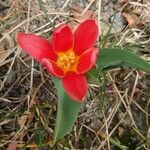
Tulipa kaufmanniana
Water-lily tulip · Kaufmann's Tulip
Description
Source: leafsnapTulipa kaufmanniana, commonly known as the waterlily tulip, is a species of tulip native to Central Asia. This small, bulbous plant grows up to 20 cm tall and typically produces one or two cup-shaped flowers per stem. Each flower has six petals, which are white on the inside with red or yellow markings on the outside. The leaves are narrow, pointed, and bluish-green in color. Tulipa kaufmanniana blooms in early spring and is one of the earliest tulips to flower. It thrives in well-drained soil and can be planted in full sun or partial shade. It is suitable for rock gardens, borders, or containers. Cultivated for centuries for its ornamental value, Tulipa kaufmanniana has many cultivars available today in a variety of flower colors, including pink, orange-red, and yellow-green. Overall, Tulipa kaufmanniana is an easy-to-grow plant that adds vibrant early spring color to any garden setting while requiring minimal care. This makes it an excellent choice for gardeners of all experience levels.
Care Guide
💧 Water Every 7 days
The water-lily tulip naturally grows in mountainous areas with irregular moisture. It requires a balance between hydration and drought tolerance to thrive. To mimic its natural cycle, water it weekly. Plant it outdoors to benefit from seasonal temperature changes, which promote growth. Spring rains, occurring during its flowering period, are especially beneficial for its development.
☀️ Light Full sun
The water-lily tulip is a sun-loving, perennial herbaceous plant that originates in open habitats and commonly thrives in meadows and grasslands. It prefers full sun but can also tolerate partial sun.
🌡️ Temperature 0–32.2°C
Water-lily tulip can tolerate a wide range of temperatures, but its occurrence may still be restricted by particular combinations of moisture and heat. It does best in warm summer climates with sufficient rainfall or irrigation. Long periods of cloudy, rainy weather or prolonged high temperatures both raise the chance of the Water-lily tulip dying. In winter, proper protection from cold can increase the plant's survival rate.
💨 Humidity
🪴 Soil 6-7
🌱 Fertilizer
For the Water-lily tulip, the best time to apply fertilizer is in early spring when the flowers are forming. The proper fertilizer promotes healthier blooms and helps the Water-lily tulip produce attractive flowers. Fertilizing in early spring ensures good flowering throughout the season and provides energy for dormant growth stages.
🪴 Pot & Repot
✂️ Pruning
Water-lily tulips are known for their star-shaped, vibrant flowers. To keep them thriving, it's important to prune them in early spring. Removing faded blooms will encourage new growth and prevent unwanted seeding. Additionally, trimming away any damaged foliage will help maintain the plant's health. By pruning at the right time in their growth cycle, you can enhance the plant's vitality, increase bloom production, improve aesthetic appeal, and minimize the risk of disease.
🌿 Propagating
🐛 Diseases & pets
☠️ Toxicity
Characteristics
- Plant Type
- Herb
- Life Cycle
- Perennial
- Genus
- Tulipa
- Family
- Liliaceae
- Hardiness Zone
- 3-8
- Mature Height
- 25 cm
- Mature Spread
- 15 cm
- Leaf Color
- Green
- Leaf Type
- Deciduous
- Flower Color
- Yellow, White, Red
- Flower Size
- 7.62 cm to 15.24 cm
- Bloom Time
- Early spring, Mid spring
- Planting Time
- Autumn, Winter
- Harvest Time
- Late spring, Early summer