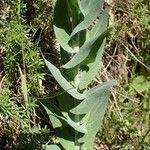
Turritis glabra
Tower mustard · Tower rockcress · Garden arabis · Towercress · Glabrous tower cress
Description
Source: leafsnapArabis glabra, commonly known as tower rockcress or tower mustard, is a tall, slim, grey-green plant with small creamy flowers at the top of the stem. It usually grows on poor chalky or sandy soils, in open situations. It is native to Europe, Asia, and North Africa, and it is widespread in North America where it is also probably native. It can be found in many other parts of the world as an introduced species. It is classified as an endangered species in the UK and is considered to be facing a very high risk of extinction in the wild. It is listed as a Priority Species under the UK Biodiversity Action Plan. Only 35 sites are recorded by Plantlife mostly in Norfolk, (where 100 plants were found at a new site in 1999) but includes 6 sites near Kidderminster in Worcestershire.
🎭 Fecundity, Defense, Psychic powers
Care Guide
💧 Water
Tower Rock-Cress, native to temperate regions, thrives in moderate moisture and can tolerate brief periods of dryness. To prevent stress, it requires weekly watering. When grown outdoors in rocky terrains, Tower Rock-Cress efficiently captures rainfall during its growing season, minimizing the need for frequent care.
How should I water my Tower Rock-Cress?
Tower Rock-Cress can be watered using various common tools such as a garden hose with a spray nozzle or a watering can. They are not too particular about the source of water, as they can thrive with rainwater, tap water, or even filtered water. It is generally recommended to avoid watering this plant from overhead to prevent damage to the leaves and flowers, as well as the potential for disease. A drip irrigation system is often the best method for watering Tower Rock-Cress, as it ensures even and direct application of water to the soil. If you have a container-grown Tower Rock-Cress, you can use a cup, watering can, or tap water to water it by applying water directly to the soil.
What do I need to do if I give my Tower Rock-Cress plant too much or too little water?
To prevent underwatering Tower Rock-Cress, simply water it more often when you notice it lacks moisture. Overwatering, on the other hand, can be a serious problem. It can lead to diseases and the death of the plant. To avoid this, choose a growing location with plenty of sunlight and good drainage. If you overwater a potted Tower Rock-Cress, consider moving it to a new pot with better drainage and adding loose soil.
How frequently do I need to water my Tower Rock-Cress?
Tower Rock-Cress requires regular watering throughout the growing season. In spring, watering once per week is recommended. As the season progresses and becomes warmer, increasing the watering rate to two or three times per week may be necessary. However, it is important not to exceed this rate as it can harm the plant. It is also crucial to maintain a relatively moist, but not wet, soil for the Tower Rock-Cress regardless of the watering frequency. When it comes to watering Tower Rock-Cress in a pot, it is essential to water more frequently. Potted plants tend to have soil that dries out faster than the ground soil due to heating. Thus, watering container-grown Tower Rock-Cress a few times per week is typically required, compared to once per week for plants in the ground.
How much water does my Tower Rock-Cress plant require?
Determining how much water to give your Tower Rock-Cress can be approached in a few different ways. One method involves feeling the soil to gauge its moisture level. In this approach, you should water the plant until the top six inches of soil are moist. Another option is to follow a set measurement: typically, two gallons of water per week, adjusting based on temperature and soil dryness. However, this method may cause overwatering if your plant needs less water. When growing Tower Rock-Cress in a container, you need to use a different approach. In this case, you should moisten all dry soil layers, which can be tested by inserting your finger into the soil. Alternatively, watering until you observe slight excess water draining from the pot's drainage holes should be sufficient.
How do I know if I'm giving enough water to my Tower Rock-Cress plant?
Tower Rock-Cress can be challenging to water correctly. While they have deep roots that need weekly watering, they are prone to root rot and browning if overwatered. Underwatering is less of a concern as these plants can survive without extra water for a while. However, if you wait too long, they may wilt and develop dry leaves.
☀️ Light Full sun
Tower Rock-Cress strongly prefers sun exposure, originating from habitats bathed in light where it grows in the best health. Any reduction in light intensity can impede its development. Sunlight shortage may prevent it from achieving vigorous growth and plentiful flowering. Overexposure, however, has not been found to cause harmful effects.
What are the sunlight requirements for Tower Rock-Cress?
Tower Rock-Cress requires full sun, which means it needs above 6 hours of sunlight daily for optimal growth. It's crucial to observe the movement of sunlight through your garden to find spots that offer a balance of light and shade, ensuring that your plants receive the perfect amount of sunlight for their health.
Why is sunlight so important for Tower Rock-Cress?
Sunlight is significantly important for Tower Rock-Cress, as it originates from environments that are saturated with light. Such conditions are essential for its optimal health, developmental progress, and to ensure robust growth and hearty bloom cycles. Although Tower Rock-Cress can tolerate overexposure to sunlight without adverse effects, any decrease in light intensity can hinder its growth and flowering potential.
Can artificial lighting be used for Tower Rock-Cress, and if so, how?
Yes, artificial lighting can be used for Tower Rock-Cress, especially when natural sunlight is insufficient, like in winter or less sunny spaces. LED lights are recommended because they can be customized to provide specific wavelengths of light needed by plants. For full sun plants like Tower Rock-Cress, 30-50W/sq ft of artificial light is ideal. The artificial light source should be placed 12-36 inches above the plant to mimic natural sunlight, and most plants need 8-12 hours of light per day.
What are some symptoms of insufficient light exposure in Tower Rock-Cress?
When grown indoors with inadequate light, Tower Rock-Cress may show symptoms such as smaller new leaves, leggy or sparse growth, faster leaf drop, slower or no new growth, lighter-colored new leaves, chlorosis, sunscald, leaf curling, wilting, and leaf scorching. These symptoms indicate the plant's struggle with low light conditions and its efforts to conserve resources.
How can I address light related issues in Tower Rock-Cress indoors and outdoors?
For indoors, gradually move your Tower Rock-Cress to a sunnier location each week until it gets at least 6 hours of direct sunlight daily. Use south-facing windows for maximum sunlight and consider artificial lights for additional support. Outdoors, similarly, move your plants gradually to sunnier spots to avoid sunburn. Note that parts of the plant damaged by insufficient light might not recover, but new growth should be healthy once light conditions improve. For ground plants, reduce obstructions like tree branches blocking sunlight and consider transplanting smaller plants to better-lit locations during their dormant period for optimal sunlight exposure.
🌡️ Temperature 10–35°C
Tower Rock-Cress is a plant that does well in temperatures of 68 to 95 °F (20 to 35 °C). Its native habitat indicates it favors temperate conditions. Seasonal variations may require adjusting temperatures to keep it healthy.
What is the ideal temperature range for Tower Rock-Cress?
Tower Rock-Cress thrives best in environments with temperatures between 68 to 95 °F (20 to 35 °C), preferring temperate conditions. Its health may need temperature adjustments depending on the season, as it is native to environments within this temperature range.
Does Tower Rock-Cress need protection from frost?
Tower Rock-Cress has strong cold resistance, usually not requiring special frost protection measures during winter. However, if temperatures are expected to drop below -25°C, cold protection is important and can be provided by covering the plant with soil or straw. Watering the plant abundantly before the first freeze in autumn, ensuring the soil remains moist and enters a frozen state, helps prevent drought and water scarcity during winter and early spring.
What happens to Tower Rock-Cress in low temperatures?
In low temperatures, Tower Rock-Cress is cold-tolerant and thrives best above 20°C, and should ideally be kept above 0°C during winter. When temperatures fall below -25°C, there may not be noticeable changes during winter, but there may be a decrease in sprouting or even no sprouting during spring. In spring, it's recommended to remove any parts of the plant that have failed to sprout.
How should Tower Rock-Cress be cared for in high temperatures?
During summer, it's important to ensure that Tower Rock-Cress remains under 35°C. When temperatures exceed 38°C, the plant's leaves may become lighter in color, prone to curling, susceptible to sunburn, and in severe cases, the entire plant may wilt and become dry. To care for Tower Rock-Cress in high temperatures, trim away the sunburned and dried-up parts, move the plant to a shaded location or use a shade cloth to protect it from midday and afternoon sun, and water the plant in the morning and evening to keep the soil moist.
💨 Humidity
🪴 Soil 6-7
🌱 Fertilizer
Tower Rock-Cress benefits from regular, light applications of fertilizer to encourage healthy leaf growth. You should fertilize Tower Rock-Cress about once a month during the summer. Nitrogen is important for foliage, and adding nitrogen-rich sources helps Tower Rock-Cress thrive.
🪴 Pot & Repot
✂️ Pruning
Tower Rock-Cress has slender stems and clusters of white flowers. It thrives best when properly pruned from early to late spring. Essential techniques for encouraging robust growth and vibrant blooms include cutting back spent stalks and removing dead stems to improve air circulation and overall plant health.
🌿 Propagating
🐛 Diseases & pets
☠️ Toxicity
Characteristics
- Plant Type
- Herb
- Life Cycle
- Annual, Biennial, Perennial
- Genus
- Turritis
- Family
- Brassicaceae
- Hardiness Zone
- 6-9
- Mature Height
- 0.49 m to 1.22 m
- Mature Spread
- 20 cm to 40 cm
- Leaf Color
- Light Green, Green
- Leaf Type
- Semi-evergreen
- Flower Color
- White
- Flower Size
- 0.51 cm
- Bloom Time
- Late spring, Early summer
- Planting Time
- Spring, Summer, Autumn
- Harvest Time
- Early summer, Mid summer
- Native Area
- Turkey, Sweden, India, Austria, Slovakia, Montenegro, Pakistan, Slovenia, Morocco, Croatia, Kenya, Uganda, Tanzania, Belarus, Uzbekistan, Russia, Germany, Estonia, Koppen, Romania, Latvia, South Korea, Portugal, Nepal, Netherlands, France, Tajikistan, Czech Republic, Bulgaria, Armenia, Poland, Greece, Ukraine, Serbia, China, Lithuania, Norway, Afghanistan, Kyrgyzstan, Kazakhstan, Italy, Spain, Switzerland, Denmark, Japan, Mongolia, Finland, Iran, Albania, Azerbaijan, United Kingdom, Hungary, Algeria, Congo (DRC), Turkmenistan