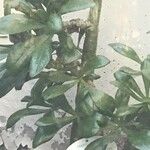
Tylecodon paniculatus
Botterboom
Description
Source: leafsnapTylecodon paniculatus, also known as butter bush, butter tree, butterboom or rooisuikerblom (Afrikaans), is a species of succulent plant in the genus Tylecodon belonging to the family Crassulaceae.
Care Guide
💧 Water
☀️ Light Full sun
The butter tree does best where sunlight intensity stays high throughout the day. Because it comes from dry habitats, it withstands heavy sun exposure, and comparable light levels encourage healthy growth. Insufficient or excessive sunlight does not seriously harm the plant; however, too little can slow its growth, while too much may cause leaf scorch.
What are the sunlight requirements for a Butter Tree?
The Butter Tree (Tylecodon paniculatus) requires full sun, meaning it should receive above 6 hours of sunlight daily. It is important to observe the movement of sunlight through your garden to identify spots that provide a good balance of light and shade, catering to the plant's needs and ensuring its wellbeing. The Butter Tree thrives best when the intensity of sunlight is high throughout the day, given its origins in arid environments. Although it can tolerate both a lack and an excess of sunlight, insufficient light may slow down its growth, whereas too much sunlight could cause leaf scorch.
How can artificial lighting be used for indoor Butter Trees?
For indoor Butter Trees, especially in winter or less sunny spaces, artificial lighting provides a vital solution for optimal growth. To create an effective artificial lighting setup: 1. Choose the right type of light such as LED, which can be tailored to the specific wavelengths needed by your plants. 2. Ensure the right amount of artificial light; full sun plants need 30-50W/sq ft, partial sun plants 20-30W/sq ft, and full shade plants need 10-20W/sq ft. 3. Place light sources 12-36 inches above the plant to mimic natural sunlight, and keep them on for 8-12 hours a day to simulate natural daylight hours.
What are some symptoms of improper lighting in Butter Trees?
Butter Trees can exhibit several symptoms when they suffer from improper lighting, including small or lighter-colored new leaves, leggy or sparse growth, faster leaf drop, chlorosis (yellowing leaves due to a lack of chlorophyll), sunscald (damage from intense light), leaf curling (to minimize water loss), wilting (loss of turgor pressure), and leaf scorching (brown, dry patches on leaves). These symptoms indicate either too much or too little light exposure, affecting the plant's health and growth.
How can I remediate lighting issues for my Butter Tree?
To address lighting issues with your Butter Tree, consider the following solutions based on the plant's location. Indoors: Gradually move your plant to a sunnier spot, aiming for at least 6 hours of direct sunlight through a south-facing window. If moving is not an option, use artificial light such as desk lamps or professional grow lights for at least 8 hours a day. Outdoors: Gradually acclimate your plant to sunnier conditions to prevent sunburn. Ground-planted trees may benefit from pruning nearby obstructions or transplanting to sunnier spots during the dormant period. While damaged parts may not recover, new growth should reflect improved health with adequate light.
🌡️ Temperature 20–37.8°C
Although the Butter tree can tolerate some heat, it mainly thrives and grows in cooler seasons and goes dormant in summer. In very hot summer weather, give it shade to prevent scorching from strong sunlight. Watering should be reduced or stopped during the hottest part of the year to avoid root rot. The tree shows vigorous growth in winter and spring, and if temperatures do not fall too low it will continue to grow steadily.
What is the botanical name of the Butter tree?
The botanical name of the Butter tree is Tylecodon paniculatus.
💨 Humidity
🪴 Soil 6-7
🌱 Fertilizer
For the Butter tree, light applications of fertilizer once or twice a year during the growing season are sufficient. Do not fertilize in winter or summer when the tree is dormant. Reduce the amount of fertilizer for plants that have been repotted and wait a couple of months after repotting before you fertilize. Fertilizing promotes healthy growth and encourages blooming.
🪴 Pot & Repot 2-3 years
Repot the butter tree every 2 to 3 years during its dormant period, using a slightly larger pot to prevent the roots from becoming overcrowded. Make sure the pot has good drainage to avoid root rot. After repotting, place the butter tree in a location with bright, indirect light. Water it sparingly once you notice new growth.
✂️ Pruning
Pruning the butter tree from early to late winter encourages both growth and flowering. To do this, remove any dead branches and shape the tree for better structure. Be sure to use clean, sharp tools to prevent infections. This practice improves air circulation, controls the tree's size, and helps maintain a healthy and attractive plant.
🌿 Propagating
🐛 Diseases & pets
☠️ Toxicity
Characteristics
- Plant Type
- Shrub
- Life Cycle
- Perennial
- Genus
- Tylecodon
- Family
- Crassulaceae
- Hardiness Zone
- 9-11
- Mature Height
- 1.83 m
- Mature Spread
- 0.91 m to 1.22 m
- Leaf Color
- Light Green, Gray
- Leaf Type
- Evergreen, Deciduous
- Flower Color
- Yellow
- Flower Size
- 1.02 cm to 1.52 cm
- Bloom Time
- Mid winter, Late winter, Early spring
- Planting Time
- Summer
- Harvest Time
- Early spring, Mid spring