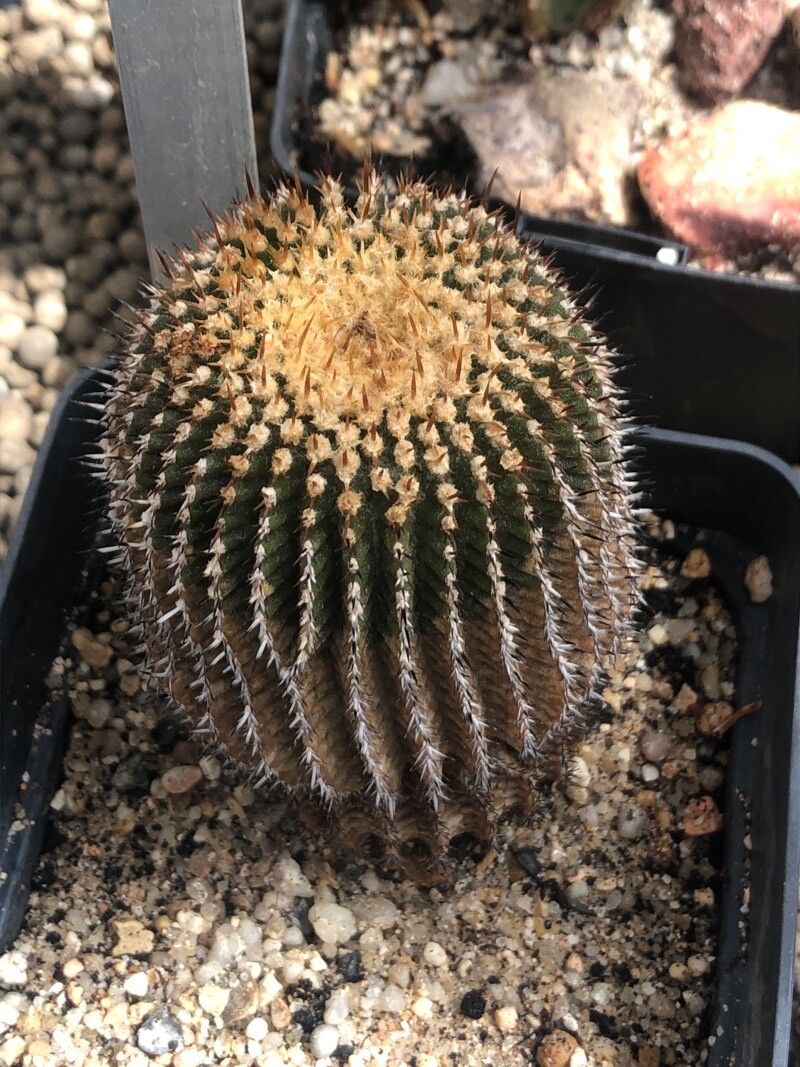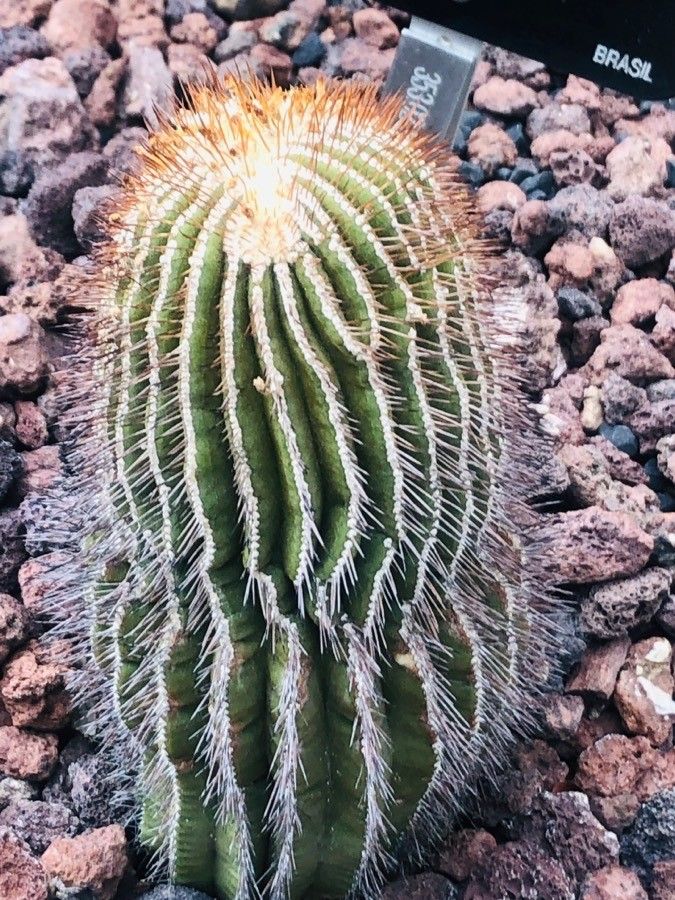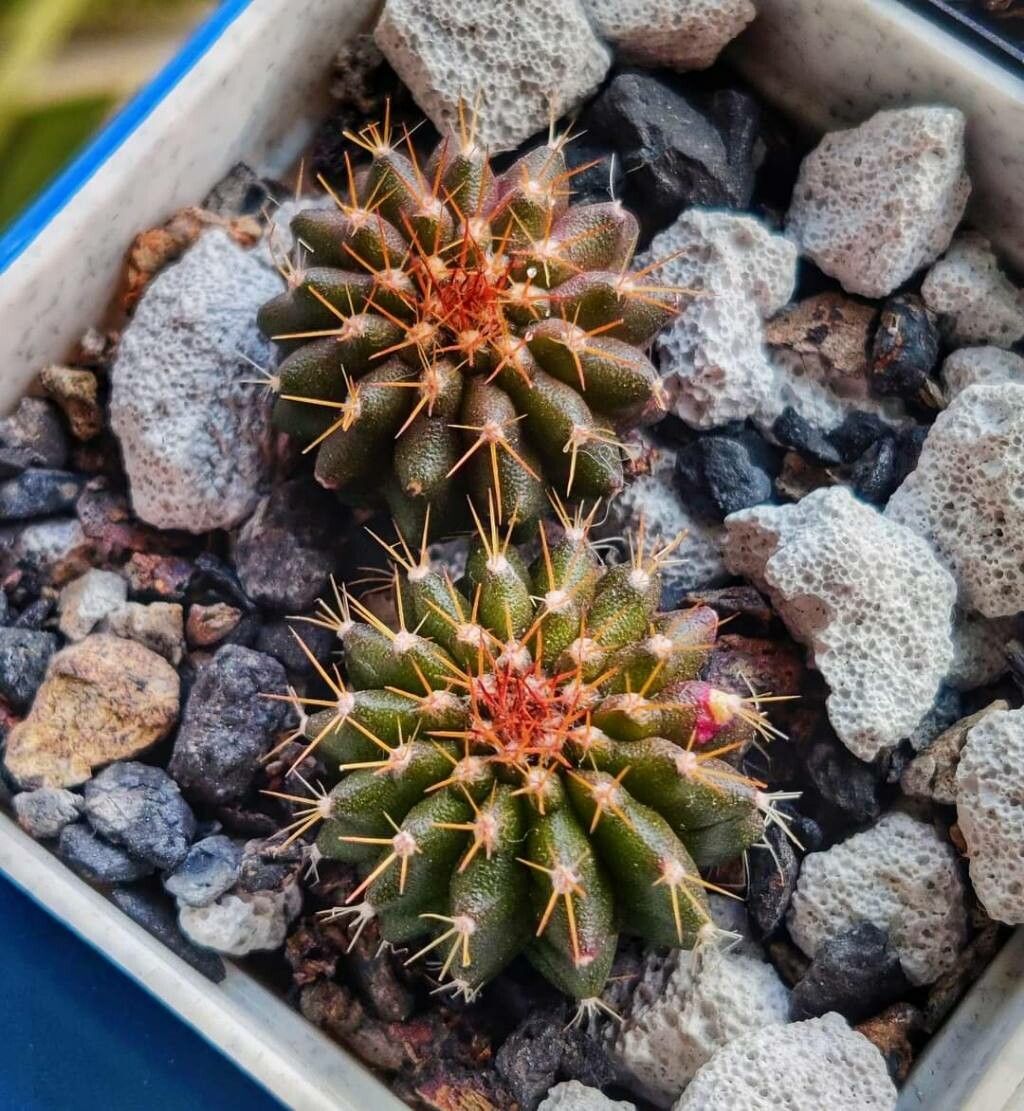
Uebelmannia buiningii is a species of plant in the family Cactaceae. It is endemic to Brazil. Its natural habitat is dry savanna. It is threatened by habitat loss.
Uebelmannia buiningii is fairly resistant to disease and can tolerate normal care routines without becoming ill easily. That said, it can be vulnerable to mealybugs; these pests may inflict some harm but are usually not a major danger. Regarding care, Uebelmannia buiningii tolerates drought and does not need frequent watering. It can endure extended intervals without water and requires little fertilizer. However, it is very prone to root rot when exposed to poor lighting and excessive watering. In general, Uebelmannia buiningii is a good choice for people who prefer to spend less time on plant care, though it's crucial to know and meet its basic requirements. It is especially appropriate for those who are away for long stretches and might often forget to water their plants.
How to keep Uebelmannia Buiningii.
Light
Uebelmannia buiningii flourishes with ample sunlight, which supports its healthy growth and development. It can also tolerate somewhat less sunlight than its ideal. Too much or too little light may impede its vigor. Its native habitat features conditions like these.
Temperature
Uebelmannia buiningii originates from areas where temperatures range between 68 and 100 °F (20 to 38 °C). It does best within that span and may require temperature adjustments to maintain those conditions as seasons change.
Fertilizer
For Uebelmannia buiningii, light applications of fertilizer one to two times a year during the growing season are sufficient. Avoid fertilizing in winter and summer when the plant is dormant. Reduce the amount of fertilizer for repotted plants and wait a couple of months after repotting before fertilizing. Fertilizing supports healthy growth and encourages blooming.
Pruning
Uebelmannia buiningii requires very little pruning. However, it's important to remove any withered flowers and branches. This helps focus nutrients on healthy growth, boosting the plant's vitality and overall health.
Pot & Repot
Repot Uebelmannia buiningii in spring or summer, selecting a pot slightly larger than the current one that has good drainage. Use a sandy or gritty cactus mix that drains well. Handle the plant carefully to avoid the spines. Let the cactus dry out before repotting to help prevent root rot. After repotting, wait for a week before watering so the roots can heal.
Botanical profile.
- Plant Type
- Succulent
- Life Cycle
- Perennial
- Genus
- Uebelmannia
- Family
- Cactaceae
- Hardiness Zone
- 10-11
- Mature Height
- 10 cm to 13 cm
- Mature Spread
- 8 cm
- Leaf Color
- Dark Green
- Leaf Type
- Evergreen
- Flower Color
- Yellow
- Flower Size
- 2.03 cm
- Bloom Time
- Summer
- Planting Time
- Summer
- Harvest Time
- Late summer, Early fall, Mid fall
Reader questions.
What are the sunlight requirements for Uebelmannia buiningii?
Uebelmannia buiningii thrives best with ample sunlight exposure, ideally above 6 hours a day described as full sun, but it can also tolerate partial sun, about 3-6 hours of sunlight daily. It's important to observe the movement of sunlight through your garden to find the perfect spots that cater to the needs of your plants, ensuring they receive a balanced amount of light and shade for their optimum growth and happiness.
Can Uebelmannia buiningii grow under artificial lighting?
Yes, Uebelmannia buiningii can grow under artificial lighting, which is especially useful when natural sunlight is insufficient, such as during winter or in less sunny indoor spaces. Optimal growth under artificial lights can be achieved by selecting the right type of light, like LED, which can be customized for plant needs. For full sun plants, 30-50W/sq ft is necessary, partial sun plants need 20-30W/sq ft, while full shade plants require 10-20W/sq ft. The light source should be placed 12-36 inches above the plant, and the duration should mimic natural daylight hours, typically between 8-12 hours per day.
What are the symptoms of inadequate lighting for Uebelmannia buiningii?
Symptoms of inadequate lighting for Uebelmannia buiningii include small new leaves, leggy or sparse growth, faster leaf drop, slowed or ceased new growth, lighter-colored or pale new leaves indicating a lack of chlorophyll, chlorosis which entails leaves turning yellow due to breakdown of chlorophyll, sunscald visible as bleached areas on the plant, leaf curling as a defense mechanism to minimize water loss, wilting from excessive water loss, and leaf scorching characterized by brown, dry edges on leaves. These symptoms highlight the plant's struggle under suboptimal light conditions.
How can I adjust the light conditions for my Uebelmannia buiningii?
Adjusting light conditions for your Uebelmannia buiningii involves several strategies. Indoor plants may benefit from being slowly moved to sunnier spots until they receive at least 6 hours of sunlight or using artificial lights like desk lamps or professional grow lights for at least 8 hours daily. Outdoors, it's crucial to gradually increase sunlight exposure to prevent sunburn, moving plants progressively sunnier each week. If physical obstructions like trees block sunlight, consider pruning or transplanting to better-lit locations, especially smaller plants during their dormant period for less stress.