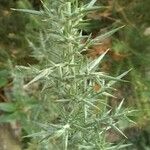
Ulex europaeus
Common Gorse · Gorse · European gorse · Whin · Furze
Description
Source: leafsnapUlex europaeus, commonly known as gorse or furze, is a spiny evergreen shrub belonging to the Fabaceae family. Native to Europe and North Africa, it has also been introduced to various other regions, including North America, Australia, and New Zealand. This shrub can grow up to 2-3 meters tall and features bright yellow flowers that bloom from late winter through early summer. Gorse is highly adaptable and can thrive in a range of soil types, including poor soils. It has the ability to fix nitrogen in its roots, making it valuable for soil improvement. However, in some areas, it can become invasive, outcompeting native vegetation. Historically, gorse has been used for various purposes, such as fuel for fires, animal fodder, and medicinal remedies. In some cultures, its flowers symbolize love or good luck. Despite its spiny nature, which makes it difficult to handle, gorse provides significant habitat for wildlife. Birds and insects often use its dense foliage for nesting sites or as a food source. Overall, Ulex europaeus is an intriguing species with both positive and negative impacts on ecosystems, depending on its location.
🌳 Common gorse can surprise people by its use in traditional fabric dyeing, yielding a bright yellow dye from its blossoms. It has also been used historically as forage for livestock, particularly in winter when other food sources are scarce. The spiky bushes have likewise been used as protective barriers for livestock and property boundaries, taking advantage of their dense, formidable structure.
🎭 Safety, Funds
Care Guide
💧 Water Every 7 days
Common gorse thrives in well-drained soil with moderate moisture, avoiding areas prone to waterlogging. It is well-suited to temperate climates and is drought-tolerant, requiring watering only every two weeks. As an evergreen plant, common gorse retains moisture throughout the year, which helps maintain its foliage and resilience against temperature changes.
How should I water my Common gorse plants to keep them healthy?
Your Common gorse does not require specific watering methods. You can use any watering equipment, such as watering cans, hoses, or even cups, to water the plant. Ensure that you water the soil directly and evenly, to provide adequate water to all parts of the root system. It's best to use filtered water to avoid harmful particles from tap water and water that is at or slightly above room temperature to prevent any shock to the Common gorse. However, the plant typically responds well to any type of water.
What should I do if I give my Common gorse too much water or too little water?
Outdoor plants, especially newly planted ones or seedlings, can be prone to lack of watering. It's important to remember that you should water them consistently for a few months when they are small or newly planted. Once the roots are established, Common gorse can rely on rain most of the time. When Common gorse is planted in pots, overwatering is often a common issue. If you accidentally overwater your Common gorse, it's important to take immediate action to remedy the situation. First, stop watering the plant right away to minimize the effect of overwatering. Then, remove the Common gorse from its pot to check its roots. If there are no signs of root rot, you can return the plant to its container. However, if you do find signs of root rot, trim away any affected roots and consider applying a fungicide to prevent further damage. Finally, repot the Common gorse in well-draining soil. In the case of underwatering, simply water the Common gorse more frequently. Underwatering is usually an easy fix. When a plant is underwatered, its leaves may droop, dry out, and fall off. However, they will quickly return to fullness after sufficient watering. It's important to correct your watering frequency as soon as you notice signs of underwatering.
How much should I water my Common gorse?
Most outdoor plants can survive with rainfall, but if your area lacks rain, water them every 2 weeks in spring and fall, and more often in summer. In winter, water less since plants grow slower. Common gorse should be watered more when young or newly planted. For potted plants, you can set a regular watering schedule, but it may not always work for the specific conditions. Adjust the frequency based on soil moisture. Wait until the top few inches of soil have dried out before watering again.
How often should I water my Common Gorse?
When watering your Common gorse, you don't always need to give it a lot of water. Instead, if only a few inches of soil have dried since your last watering, give it about five to ten ounces of water each time. You can also decide how much water to give based on the soil moisture. To ensure your Common gorse gets enough moisture, water enough to moisten all the dry soil layers since the last watering. If more than half of the soil is dry, give more water until excess water drains from the pot. If your Common gorse is planted outdoors where it gets plenty of rain, it may not need extra watering. When the Common gorse is young, make sure it gets 1-2 inches of rain per week. As it grows, it can rely on rainwater, but in hot weather with no rain for 2-3 weeks, give it a full watering to prevent stress.
How can I know if I am giving enough water to my Common gorse?
Common gorse is more likely to be overwatered, and there are several signs to watch for in such cases. An overwatered Common gorse will typically have yellowing leaves and may lose some leaves. Additionally, overwatering can cause the plant's overall structure to shrink and promote root rot. Conversely, an underwatered Common gorse will also start to wilt, with brown or brittle leaves. Whether you notice signs of overwatering or underwatering, it is important to take action and restore the health of your Common gorse.
☀️ Light Full sun
Common gorse thrives in environments akin to its native habitat where sunlight is continually unblocked. Its growth and likelihood of survival increase when sunlight is plentiful. However, constant exposure with no shade at all can cause stress and may impede its development.
What are the sunlight requirements for Common Gorse (Ulex europaeus)?
Common Gorse (Ulex europaeus) thrives best in full sun, requiring more than 6 hours of sunlight daily to flourish. It's crucial to monitor the sunlight's trajectory through your garden carefully, selecting locations that offer an optimal mix of light and shade. This careful placement ensures the plants receive the light they need while avoiding potential harm from too much direct exposure, thereby supporting their overall health and happiness.
What are the essential growth conditions for Common Gorse?
Common Gorse flourishes in environments that mimic its native habitat, with plentiful sun exposure and minimal to no shade. This unobstructed access to sunlight boosts its growth and survival chances. However, it's important to note that continuous exposure to full sunlight without any shade can stress the plant, potentially affecting its development negatively. For indoor plants, adequate lighting is crucial, particularly in spaces with low natural sunlight. Artificial lighting, such as LED lights, provides an effective alternative, helping to promote healthier and faster growth by offering the right wavelengths of light the plants need. Depending on the plant's sunlight requirements, artificial lighting should range between 10-50W/sq ft, with the light source placed 12-36 inches above the plant for about 8-12 hours per day.
What are the symptoms of insufficient light in Common Gorse?
When Common Gorse does not receive enough sunlight, it may display several symptoms indicating light deficiency. These include the growth of smaller leaves than previously developed ones, leggy or sparse growth characterized by elongated spaces between leaves or stems, early dropping of older leaves to conserve energy, and a halt or slowdown in new leaf production. Additionally, new leaves might appear paler or develop irregular color patterns due to insufficient sunlight, leading to a lack of chlorophyll and essential nutrients. Conditions such as chlorosis, sunscald, and leaf scorching can also occur, affecting the plant's ability to photosynthesize and overall health.
How can I address light deficiency issues in Common Gorse?
To combat light deficiency in Common Gorse, gradually introduce the plant to more sunlight by moving it to sunnier locations each week, aiming for at least 6 hours of direct sunlight daily. For indoor plants, consider placing them near a south-facing window or using artificial lights such as desk lamps or professional grow lights for about 8 hours daily to ensure they receive enough light. Outdoor plants should also be moved gradually to prevent shock and sunburn. If sunlight is being blocked by physical obstructions like trees, consider pruning to increase light exposure. For smaller plants, transplanting during their dormant period in late winter or early spring to a location with better sunlight and drainage might be beneficial. However, it's important to note that parts of the plant already damaged by insufficient light may not recover, but new growth should be healthier following these adjustments.
🌡️ Temperature 5–35°C
Common gorse is native to temperate regions and does best where temperatures range from 41 to 95 °F (5 to 35 °C). To maximize growth, change its location or give it protection when temperatures move significantly outside this range.
What is the native environment for Common Gorse?
Common gorse is native to environments with a temperate climate. It thrives best in areas where the temperature ranges between 41 to 95 °F (5 to 35 °C). For optimal growth, it is important to adjust the plant's location or provide protection when temperatures significantly deviate from this preferred range.
How does Common Gorse handle cold temperatures?
Common gorse has a strong cold resistance, making special frost protection measures typically unnecessary during winter. However, if winter temperatures are expected to drop below the limit growth temperature, it's important to protect the plant from the cold. This could include wrapping the trunk and branches with non-woven fabric or cloth, and watering the plant abundantly before the first freeze in autumn to ensure the soil remains moist and enters a frozen state. This action helps in preventing drought and water scarcity for the plant during winter and early spring.
How should you care for Common Gorse in low temperatures?
Common gorse is quite cold-tolerant. It is best kept above a certain minimum suitable growth temperature during winter. If temperatures fall below the limit growth temperature, there might not be noticeable changes during winter, but the branches may become brittle and dry in spring, with no new shoots emerging. In such cases, it is advised to prune away any dead branches that have failed to produce new leaves come spring.
What should you do if Common Gorse experiences high temperatures?
During summer, it's crucial to keep Common gorse's surrounding temperatures below a specific maximum suitable growth temperature. If temperatures exceed a certain tolerable growing maximum, the leaves may lighten in color, tips can dry and wither, and the plant becomes more susceptible to sunburn. To mitigate this, trim away sunburned and dried parts. Move the plant to a shaded location or use a shade cloth to protect it from midday and afternoon sun. Additionally, watering the plant in the morning and evening helps to keep the soil moist and supports plant health.
💨 Humidity dry (<40%)
This plant prefers dry conditions, so don't mist it. However, watering it less often can also thrive in higher humidity.
🪴 Soil 4-7
🌱 Fertilizer
The timing is important when fertilizing Common gorse. Apply fertilizer in early spring and repeat it monthly until early summer. Fertilizer encourages lovely blooms and supplies energy during both dormant and active growth phases.
Why do I have to add fertilizer to my Common gorse?
No matter what type of Common gorse you have, regular fertilization is key to ensuring a healthy plant. Providing the right nutrients promotes strong growth and helps your Common gorse withstand challenging conditions and fend off diseases and pests. The foliage of your Common gorse is a standout feature, so it is important to maintain it. This involves following a regular fertilization schedule tailored to your specific Common gorse, resulting in vibrant, lush leaves.
When should I put fertilizer on my Common gorse?
The best time to fertilize your Common gorse is in late winter or early spring. This will provide the necessary nutrients for healthy growth when the weather becomes warmer. If you live in a warm climate region, it can also be beneficial to fertilize again in early fall. This will give the Common gorse extra nutrients for the next growing season and help it withstand the winter cold without damaging the foliage. Fertilizing earlier in the fall will allow the new branches to grow and be more resilient to the cold temperatures.
When is it best to not fertilize my Common gorse?
There are specific times of the year when you should avoid fertilizing your Common gorse. Firstly, during the early and mid-winter months when the plant is dormant and does not need to be fed. Additionally, it is not recommended to fertilize the plant during late spring and summer when the weather is hotter and drier. These conditions can have a negative effect on the Common gorse when fertilized. To prevent such issues, it is advisable to only fertilize the plant in early spring and early fall.
What kind of fertilizer should I use for my Common gorse?
Common gorse plants primarily require nitrogen as their main nutrient, but this doesn't mean that phosphorus and potassium are not important. In fact, these plants need a good amount of all three nutrients, which is why a balanced fertilizer like a 10-10-10 can be effective. However, for optimal growth, a more specific nutrient ratio is often preferred for Common gorse. Fertilizers with slightly higher nitrogen content, such as a 10-6-4 ratio, tend to work well. You can choose between granular or liquid-based fertilizers for application.
How do I make my Common gorse plant healthy and grow better?
To fertilize your Common gorse, you have two options: using a granular fertilizer or a liquid fertilizer. If you choose the granular fertilizer, simply sprinkle it on the soil at the right time. The slow-release property of granular fertilizer ensures that nutrients are released gradually over time. Before applying the fertilizer, it's a good idea to lightly water your Common gorse. On the other hand, if you go with the liquid fertilizer, mix it with water and pour the mixture onto the soil around the base of your Common gorse. However, using liquid fertilizer is less common. It can also be helpful to conduct a soil test beforehand to determine whether you need to adjust the pH level before fertilizing.
🪴 Pot & Repot
✂️ Pruning
Common gorse is an evergreen shrub featuring bright yellow flowers. It requires pruning from early to late winter. During pruning, focus on removing dead or overly dense branches to encourage healthy growth and flowering. Wear protective clothing as the shrub has sharp thorns. Regular pruning is also important to prevent the shrub from becoming invasive.
🌿 Propagating
🐛 Diseases & pets
☠️ Toxicity
Characteristics
- Plant Type
- Shrub
- Life Cycle
- Perennial
- Genus
- Ulex
- Family
- Fabaceae
- Hardiness Zone
- 5-9
- Mature Height
- 2.13 m to 3.05 m
- Mature Spread
- 2.13 m
- Leaf Color
- Green
- Leaf Type
- Evergreen
- Flower Color
- Yellow
- Flower Size
- 2.03 cm
- Bloom Time
- Mid spring, Late spring, Early summer
- Planting Time
- Winter, Spring
- Harvest Time
- Late spring, Early summer, Mid summer
- Native Area
- Germany, Italy, Switzerland, Belgium, Netherlands