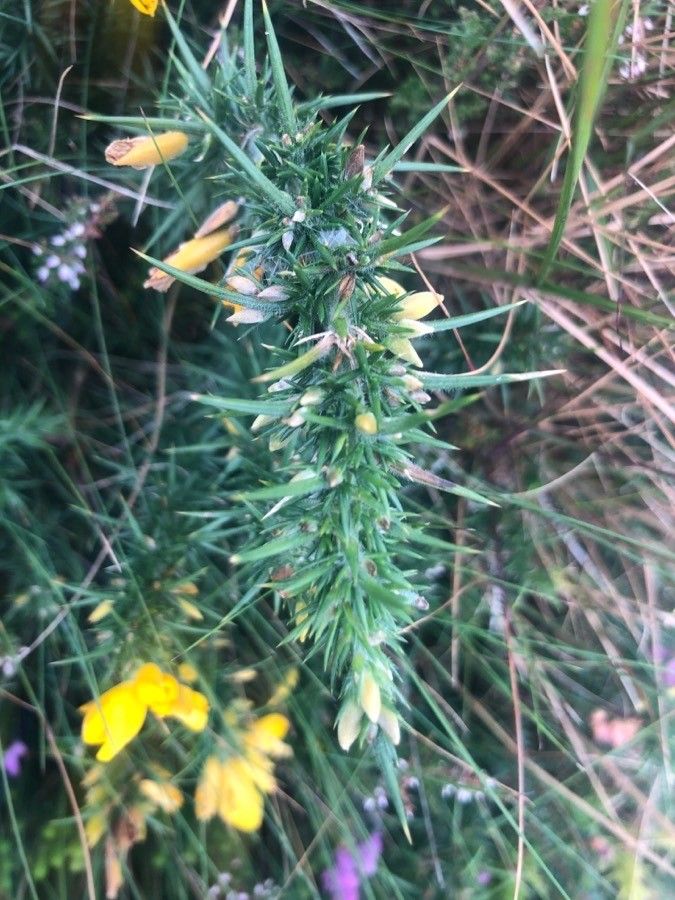
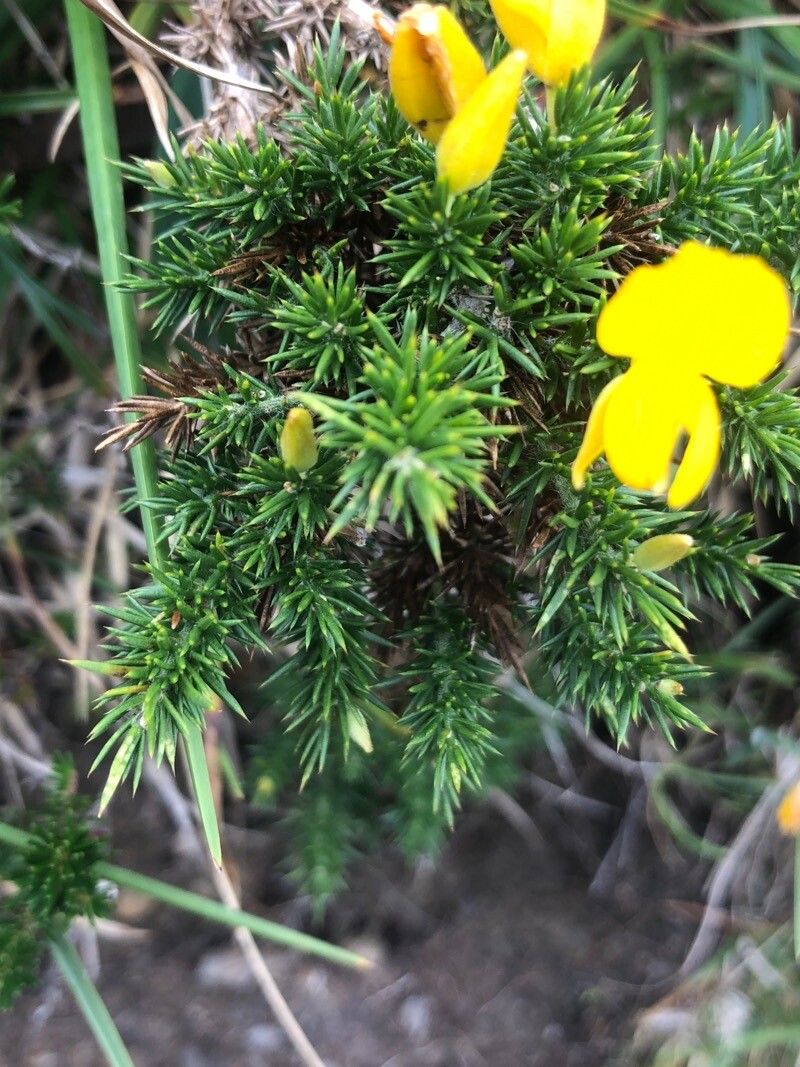
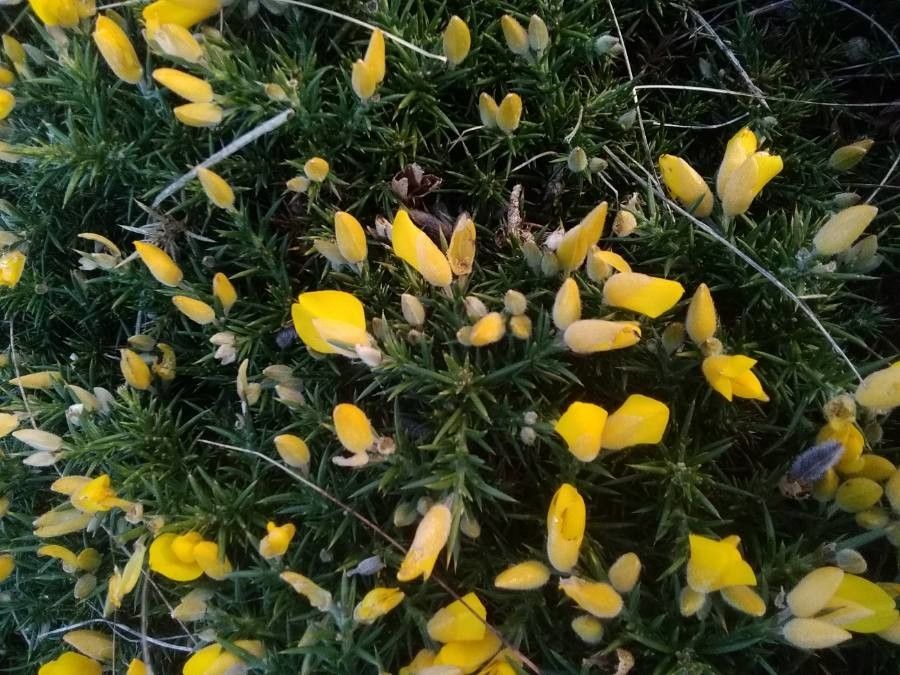
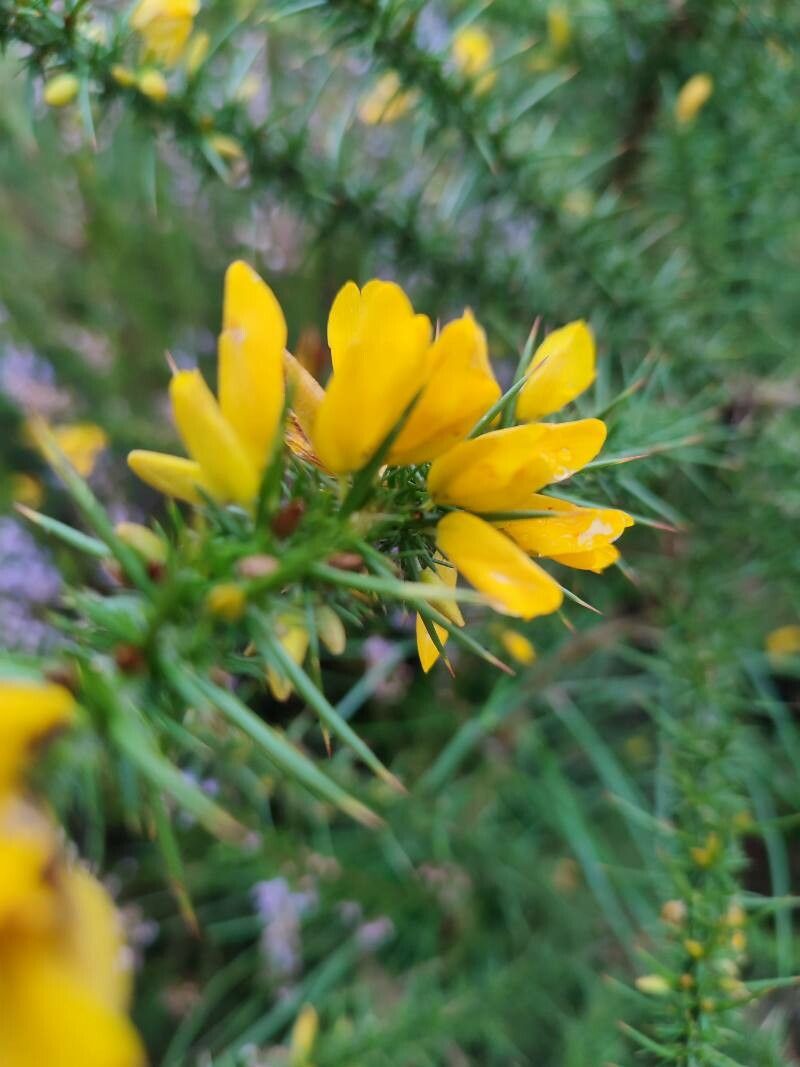
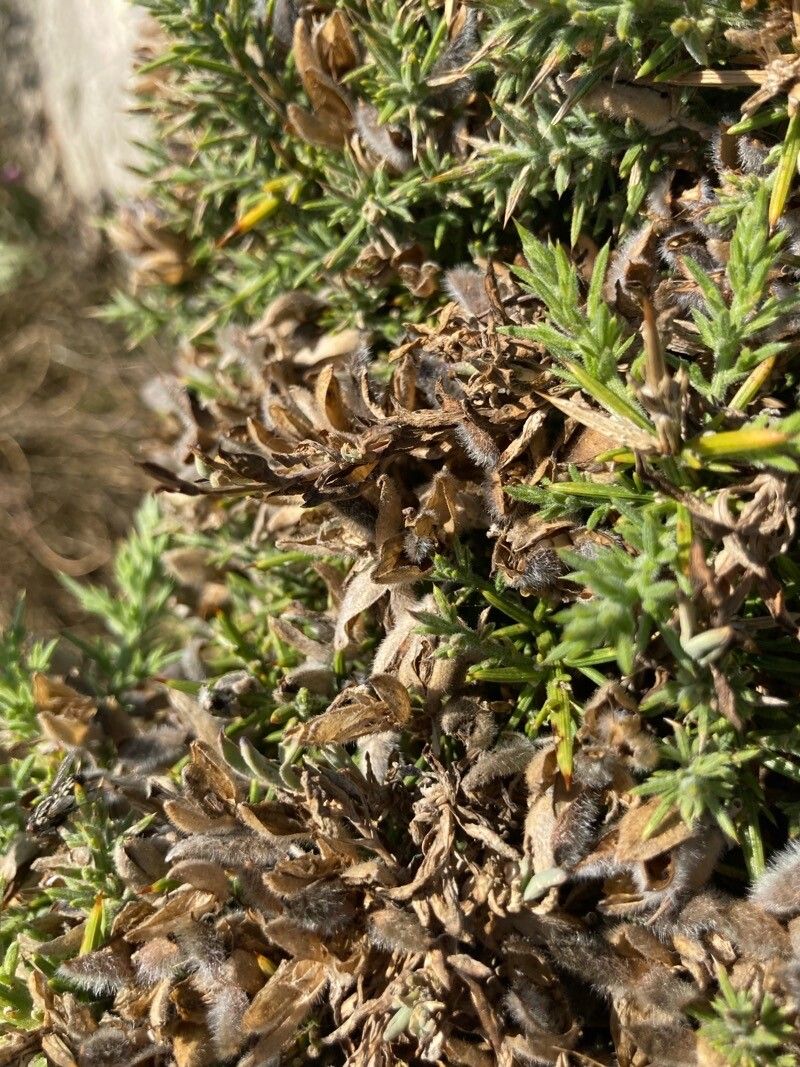
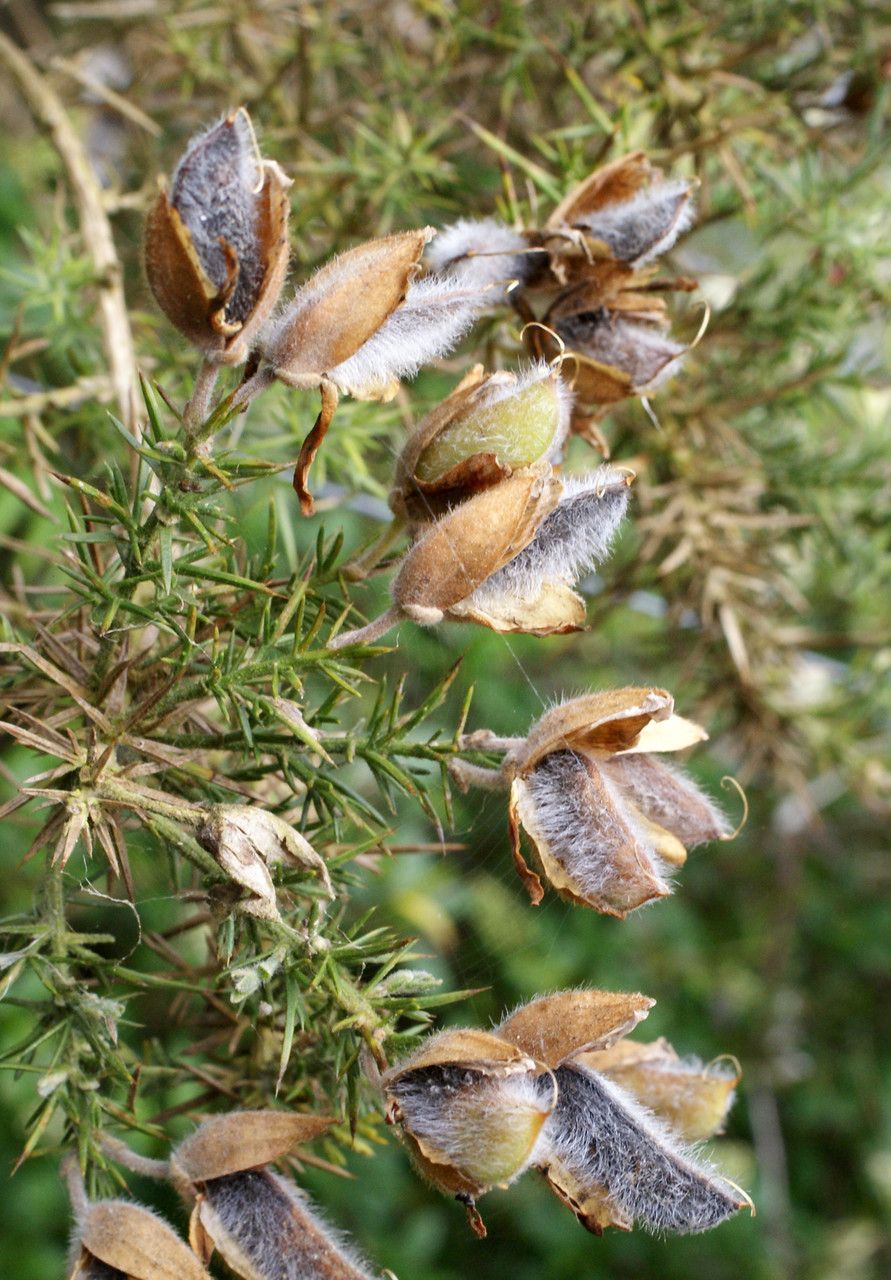
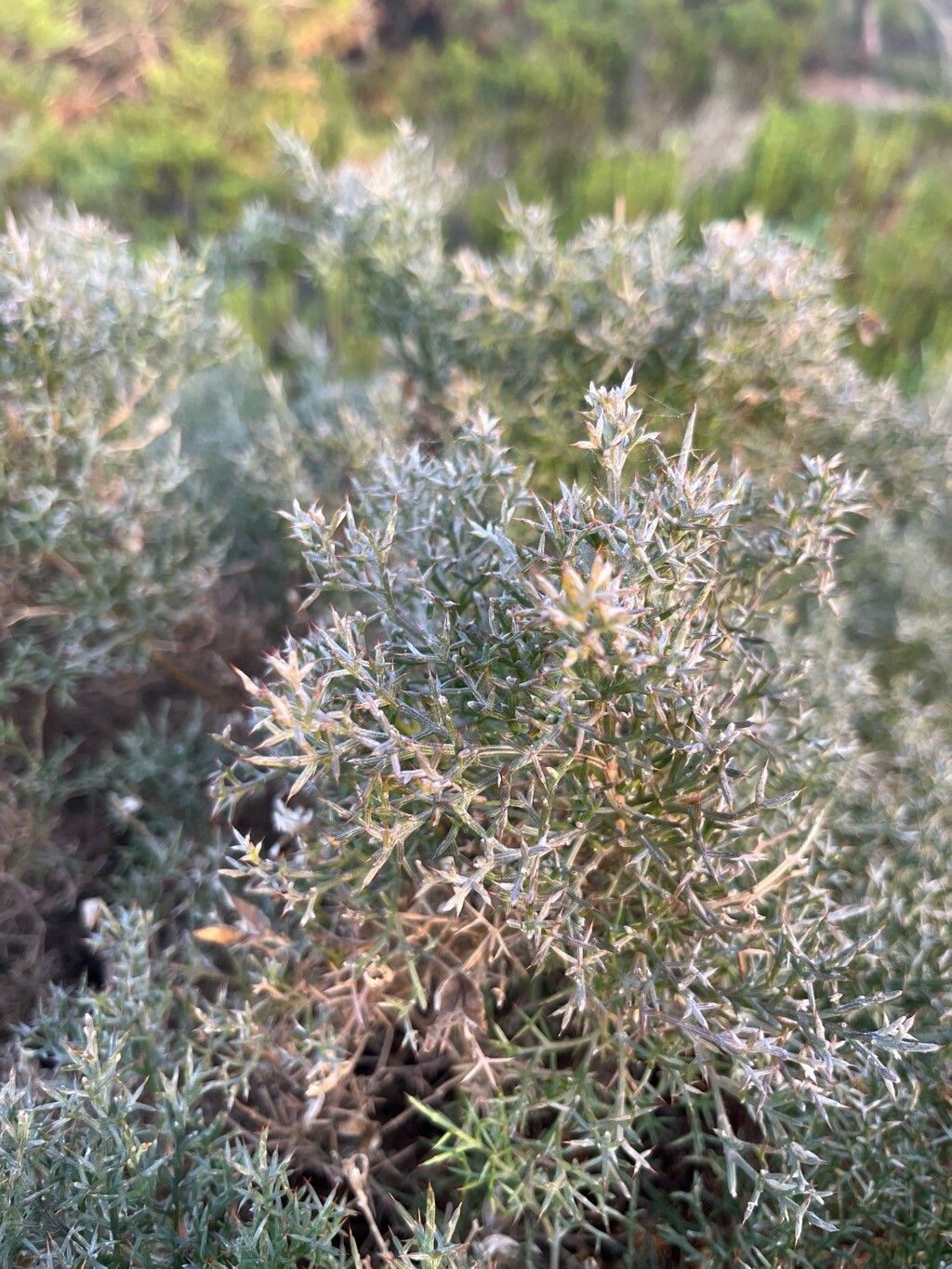
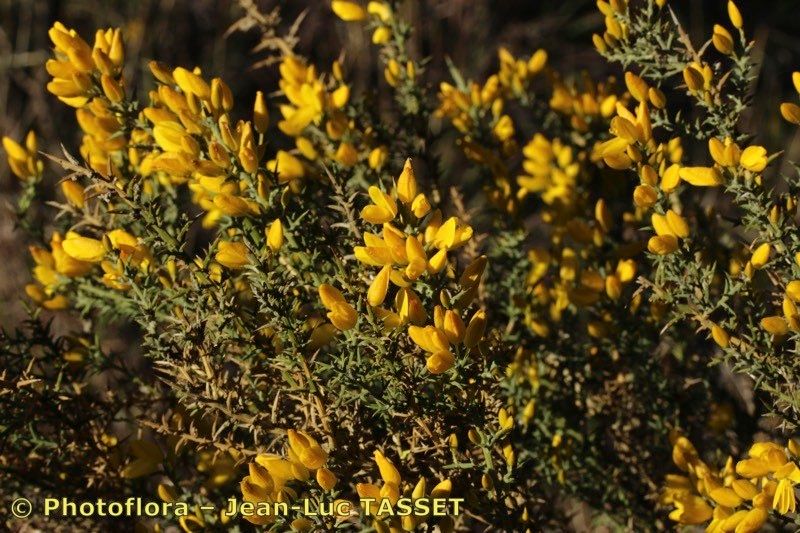
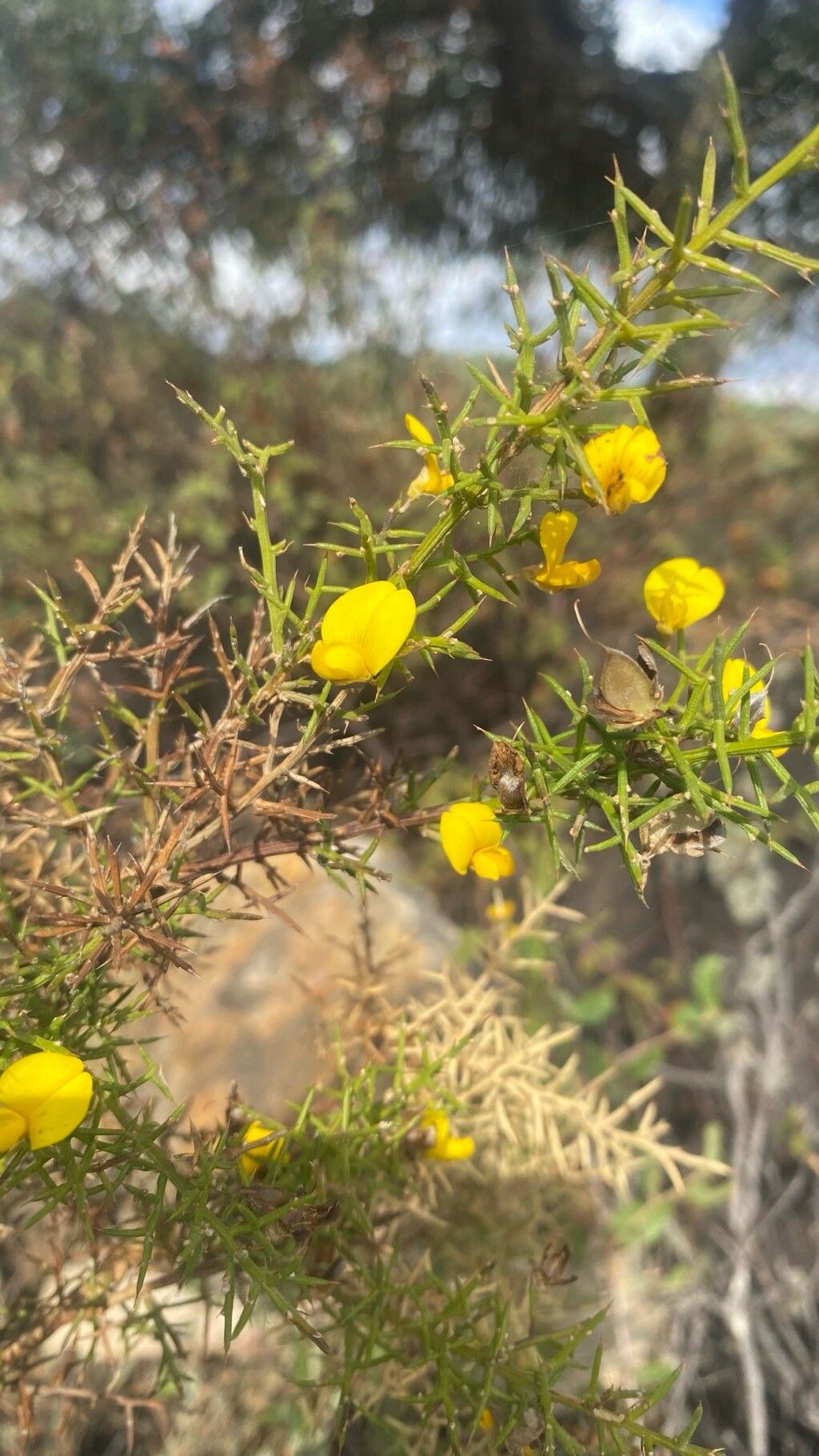
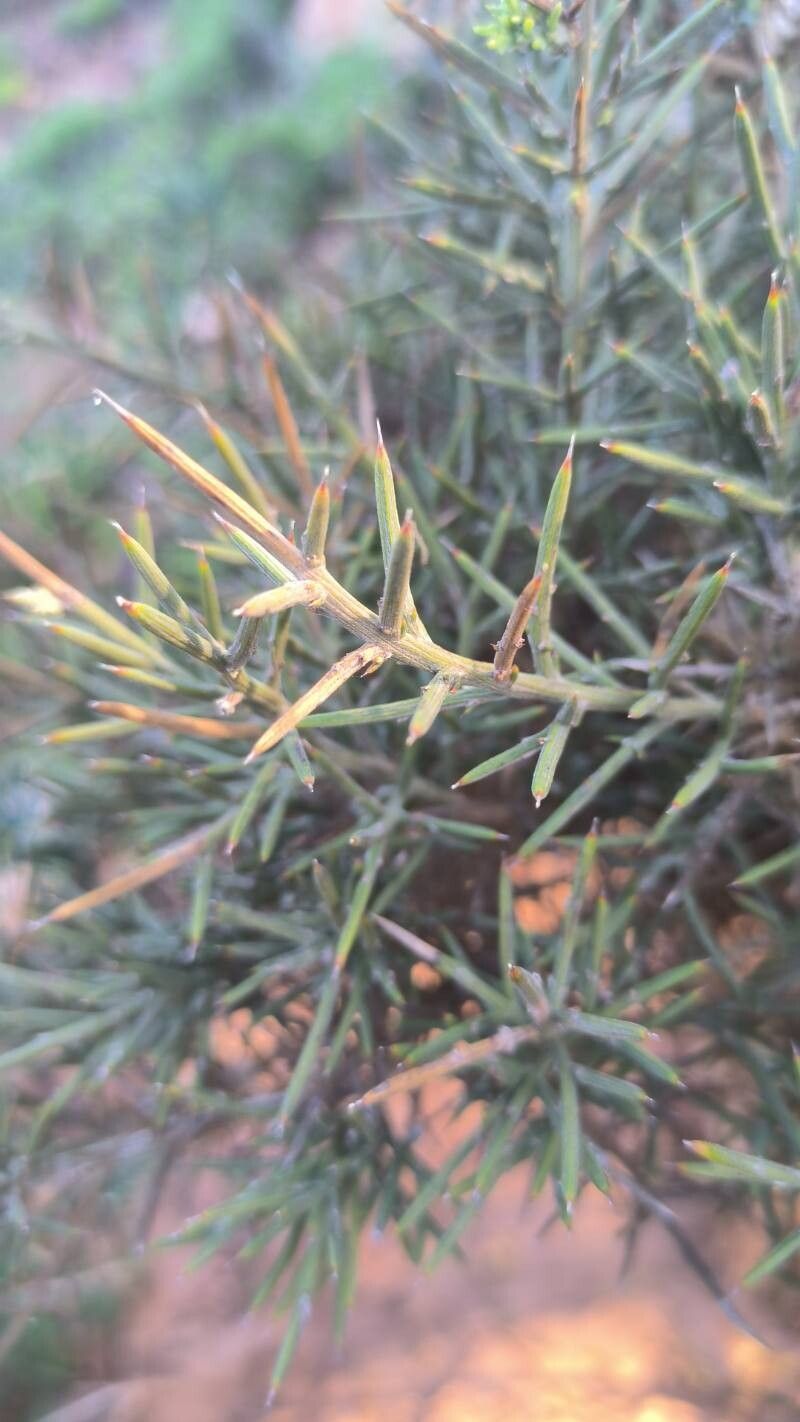
Ulex gallii, commonly known as Western Gorse or Dwarf Furze, is a small evergreen shrub belonging to the Fabaceae family. Native to western Europe, it thrives in heathlands, moors, and rocky areas. The plant can grow up to 1 meter in height, featuring spiny branches and small green leaves arranged in whorls of three.
The flowers of Ulex gallii are bright yellow and emit a distinctive coconut-like scent. Blooming from late winter through early summer, these flowers attract bees for pollination. The plant produces seed pods that split open when ripe, facilitating seed dispersal.
Traditionally, Ulex gallii has been used for medicinal purposes, such as treating skin conditions like eczema and psoriasis due to its anti-inflammatory properties. Additionally, it serves as a source of food for livestock because of its high protein content.
However, Ulex gallii can become invasive outside its native range, such as in New Zealand, where it competes with native vegetation and reduces biodiversity. Therefore, careful management is essential if the species is introduced into new environments.
Overall, Ulex gallii is an interesting plant species with both beneficial uses and potential negative impacts if not properly managed outside its natural habitat.
Welsh gorse has strong resistance to disease and is generally not prone to it. Regarding care, the plant is fairly low-maintenance. When grown outdoors it needs little watering, and larger plants typically do not require pruning. Smaller plants, however, should be trimmed after they have finished blooming. Welsh gorset is suitable for anyone with an outdoor space, such as a garden or deck, and does not require much care experience.
How to keep Ulex Gallii.
Light
Welsh gorse comes from open habitats, like sunny meadows and forest edges, which supply plenty of light. It thrives in Full Sun but can also tolerate Partial Sun, adapting well to a range of sunlight conditions.
Water
Originating from regions with irregular rainfall, Welsh gorse is drought-tolerant and benefits from watering once every 1-2 weeks. It thrives outdoors in well-draining soil, which is essential for preventing waterlogging and ensuring optimal growth and health.
Temperature
Welsh gorse is very adaptable to a variety of climate conditions, from very hot summers to cold winters. Still, it has an ideal temperature range for growth. If temperatures climb too high, the plant is vulnerable to heat and humidity stress, which can cause it to die. In places where temperatures near the lower edge of its cold tolerance, insulating the plant is important to protect it.
Fertilizer
The timing of fertilization is important for Welsh gorse. Apply fertilizer in early spring and repeat monthly through early summer. Fertilizer encourages attractive blooms and supplies energy during both dormant and active growth periods.
Pruning
Welsh gorse is a spiny shrub that produces vibrant yellow flowers. To maintain its health and appearance, it is best to prune it from early to late winter, taking care not to cut it back too severely. Concentrate on removing dead branches and thinning out the plant to improve air circulation. Regular light pruning helps encourage healthy growth and ensures abundant flowering in the following season.
Botanical profile.
- Plant Type
- Shrub
- Life Cycle
- Perennial
- Genus
- Ulex
- Family
- Fabaceae
- Hardiness Zone
- 6-9
- Mature Height
- 30 cm to 91 cm
- Mature Spread
- 0.49 m to 1.52 m
- Leaf Color
- Green
- Leaf Type
- Evergreen
- Flower Color
- Gold, Yellow
- Flower Size
- 1.52 cm to 2.03 cm
- Bloom Time
- Late summer, Early fall, Mid fall
- Planting Time
- Spring, Summer, Autumn
- Harvest Time
- Late fall, Early winter, Mid winter
- Native Area
- Spain, Ireland, United Kingdom, France
Other names.