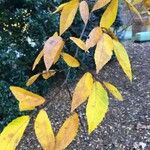
Ulmus alata
Winged elm · Wahoo elm · Small-leaf elm · Wahoo
Description
Source: leafsnapUlmus alata, commonly known as the winged elm, is a deciduous tree native to North America. Typically, it reaches a height of up to 60 feet and a spread of about 40 feet. The term "winged elm" refers to the distinctive corky wings that grow along its branches, setting it apart from other elm species. The leaves of Ulmus alata are small, oval-shaped, and have serrated edges. They are dark green during the growing season and turn yellow in the fall before shedding for winter dormancy. Its bark is gray-brown and deeply furrowed. Winged elms are hardy trees capable of thriving in a wide range of soil types and growing conditions, making them popular for landscaping projects across North America. They also exhibit good resistance to Dutch Elm Disease, which has severely affected many other elm species. Beyond their ornamental value as shade or street trees, Ulmus alata trees are also valued for their strong and durable wood, which is ideal for furniture and flooring applications. Overall, Ulmus alata is an attractive native species with numerous desirable attributes, making it an excellent choice for landscaping projects or natural area restoration efforts throughout North America.
💡 According to legend, the first elm grove appeared in celebration when the Greek hero Orpheus rescued his wife, Eurydice, from the underworld. Using the enchanting music of his harp, Orpheus captivated Eurydice's captors. Along the journey back, he paused to play a love song, and it was at that spot that the elm grove is said to have grown.
🌳 Although it was initially seen as a plain, unremarkable tree, winged elm proves excellent for craftsmanship and serves as an ideal material for sturdy furniture. Its resistance to splitting, a result of a strong, interlaced grain, is highly prized by artisans making furniture and tool handles. Beyond its traditional uses, winged elm is also being investigated as a source of renewable energy. Its biomass could provide innovative solutions for sustainable energy, emphasizing the tree's versatility and nature's resourcefulness.
🎭 Love, death, the realm of the dead
Care Guide
💧 Water Every 7 days
Winged elm, which comes from regions with varying moisture levels, is moderately drought-tolerant and thrives when exposed to alternating periods of dryness and moisture. For optimal growth, water the winged elm every 1 to 2 weeks, allowing the soil to dry out slightly between waterings. It prefers well-draining soil and benefits from increased humidity during its active growing season.
When should I water my Winged Elm?
Watering your Winged Elm is crucial for its health and growth, and there are several indicators to guide you on when to water. Firstly, check the soil's moisture by inserting your finger about 1 to 2 inches deep; if it feels dry, it's time to water. Wilting, limp, or droopy leaves are a clear sign of dehydration, as is a change in leaf color, such as yellowing or browning, which indicates water stress. During the pre-flowering stage, ensure the plant is adequately watered to support bud development. Winged Elm may require more frequent watering in conditions of high temperatures and prolonged sunlight exposure. However, be cautious of watering too early when the soil is moist to prevent root diseases, and avoid watering too late after the soil has become excessively dry to prevent stress and potential plant death.
How should I water my Winged Elm?
Winged Elm has unique watering requirements due to its drought tolerance; when it does require water, aim for a deep and thorough watering that reaches the deeper roots. Over-watering should be avoided to prevent root rot. Use a hose set at the base of the tree, allowing water to trickle slowly into the soil, which encourages deep root growth. Utilizing a soaker hose or a drip irrigation system can also be beneficial by ensuring slow, deep watering. When watering, focus around the base extending to its drip-line but avoid soaking the trunk or foliage to prevent fungal diseases. Winged Elm does not benefit from frequent shallow watering; instead, a deep watering method is preferred.
How much water does Winged Elm really need?
The water needs of Winged Elm can vary significantly based on several factors such as pot size, root depth, and plant size. For a medium-sized Winged Elm in a 12-inch pot, roughly 1 to 1.5 liters of water per week is a good guideline. Plants in the ground require more generous and deeper watering. Proper hydration results in firm, vibrant leaves, whereas both over and under-watering can cause leaves to droop, yellow or brown and fall off, affecting the plant's growth rate. Winged Elm's deep roots necessitate a thorough soaking, particularly for newly planted trees or those in pots to ensure water reaches deeper soil layers or the bottom of the pot.
What kind of water is best for Winged Elm?
The best type of water for Winged Elm is rainwater, as it is free of chemicals, naturally balanced and best suits the tree's needs. Filtered water is a good alternative provided harmful contaminants are removed. Tap water can be used in the absence of other sources but bear in mind it might contain chlorine and other chemicals potentially harmful to the plant. Winged Elm has moderate chlorine sensitivity; if using tap water, it's recommended to let it sit out for 24 hours before use to allow chlorine to evaporate. Ideally, water used should be at room temperature, approximately 68-72°F (20-22°C), to avoid stressing the plant with extreme temperatures.
How do Winged Elm's watering needs change with the seasons?
Winged Elm's watering needs adjust with the changing seasons. Springtime, marking the plant's active growth phase, requires regular, consistent soil moisture. In summer, the need for water might increase due to higher temperatures and evaporation rates; water deeply and maintain even soil moisture without overwatering. During autumn, as the plant begins to enter dormancy, reduce watering frequency, allowing the top inch of soil to dry out before watering again. In winter, during dormancy, water needs are minimal; water only when the soil has completely dried out, which could be every few weeks, depending on indoor conditions and humidity.
☀️ Light Full sun
Winged elm performs best in locations that receive abundant sunlight for most of the day, supporting healthy growth. It can, however, tolerate spots where the sun is slightly filtered. Too much or too little sunlight can affect its health, leading to a decline in its vigor.
What are the sunlight requirements for plants?
Plants have diverse sunlight requirements that can be broadly categorized into full sun and partial sun. Full sun refers to areas that receive more than 6 hours of direct sunlight daily, ideal for plants that thrive under extensive exposure to sunlight. Partial sun signifies places with about 3 to 6 hours of sunlight, suitable for plants that prefer a moderate amount of sunlight. It's essential to observe the movement of sunlight through your garden to ensure that each plant is placed in an optimal location that balances light and shade, fostering their health and happiness.
How does sunlight affect the growth of a winged elm?
A winged elm flourishes in environments that benefit from an abundance of sunlight throughout the day, which is crucial for its healthy development. It can tolerate slightly shaded areas, though too much or too little sunlight may adversely affect its condition, leading to a decrease in vitality. Additionally, indoor plants lacking natural light can benefit from artificial lighting to ensure optimal growth. For example, LED lights mimic natural sunlight, promoting healthier growth by providing the specific wavelengths needed by the plant. The amount of artificial light required varies depending on whether the plant needs full sun, partial sun, or full shade.
What symptoms indicate a winged elm is receiving inadequate light?
When a winged elm doesn't get enough light, it may show several signs indicating stress. These symptoms include smaller new leaves, leggy or sparse growth, premature leaf drop, halted new growth, or lighter-colored new leaves. Additionally, excessive sunlight can lead to chlorosis (loss of green color in leaves), sunscald (damage from intense light), leaf curling, wilting, and leaf scorching. These symptoms reflect the plant's struggle with inadequate sunlight or overexposure, affecting its ability to photosynthesize and maintain overall health.
How can I ensure my winged elm receives enough sunlight?
To guarantee your winged elm receives sufficient sunlight, you can take several steps based on whether the plant is indoors, outdoors, or in the ground. For indoor plants, gradually move them to sunnier spots, aiming for at least 6 hours of direct sunlight by utilizing south-facing windows or artificial lighting if moving them isn't feasible. Outdoor plants benefit from gradual relocation to sunnier areas, preventing sunburn by avoiding abrupt light intensity changes. For plants in the ground, reducing obstructions by pruning blocking foliage and transplanting smaller plants during their dormant periods to sunnier locations can improve sunlight access. Note that parts of the plant damaged by insufficient light might not recover, but new growth will be healthy with improved light conditions.
🌡️ Temperature 10–35°C
The native temperature range for the winged elm extends from 50 to 95 ℉ (10 to 35 ℃). As a temperate woody species, it favors temperatures between 50 and 95 ℉ (10 to 35 ℃). In hotter months, providing some shade is advised to help the plant acclimate to higher temperatures. In colder months, adding mulch around the base of the plant can help retain warmth.
What is the ideal temperature range for growing a winged elm?
The ideal temperature range for growing a winged elm is between 50 to 95 °F (10 to 35 °C). This temperate woody plant thrives in environments within this temperature range. To help the plant adjust to higher temperatures during hotter seasons, providing some shade is recommended. Conversely, in colder seasons, adding mulch around the base of the plant can help maintain warmth. Despite winged elm's strong cold resistance, where special frost protection measures are usually not necessary during winter, protection is advised if temperatures are expected to drop below -25°C by wrapping the trunk and branches with non-woven fabric or cloth. It's also beneficial to water the plant abundantly before the first freeze in autumn to ensure the soil remains moist and enters a frozen state, aiding in drought prevention during winter and early spring.
How does low temperature affect winged elm and what are the solutions?
Winged elm is cold-tolerant and performs best when the temperature stays above 10°C. It should ideally be kept above -15°C during winter. However, when temperatures fall below -25°C, no immediate noticeable changes may occur during the winter, but come spring, the branches might become brittle and dry, and no new shoots will emerge. The solution for this condition in the spring is to prune away any dead branches that have failed to produce new leaves, helping the plant to focus its energy on healthy growth.
How does high temperature affect winged elm and what are the solutions?
During the summer, it's best to keep winged elm below 35°C. Exposure to temperatures above 41°C can cause the leaves to lighten in color, the tips to become dry and withered, and the plant may become more susceptible to sunburn. To address this, trim away the sunburned and dried-up parts of the plant. Additionally, move the plant to a location that provides shade during the midday and afternoon sun, or utilize a shade cloth. Ensuring the winged elm is watered in the morning and evening will keep the soil moist and help the plant remain healthy in high temperatures.
💨 Humidity
🪴 Soil 5-7
🌱 Fertilizer
Fertilize your Winged elm in early spring to encourage healthy growth. Regular fertilization improves overall health, producing vigorous growth, increased tolerance to harsh conditions, and better resistance to diseases and pests. Maintain a specific fertilization schedule for your Winged elm to ensure vibrant foliage with deep color and a lush appearance.
Why is it important to add fertilizer to my Winged elm tree?
No matter what type of Winged elm you have, regularly fertilizing it will promote overall health. By supplying the proper nutrients, you will encourage stronger growth and enhance its resilience to challenging conditions. This will also boost its ability to ward off diseases and pests. The foliage of your Winged elm is particularly beautiful, so it is crucial to maintain its condition. To achieve this, establish a consistent fertilization routine tailored to your specific Winged elm. This will result in vibrant, lush leaves with a deep color.
When should I fertilize my Winged elm tree?
To successfully fertilize your Winged Elm, it is recommended to do so in late winter or early spring. This will provide the necessary nutrients for the tree to resume healthy growth as the weather warms up. If you live in a warm climate region, it is also beneficial to give your Winged Elm an additional dose of fertilizer in early fall. This helps to provide extra nutrients for the following growing season and also makes the tree more resilient to winter cold, preventing damage to its foliage. Fertilizing earlier in the year will ensure that new branches have enough time to grow and withstand the harsh winter conditions.
When is it not a good idea to give fertilizer to my Winged elm tree?
There are a few specific times each year when you should avoid fertilizing your Winged elm. The first is during the early and mid-winter months when the tree is dormant and does not require any feeding. Another time to avoid fertilizing is during late spring and throughout the summer because the weather tends to be hotter and drier, which can have a negative impact on the tree if fertilized. To prevent these issues, it is best to stick to a fertilization schedule that focuses on feeding the tree only in the early spring and early fall.
What kind of plant food does my Winged elm tree require?
The most important nutrient for a Winged elm is usually nitrogen, but that doesn't mean phosphorus and potassium are unimportant. In fact, your Winged elm needs a decent amount of all three nutrients, which is why a balanced fertilizer like a 10-10-10 can be effective. However, a more precise nutrient ratio often leads to optimal growth. Fertilizers with slightly higher nitrogen content, such as a 10-6-4 ratio, can work well. When fertilizing, you have the option of using a granular or liquid-based fertilizer.
How should I feed my Winged elm tree?
To fertilize your Winged elm, you have two options: granular fertilizer or liquid fertilizer. For granular fertilizer, simply sprinkle it onto the soil at the right time. The slow-release property of this type of fertilizer will gradually provide nutrients to the soil. It's a good idea to lightly water your Winged elm before applying the fertilizer. Alternatively, you can use liquid fertilizer. This method is less common but still effective. Mix the fertilizer with water and pour the mixture around the base of your Winged elm. Before fertilizing, it can be helpful to conduct a soil test to determine if any pH adjustments are needed.
🪴 Pot & Repot Every 12 months
✂️ Pruning
Winged elm, known for its distinctive corky wings, benefits greatly from pruning in early spring. Key techniques include removing dead, diseased, or crossing branches to maintain the tree's structure and health. Pruning in this manner promotes balanced canopy growth, improves airflow, and reduces the risk of pests and diseases. Additionally, it minimizes sap loss and stress on the tree.
🌿 Propagating
🐛 Diseases & pets
☠️ Toxicity
Characteristics
- Plant Type
- Tree
- Life Cycle
- Perennial
- Genus
- Ulmus
- Family
- Ulmaceae
- Hardiness Zone
- 6-10
- Mature Height
- 10.06 m to 17.98 m
- Mature Spread
- 9.14 m to 11.89 m
- Leaf Color
- Green
- Leaf Type
- Deciduous
- Flower Color
- Green, Red
- Flower Size
- 0.51 cm
- Bloom Time
- Early spring, Mid spring, Winter
- Planting Time
- Spring
- Harvest Time
- Late spring, Early summer, Mid summer