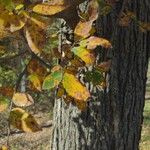
Ulmus crassifolia
Cedar elm · Basket elm · Southern rock elm · Red Elm
Description
Source: leafsnapUlmus crassifolia Nutt., the Texas cedar elm or simply cedar elm, is a deciduous tree native to south central North America, mainly in southern and eastern Texas, southern Oklahoma, Arkansas and Louisiana, with small populations in western Mississippi, southwest Tennessee and north central Florida; it also occurs in northeastern Mexico. It is the most common elm tree in Texas. The tree typically grows well in flat valley bottom areas referred to as 'Cedar Elm Flats'. The common name 'cedar elm' is derived from the trees' association with juniper trees, locally known as cedars.
🌳 Cedar elm has uses in both cultural and practical contexts. Indigenous peoples made baskets and bows from its wood, and today its timber is suitable for furniture making. The tree's plentiful nectar provides a natural sweetener and is used to produce distinctive mead. The high protein content of the leaves supports animal nutrition and signals the presence of metals in the soil — a tool for resource exploration.
🎭 I live only for you; think of me.
Care Guide
💧 Water Every 7 days
The cedar elm is well-suited to different moisture levels and typically requires moderate watering. You should water this tree every 1 to 2 weeks. As an outdoor tree, it naturally adapts to seasonal changes. In the spring, rainfall encourages its growth, while the summer's drier conditions cause it to enter a period of dormancy.
How should I water my Cedar elm tree?
To ensure excellent root development, place a garden hose at the base of the plant. Avoid spraying the leaves directly, especially if they are exposed to direct sunlight outdoors. Consider using bubblers or soaker hoses to moisten the roots. When adding or removing plants, use soaker hoses that cover the entire garden or bed to allow for deep root penetration. Make sure to drain any excess water and wait for the soil to dry before watering again. Watering at ground level can help prevent diseases. On sunny days, it may be beneficial to spray the entire bush with water. Whether potted or in-ground, remember to give the Cedar elm deep watering instead of light sprinkling.
What should I do if I give too much/not enough water to the Cedar elm tree?
An overwatered Cedar elm can show several signs of distress. Yellow leaves may appear, eventually dropping off and wilting. The plant's overall appearance may become dull and unhealthy, with mushy stems being a common symptom. It is recommended to adjust your watering schedule when these signs start to emerge. Interestingly, wilting can also indicate under watering, but with some differences. Underwatered leaves may turn crispy and dry, while overwatered ones will have soft, wilted leaves. If the soil is dry and regular watering is not sufficient, a thorough watering is recommended. However, even with enough water, the Cedar elm may still display dryness and yellow leaves due to root damage. Once the plant returns to normal, the yellowing will subside. When keeping the Cedar elm indoors, always check the moisture levels in the pot and avoid overwatering. Look out for black spots, and if present, allow the soil to dry by refraining from watering for a few days. Overwatering can lead to root rot, so if you observe discolored and slimy roots, consider transferring the plant to a different pot. Preventing root rot is crucial, so ensure that the soil does not become excessively soggy. When planting the Cedar elm outdoors, dig a bit deeper and if the soil feels too dry, it may indicate underwatering. Adequate watering is necessary for the plant's recovery.
How many times a week should I water my Cedar elm tree?
The Cedar elm prefers deep and infrequent watering, especially when planted in pots. To prevent the soil from drying out quickly, soak them in a gallon of water each time. In a cold region, water every 3 to 5 days, preferably in the morning when the soil is dry. Check the soil inside to determine if watering is needed; if the top 2-3 inches are dry, give the plant a full watering. During hot days, check the moisture daily as the heat can dry out the soil rapidly. If you have a garden, irrigation is necessary in a hot climate, usually once a week. Only water when you notice that about 2 to 3 inches of soil are too dry. Take into account the amount of rainfall and avoid overwatering to prevent root rot. Cedar elm typically grows in spring and fall; outdoor plants benefit from adding 3 to 4 inches of mulch to conserve water. Sandy soil drains faster, requiring more frequent watering, while clay soil needs less frequent watering to avoid root rot. Keep track of watering dates on a calendar and check for drooping leaves, which may indicate a need for earlier watering.
How much water does my Cedar elm tree need?
The Cedar elm requires about a gallon of water per watering schedule. For potted plants, water them deeply until water drips from the bottom of the pot. Wait for the soil to dry before watering again. Use a water calculator or moisture meter to track how much water you give to your plant each week. Water generously during the flowering period, but allow the moisture to evaporate to avoid root rot. If the Cedar elm is planted outdoors with sufficient rainfall, additional watering may not be necessary. When the Cedar elm is young or newly planted, ensure it receives 1-2 inches of rain per week. As the Cedar elm matures, it can rely solely on rainfall. Only give the Cedar elm a full watering during cooler parts of the day if the weather is too hot or if there is no rainfall for 2-3 weeks to prevent heat damage. Additional watering is needed during prolonged dry spells.
Should I water my Cedar elm more often or less often based on the time of year or the weather?
The Cedar elm needs to be outdoors and relies on rain for hydration, but during dry periods, you may need to water it. In the spring and fall, keep the soil moist but not soggy for optimal growth. During summer, hot weather and lack of rainfall can cause the water to evaporate quickly, so you may need to water more frequently to maintain moisture. In winter, the Cedar elm needs less water because it goes dormant, but make sure the soil has good drainage. When grown in pots, the Cedar elm has limited root growth, so water them well, especially in summer. It's best to water deeply once or twice a week instead of shallow sprinkles, as the latter can promote fungal growth and may not reach the roots effectively. Avoid letting the Cedar elm dry out completely in fall and winter, even when dormant. Ensure proper drainage to prevent drowning and mulch can be applied to reduce stress and conserve water.
☀️ Light Full sun
The cedar elm does best when it gets plenty of light for most of the day, which encourages growth and vigor. It can, however, still grow in areas where sunlight is less plentiful. Long stretches without enough light can impede growth, while an excessive amount can be overwhelming.
What are the sunlight requirements for cedar elm?
Cedar elm thrives best when exposed to full sun, which means it requires above 6 hours of direct sunlight each day. It can also grow under partial sun conditions, receiving about 3-6 hours of sunlight daily. However, for optimal growth and vitality, providing abundant illumination for most of the day is essential. Despite this, cedar elms can manage to grow in less sunny areas, but insufficient sunlight over extended periods can hinder their growth, while too much direct sunlight can be overwhelming. It's important to monitor the movement of sunlight through your garden to select the best spots that offer a balance of light and shade, ensuring the plants' happiness.
How does artificial lighting support cedar elm growth indoors?
Indoor cedar elms require adequate lighting for optimal growth, especially when natural sunlight is insufficient, like in winter or less sunny spaces. Artificial lighting becomes crucial, promoting faster and healthier growth. LED lights are popular for plant lighting as they can be tailored to provide specific light wavelengths needed by the plants. For full sun plants, 30-50W/sq ft of artificial light is recommended, 20-30W/sq ft for partial sun plants, and 10-20W/sq ft for full shade plants. The artificial light source should be placed 12-36 inches above the plant, mimicking natural sunlight, and kept on for 8-12 hours per day to match the length of natural daylight hours required by the species.
What are the symptoms of insufficient or excessive light exposure in cedar elm?
Cedar elms show various symptoms when they don't receive adequate light or are exposed to too much light. Symptoms of insufficient light include smaller new leaves, leggy or sparse growth, faster leaf drop, slower or no new growth, and lighter-colored new leaves. Chlorosis, sunscald, leaf curling, wilting, and leaf scorching are symptoms of excessive sunlight exposure. Chlorosis is characterized by the leaves losing their green color and turning yellow, while sunscald manifests as pale, bleached areas on the plant. Leaf curling is a defense mechanism to minimize water loss, and wilting occurs when the plant loses turgor pressure due to excessive water loss. Leaf scorching appears as brown, dry edges on leaves caused by too much direct sunlight.
How can I address light-related issues with my cedar elm?
To address light-related issues in cedar elms, it's important to gradually adjust the plant's exposure to sunlight. For indoor plants, gradually move them to a spot where they can receive at least 6 hours of direct sunlight daily, utilizing a south-facing window for maximum exposure. If the plant is large or not easily movable, consider using artificial lighting, like desk or ceiling lamps, for at least 8 hours daily, or invest in professional plant grow lights. For outdoor plants, move them to sunnier locations week by week to prevent sunburn. Note that parts of the plant affected by insufficient sunlight may not recover, but new growth will be healthy after adjusting light exposure. To reduce obstructions outdoors, prune trees that block sunlight, and for smaller plants, consider transplanting them during their dormant period to a location with sufficient sunlight and good drainage.
🌡️ Temperature 15–35°C
In its native habitat, cedar elm occurs in areas with a warm temperate climate. This species favors temperatures between 59 and 95 ℉ (15 and 35 ℃) and grows best in well-drained soils. In summer it requires adequate watering and protection from excessive heat, while in winter it can withstand temperatures as low as 23 ℉ (-5 ℃).
What is the native growth environment of Cedar Elm?
Cedar Elm, or Ulmus crassifolia, is commonly found in regions with a warm temperate climate. It thrives in temperatures that range between 59 to 95 °F (15 to 35 °C) and prefers well-drained soils. This species is well-adapted to cope with the summer heat, provided it receives adequate water, but also shows strong cold resistance, tolerating winter temperatures down to 23 °F (-5 °C). Despite its resistance to cold, protection is recommended if temperatures are expected to drop below -15°C by wrapping the tree's trunk and branches with insulating materials.
How does cold temperature affect Cedar Elm and how can it be managed?
Cedar Elm is cold-tolerant and performs best at temperatures above 15°C. However, during winter, it should not be exposed to conditions colder than -10°C. Exposure to temperatures below -15°C might not show immediate damage during winter, but by spring, the branches can become brittle and dry, leading to a lack of new shoots. To manage this, any dead branches that fail to produce new leaves in spring should be pruned away.
What are the effects of high temperature on Cedar Elm and how can they be addressed?
During the summer, it's essential to ensure that Cedar Elm is not exposed to temperatures above 35°C. Temperatures exceeding 41°C can cause the leaves to lighten in color and the tips to become dry and withered, increasing susceptibility to sunburn. To address this, trim away the sunburned and dried parts of the plant. Additionally, moving the plant to a shaded location or using a shade cloth can provide protection from the harsh midday and afternoon sun. Maintaining soil moisture by watering in the morning and evening is also crucial.
💨 Humidity
🪴 Soil 6-7
🌱 Fertilizer
Fertilize your Cedar elm in early spring to encourage healthy growth. Regular feeding improves overall health, producing vigorous growth, better tolerance of difficult conditions, and enhanced resistance to diseases and pests. Follow a specific fertilization schedule for your Cedar elm to keep the foliage vibrant, richly colored, and lush in appearance.
Why should I add fertilizer to my Cedar elm?
No matter what type of Cedar elm tree you have, regular fertilization is important for its overall health. Providing the right nutrients helps promote strong growth and makes your Cedar elm more resistant to difficult growing conditions, diseases, and pests. It's important to maintain the attractive foliage of your Cedar elm, so make sure to follow a regular fertilization schedule tailored to your tree. This will ensure that your Cedar elm develops vibrant, lush leaves with a rich color.
When should I fertilize my Cedar elm tree?
To give your Cedar elm a healthy start, fertilize it during late winter or early spring. This provides essential nutrients for the tree to grow well as the weather warms up. If you live in a warm climate region, consider giving your Cedar elm an extra fertilizer feeding in early fall. This helps replenish the soil with nutrients for the next growing season and makes the tree more resilient to survive winter without leaf damage. Fertilizing earlier also allows new branches to grow and withstand the cold winter.
When is not a good time to fertilize my Cedar elm?
You should avoid fertilizing your Cedar elm during certain times of the year. The first instance is in the early and mid-winter months when the tree is dormant and does not require feeding. Similarly, it is not recommended to fertilize the plant in late spring and throughout the summer due to the hot and dry weather conditions. These conditions can negatively affect the tree's response to fertilization. To prevent problems, it is best to only fertilize the Cedar elm in early spring and early fall.
What kind of plant food does my Cedar elm tree need?
Cedar elms primarily require nitrogen as their most important nutrient, although phosphorus and potassium should not be disregarded. It is advisable to provide a balanced fertilizer like a 10-10-10, as this will supply adequate amounts of all three main nutrients. Nonetheless, maximizing growth for a Cedar elm often calls for a more nuanced nutrient ratio. Fertilizers with slightly higher nitrogen content, such as a 10-6-4 ratio, tend to yield better results. Granular or liquid-based fertilizers can both be used for the application.
How can I make my Cedar elm tree healthier by adding plant nutrients?
To fertilize your Cedar elm using granular fertilizer, simply sprinkle it on the soil at the right time. The slow-release nature of granular fertilizer will gradually release nutrients into the soil. Before applying the fertilizer, it's a good idea to lightly water your Cedar elm. Alternatively, you can use liquid fertilizer, although it's less commonly used. To do this, mix the fertilizer with water and pour it onto the soil around the base of your Cedar elm. Sometimes, it's helpful to perform a soil test before fertilizing to determine if you need to adjust the pH.
🪴 Pot & Repot Every 12 months
✂️ Pruning
Cedar elm benefits greatly from selective pruning in early spring. By removing dead or crossing branches, you can improve airflow and shape the canopy. Moderate trimming helps prevent disease and, when done during dormancy, supports robust growth. Consistent pruning not only enhances the tree's resilience and appearance but is also essential for maintaining its overall health.
🌿 Propagating
🐛 Diseases & pets
☠️ Toxicity
Characteristics
- Plant Type
- Tree
- Life Cycle
- Perennial
- Genus
- Ulmus
- Family
- Ulmaceae
- Hardiness Zone
- 7-10
- Mature Height
- 24.08 m to 27.13 m
- Mature Spread
- 11.89 m to 17.98 m
- Leaf Color
- Green, Yellow
- Leaf Type
- Deciduous
- Flower Color
- White, Yellow, Green, Red
- Flower Size
- 0.51 cm
- Bloom Time
- Mid summer
- Planting Time
- Summer
- Harvest Time
- Mid summer, Late summer, Early fall
- Native Area
- Mexico