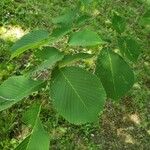
Ulmus laciniata
Japanese elm · Manchurian elm
Description
Source: wikipedia (CC BY-SA)Ulmus laciniata (Trautv.) Mayr, known variously as the Manchurian, cut-leaf, or lobed elm, is a deciduous tree native to the humid ravine forests of Japan, Korea, northern China, eastern Siberia and Sakhalin, growing alongside Cercidiphyllum japonicum, Aesculus turbinata, and Pterocarya rhoifolia, at elevations of 700–2200 m, though sometimes lower in more northern latitudes, notably in Hokkaido.
Care Guide
💧 Water
The Manchurian elm thrives in areas with distinct seasons, as it prefers consistent moisture without becoming waterlogged. To ensure proper hydration, it's important to water it twice a week. This species grows best outdoors, taking advantage of natural rainfall and temperature changes during its growing season, which promote strong growth and resilience.
☀️ Light Full sun
The Manchurian elm hails from open habitats like sunlit fields and the outskirts of forests, where there's plenty of light. It flourishes under complete sun exposure yet can cope with partial sunlight as well, demonstrating adaptability to diverse lighting situations.
🌡️ Temperature 5–32.2°C
The Manchurian elm exhibits outstanding versatility in diverse weather conditions, from sweltering summer heat to biting winter chill. However, there exists an ideal temperature spectrum for its development. If the temperature becomes overly elevated, the tree may experience stress from heat and moisture, potentially leading to its death. In areas where the temperature nears the lower end of its tolerance to cold, it is crucial to enforce strategies of insulation to provide protection for the tree.
💨 Humidity
🪴 Soil 6-7
🌱 Fertilizer
For the healthy development of your Manchurian elm, apply fertilizer in the first part of spring. Continuous fertilization boosts the overall well-being of the tree, promoting strong growth, capacity to withstand harsh situations, and increased protection against diseases and pests. Adhere to a precise fertilizing routine for your Manchurian elm to guarantee bright greenery with intense color and a rich look.
🪴 Pot & Repot
✂️ Pruning
The Manchurian elm is a deciduous tree valued for its ornamental bark and finely lobed leaves. To maintain its health and appearance, prune the tree in early spring. Focus on removing dead branches and improving airflow through the canopy. Be sure to use clean, sharp tools to promote the tree’s health, vigor, and aesthetics, and avoid excessive cutting.
🌿 Propagating
🐛 Diseases & pets
☠️ Toxicity
Characteristics
- Plant Type
- Tree
- Life Cycle
- Perennial
- Genus
- Ulmus
- Family
- Ulmaceae
- Hardiness Zone
- 4-7
- Mature Height
- 27.13 m
- Mature Spread
- 10.06 m to 14.94 m
- Leaf Color
- Green, Dark Green
- Leaf Type
- Deciduous
- Flower Color
- Yellow
- Flower Size
- 1.52 cm
- Bloom Time
- Early spring, Mid spring
- Planting Time
- Spring, Summer, Autumn
- Harvest Time
- Late spring, Early summer
- Native Area
- Russia, Japan, Koppen, South Korea, China