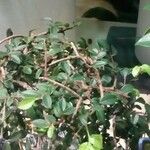
Ulmus parvifolia
Chinese elm · Lacebark · Lacebark elm · Leather-leaf elm · Sageretia
Description
Source: leafsnapUlmus parvifolia, commonly known as the Chinese elm, is a deciduous tree native to China, Japan, and Korea. It belongs to the Ulmaceae family and can grow up to 60 feet tall with a spread of 40 feet. The tree is notable for its distinct bark, which exfoliates in irregular patches to reveal shades of gray, green, and orange-brown. The leaves of Ulmus parvifolia are small, oval-shaped, and have serrated edges. They are dark green during the summer months but turn yellow or reddish-brown in autumn before they fall off. The Chinese elm is highly adaptable to various soil types and climates, making it an excellent choice for landscaping. It can tolerate drought conditions and pollution, which makes it suitable for urban environments. Beyond its aesthetic appeal, Ulmus parvifolia has several practical uses. Its strong wood makes it valuable for furniture making, and its bark has been utilized in traditional medicine for its anti-inflammatory properties. Overall, Ulmus parvifolia is a versatile tree that offers both beauty and utility, making it a superb addition to any landscape or garden.
🌳 Beyond ornamentation and shade, chinese elm bark and leaves can serve as sources of natural dyes, yielding rich, warm tones sought by artists and fabric makers. Environmental scientists also study chinese elm for its bioindicator properties, since it reflects the health of its surroundings and can indicate the presence of specific soil metals and pollution levels, thereby guiding ecological restoration and monitoring efforts.
🎭 Dignity and long life
Care Guide
💧 Water Every 7 days
The Chinese elm, which originates from East Asia, thrives in moderate humidity and can withstand brief periods of drought. It grows best with consistent watering every one to two weeks. Well-suited to temperate outdoor climates, the tree benefits from seasonal rainfall, which supports its optimal growth during the growing season.
When Should I Water My Chinese Elm?
Watering your Chinese Elm properly is vital for its health, growth, and resistance against diseases. The best time to water is when the top 1 to 2 inches of soil feels dry to the touch. Observing the leaves for signs of distress, such as wilting, limpness, or yellowing edges, can also indicate when watering is needed. Additionally, feeling the weight of the container or planter can help; a lighter weight suggests the plant requires water. It's crucial not to adhere strictly to a schedule but to watch for these signals, especially if several days have passed since the last watering. Over-watering can lead to root rot and disease, while under-watering can cause wilting and potentially kill the plant if prolonged. Recognizing these indicators will help maintain the Chinese Elm's health and promote optimal growth.
How Should I Water My Chinese Elm?
The Chinese Elm requires specific watering methods to ensure it receives optimal hydration without becoming over-watered. A bottom-watering technique by placing the plant pot in a tray of water allows the roots to absorb moisture from the bottom up, preventing soil over-saturation and promoting healthy root development. Misting the foliage with a spray bottle can increase humidity and provide additional moisture, although it's crucial to avoid excessive misting to prevent fungal diseases. Using a watering can with a narrow spout helps concentrate the water flow directly on the soil and not the foliage, minimizing disease risk. Implementing a moisture meter can offer accurate soil moisture readings, guiding when to water next. It's important to avoid wetting the plant's foliage excessively during watering, as this can lead to fungal issues.
How Much Water Does Chinese Elm Really Need?
The amount of water needed by a Chinese Elm varies based on its size, potting conditions, and environmental factors. Typically, a mature Chinese Elm in a large pot or garden soil may require around 15-20 gallons of water weekly during the growing season. Adjust the water quantity proportionally for younger or smaller trees. A well-watered Chinese Elm shows healthy green leaves without signs of wilting or yellowing, which indicate under-watering or over-watering, respectively. Excessive dryness leads to leaf shedding and dormancy, while over-watering can cause soggy soil and root rot. Observing the tree for draining water from the pot a few minutes after watering can also indicate proper hydration levels.
What Kind of Water is Best for Chinese Elm?
The health and growth of a Chinese Elm can greatly benefit from using the right type of water. Rainwater is ideal due to its balanced mineral content, but filtered and dechlorinated tap water are also suitable alternatives. The tree is sensitive to chlorine, fluoride, and hard water minerals, which can harm its root system and slow growth. Letting tap water sit for 24-48 hours can help evaporate chlorine, or using a filter can remove these harmful elements. Chinese Elm prefers lukewarm water since cold water can shock its roots, impairing water uptake. If using tap water, ensure it's soft and not hard, to prevent soil mineral buildup.
How Do Chinese Elm's Watering Needs Change with the Seasons?
The watering needs of Chinese Elm vary throughout the year as seasonal changes affect its growth and dormancy stages. In spring, as the tree wakes from dormancy, ensure moderate soil moisture to support new growth, but avoid waterlogging. Summer's active growth phase might increase water needs due to higher evaporation rates, requiring consistent soil moisture. Autumn sees a decrease in watering requirements as growth slows and temperatures drop. Winter dormancy, especially in colder climates, significantly reduces the tree's water needs; water sparingly to avoid soggy soil, focusing on the soil's top layer dryness. Monitoring and adjusting to these seasonal needs are crucial for the tree's health.
☀️ Light Full sun
Chinese elm grows best with abundant sunlight, showing it tolerates strong illumination. Based on its native habitat conditions, this plant can also cope with reduced sun exposure, though not as effectively. Insufficient light can weaken its vigor, while too much sun may harm the leaves.
What are the sun requirements for a Chinese elm?
A Chinese elm thrives when it receives generous exposure to sunlight. It requires full sun, which means it needs more than 6 hours of sunlight per day, though it can also manage in partial sun, about 3-6 hours of sunlight. However, inadequate lighting may impede its growth, and excessive rays could cause foliar distress. It's essential to watch the sunlight's movement through your garden, choosing spots that provide the perfect balance of light and shade, ensuring the plants' happiness.
Can artificial lighting support the growth of Chinese elm?
Yes, artificial lighting can support the growth of Chinese elm, especially when natural sunlight is insufficient. This is particularly useful in winter or in less sunny spaces. Indoor plants thrive under adequate lighting, with LED lights being a popular choice due to their ability to be customized to provide specific wavelengths needed by the plants. The intensity required varies; full sun plants need 30-50W/sq ft, partial sun plants need 20-30W/sq ft, and full shade plants require 10-20W/sq ft of artificial light. The light source should be placed 12-36 inches above the plant to mimic natural sunlight, and most plants need 8-12 hours of light per day.
What are the symptoms of inadequate or excessive sunlight in Chinese elm?
Chinese elm shows several symptoms when exposed to inadequate or excessive sunlight. Symptoms of inadequate sunlight include smaller new leaves, leggy or sparse growth, faster leaf drop, slower or no new growth, and lighter-colored new leaves. Excessive sunlight can cause chlorosis (leaves turning yellow), sunscald, leaf curling, wilting, and leaf scorching. These symptoms indicate either a lack of chlorophyll and essential nutrients due to insufficient light or damage and dehydration due to too much sunlight.
What solutions can help a Chinese elm receive optimal sunlight?
Ensuring a Chinese elm receives optimal sunlight involves several strategies. Indoors, gradually moving the plant to a sunnier location to receive at least 6 hours of direct sunlight daily is essential. Using artificial light, like a desk or ceiling lamp for at least 8 hours daily or investing in professional plant grow lights, can supplement natural light. Outdoors, gradually moving plants to sunnier spots and avoiding sudden light intensity changes helps prevent sunburn. Reducing obstructions by pruning trees or moving smaller plants to a sunnier location can be effective. For plants planted in the ground, transplanting during the plant's dormant period to a location with ample sunlight could enhance growth.
🌡️ Temperature 5–35°C
The Chinese elm plant is native to a temperate climate and requires temperatures ranging from 5 to 35 ℃ (41 to 95 ℉) for optimal growth. It prefers moderate conditions and should be placed where extreme temperature fluctuations are avoided. During winter, it may need additional insulation or protection if temperatures drop significantly below its preferred range.
What is the optimal temperature range for the growth of a Chinese elm?
The Chinese elm, or Ulmus parvifolia, thrives best within a temperature range of 5 to 35°C (41 to 95°F). It prefers moderate temperatures and should be positioned in a location that avoids extreme temperature fluctuations. Even though it possesses strong cold resistance and usually does not need special frost protection during winter, in environments where temperatures are expected to drop below its comfortable range, measures such as wrapping the trunk and branches with non-woven fabric or cloth are recommended. Additionally, watering the plant abundantly before the first freeze in autumn helps keep the soil moist and prevents the plant from drought and water scarcity during winter and early spring.
How does low temperature affect the Chinese elm and what are the solutions?
The Chinese elm is notably cold-tolerant and performs best when the temperature is maintained above its minimum growth threshold. If winter temperatures fall below this limit, while the plant might not show immediate signs of distress, its branches could become brittle and dry as spring arrives, potentially resulting in no new shoots emerging. To mitigate this, dead branches that have failed to produce new leaves by spring should be pruned away to encourage healthy new growth.
What should be done if a Chinese elm is exposed to high temperatures?
During the summer, it is essential to keep the Chinese elm below its maximum growth temperature to prevent stress. Exposure to temperatures above this threshold may result in the leaves turning lighter, tips drying and becoming withered, and increased susceptibility to sunburn. Solutions include trimming away the damaged parts, relocating the plant to a shaded area or using a shade cloth to protect it from the intense midday and afternoon sun. Additionally, watering the plant during the cooler hours of the morning and evening will help maintain the necessary soil moisture.
💨 Humidity high (>60%)
This plant needs special care because it loves high humidity levels of 60-80% or more. The best way to achieve this is by placing a humidifier near the plant. Daily misting is also essential! Make sure the room has good ventilation.
🪴 Soil 6-7
🌱 Fertilizer
To encourage healthy growth, apply fertilizer to your Chinese elm in early spring. Regular feeding boosts overall health, producing vigorous growth, greater tolerance of harsh conditions, and enhanced resistance to pests and diseases. Follow a consistent fertilization schedule for your Chinese elm to maintain deep-colored, vibrant foliage and a lush appearance.
Why should I put food for my Chinese elm?
No matter the type of Chinese elm you have, regular fertilization is key for overall plant health. Providing the right nutrients encourages stronger growth, better resistance to harsh conditions, and improved defense against diseases and pests. Keeping the foliage intact is important to enhance the attractiveness of your Chinese elm. Follow a specific fertilization schedule to ensure deep-colored leaves and a lush appearance.
When should I fertilize my Chinese elm tree?
To ensure healthy growth, it is recommended to fertilize your Chinese elm for the first time in late winter or early spring. This provides the necessary nutrients for the tree to thrive when the weather warms up. In warm climate regions, it can be beneficial to give an additional fertilizer feeding in early fall. This helps the tree absorb nutrients for the following growing season and strengthens it to withstand the winter. Early fertilization allows new branches to grow and withstand the cold.
When is it not a good idea to use fertilizer on my Chinese elm?
There are specific periods throughout the year when you should avoid fertilizing your Chinese elm. Firstly, during the early and mid-winter months, when the tree is dormant and does not require any feeding. Additionally, it is not recommended to fertilize the plant during late spring and all of summer. This is because the weather can be hotter and drier during this time, increasing the chances of a negative reaction to fertilization. To prevent any issues, it is best to stick to a fertilization schedule that only includes feeding in early spring and early fall.
What kind of fertilizer does my Chinese elm tree need?
In the case of Chinese elms, nitrogen is typically the most important nutrient, but that doesn't mean that phosphorus and potassium are unimportant. It's actually necessary to provide a decent amount of all three main nutrients for your Chinese elm, which is why a balanced fertilizer like a 10-10-10 can be effective. However, a more specific nutrient ratio often leads to optimal growth for Chinese elms. Fertilizers with a slightly higher nitrogen content tend to work better, such as a ratio of 10-6-4. When fertilizing, you have the option of using either granular or liquid-based fertilizers.
How should I add fertilizer to my Chinese elm?
To fertilize your Chinese elm, you have two options: using a granular fertilizer or a liquid fertilizer. If you choose the granular fertilizer, simply sprinkle it on the soil at the right time. This type of fertilizer releases nutrients slowly over time. Before applying the granular fertilizer, it's recommended to lightly water your Chinese elm. Using a liquid fertilizer is less common, but it's an alternative option. To use this method, mix the fertilizer with water and pour it onto the soil around the base of the tree. Sometimes, it's beneficial to perform a soil test before fertilizing to determine if any pH adjustments are needed.
🪴 Pot & Repot 2-3 years
When repotting a Chinese elm, pick a pot 1–2 inches (2.5–5.1 cm) larger with ample drainage. Use a well-draining potting mix. Repot in spring or fall, making sure the root ball sits slightly below the rim of the flower pot. Water thoroughly after repotting and place it in a warm spot with indirect sunlight.
✂️ Pruning
The Chinese elm is known for its distinctive flaking bark and gracefully arching branches. To keep it healthy and well-shaped, it benefits from regular pruning in early spring. This practice involves removing dead wood, shaping the tree's growth, and thinning crowded branches to improve air circulation and light penetration. Using clean, sharp tools is crucial to prevent disease and encourage proper healing.
🌿 Propagating
🐛 Diseases & pets
☠️ Toxicity
Characteristics
- Plant Type
- Tree
- Life Cycle
- Perennial
- Genus
- Ulmus
- Family
- Ulmaceae
- Hardiness Zone
- 4-9
- Mature Height
- 10.06 m to 17.98 m
- Mature Spread
- 14.94 m to 20.12 m
- Leaf Color
- Green, Yellow, Purple
- Leaf Type
- Deciduous
- Flower Color
- Yellow, Green, White
- Flower Size
- 2.54 cm
- Bloom Time
- Mid summer, Late summer
- Planting Time
- Spring, Autumn
- Harvest Time
- Mid summer, Late summer, Fall
- Native Area
- India, Japan, Pakistan, South Korea, China