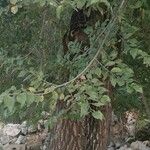
Ulmus pumila
نارون پا کوتاه · Siberian elm · Dwarf elm · Littleleaf elm · Chinese Elm
Description
Source: leafsnapUlmus pumila, commonly known as the Siberian elm, is a deciduous tree native to Central Asia. It grows rapidly, reaching heights of up to 50 feet with a spread of around 40 feet. The tree has an upright, spreading habit and an irregular crown. The leaves of the Siberian elm are small, oval-shaped, and have serrated edges. They are dark green and turn yellow in the fall before dropping. The tree's bark is grayish-brown with deep furrows. In early spring, before the leaves emerge, the Siberian elm produces small greenish-yellow flowers. These are followed by winged seeds that ripen in late spring or early summer. This tree can tolerate various soil types but prefers well-drained soils with moderate moisture levels. Once established, it is drought-tolerant but may suffer from leaf scorch during hot summers. Siberian elms have been widely planted as ornamental trees due to their fast growth, hardiness, and adaptability to different soil types. However, they are also considered invasive because they spread rapidly through seed dispersal by wind or animals. Overall, Ulmus pumila is an attractive deciduous tree that provides shade during hot summers and requires minimal maintenance once established. However, due to its invasive potential, it should be planted with caution and managed properly over time.
💡 Legend has it that in ancient times, a poor farmer saved an old man's life and was given a tree seed as a reward. With great care, the farmer nurtured the seed, and it eventually grew into a large tree. During a year of famine, people found that the leaves of the Siberian elm were edible. By relying on this tree, the villagers managed to survive the difficult times.
🌳 Although the Siberian elm is not noted for culinary or medicinal uses, it provides a range of practical benefits. Its wood is valued in furniture making because of its durability and resistance to decay. The plant has also been used in some areas as a sturdy windbreak or in erosion-control efforts, illustrating its ecological usefulness. Its capacity to indicate soil metal concentrations and its use in plantings to counter pollution emphasize its environmental importance.
🎭 Wealth, the deceased, a legacy, the netherworld
Care Guide
💧 Water Every 7 days
The Siberian elm, native to semi-arid regions, is highly drought-tolerant and typically needs watering only once every one to two weeks. It thrives outdoors in well-draining soil that simulates its natural dry steppe climate, showcasing its resilience to low precipitation.
When should I water my Siberian Elm?
Watering your Siberian Elm at the right time is crucial for its growth and health. Look out for signs of water requirement by observing the plant's leaves and soil moisture. If the leaves start wilting or turning brown and brittle, or if the soil feels dry at a depth of one inch, it is time to water the plant. Siberian Elms require more frequent watering during the growing seasons of spring and early summer and less during fall and winter. Additionally, be aware of the plant's growth pace and avoid under or over-watering, to prevent root rot and ensure the plant's well-being.
How should I water my Siberian Elm?
Watering your Siberian Elm correctly involves understanding its unique requirements. Utilize a traditional watering can or consider drip irrigation for mature trees to target the water directly to the base and minimize moisture loss. Using a soil moisture meter can help determine when the elm needs water by providing an objective measurement. Water around the dripline of the tree to reach the feeder roots effectively. Remember, overwatering can lead to issues like root rot, so focus on maintaining moisture without making the soil waterlogged.
How much water does Siberian Elm really need?
The amount of water needed for a Siberian Elm varies based on several factors including plant size, root depth, and soil conditions. Aim to keep the soil evenly moist but not soggy, with an average of 1 to 2 liters per watering session for mature plants. Proper hydration is indicated by lush, green leaves and firm stems. Overwatering or underwatering can harm the plant, leading to wilting, yellowing, or browning of leaves. It's essential to find a balance to support the plant's health and growth.
What kind of water is best for Siberian Elm?
Siberian Elm thrives best when watered with distilled, rainwater, or filtered water due to their low levels of additives and contaminants. If using tap water, let it sit out for 24 hours to allow chlorine to evaporate, as chlorinated water can harm the plant. Be cautious of water with high fluoride or salt content as well, as these can cause damage such as leaf tip burn or decreased health. Room temperature water is ideal to avoid shocking the plant's roots.
How do Siberian Elm's watering needs change with the seasons?
Siberian Elm's watering needs vary throughout the year. In spring, moderate watering encourages growth without causing waterlogging. During the hotter, summer months, ensure the soil stays consistently moist to support active growth and photosynthesis, preferring deep, infrequent watering. As the growth slows in autumn, gradually reduce watering. In winter, water the least, as the plant enters dormancy and the risk of root rot increases with overwatering. Adjust according to seasonal weather changes to meet the plant's needs.
☀️ Light Full sun
The Siberian elm grows best when it receives constant sunlight, though it can tolerate less bright spots. Coming from an environment with plentiful sun underlines its preference for light. Excessive exposure can hinder its growth, while too little light can lead to poor leaf development.
What are the sunlight requirements for Siberian elm?
Siberian elm requires full sun to flourish, meaning it needs more than 6 hours of sunlight a day but can also grow in partial sun, which is about 3-6 hours of sunlight. The plant thrives in conditions that closely mimic its natural habitat, which is abundant in sunlight. However, gardeners should watch the movement of sunlight through their garden, choosing locations that offer a balance of light and shade to ensure optimal growth and plant health. It is also noteworthy that while the Siberian elm can tolerate less sunny areas, too much or too little light can have adverse effects, such as inhibiting growth or resulting in poor foliage development.
How does artificial lighting affect Siberian elm's growth?
For indoor plants like the Siberian elm, when natural sunlight is insufficient, especially in winter or in locations that do not receive enough daylight, artificial lighting can be a vital solution. It promotes faster, healthier growth by providing the necessary wavelengths of light. LED lights are a popular choice because they can be customized to the plant's light needs. Full sun plants require 30-50W/sq ft, partial sun plants need 20-30W/sq ft, and full shade plants need 10-20W/sq ft of artificial light. The light source should be placed 12-36 inches above the plant to mimic natural sunlight, and most plants will need 8-12 hours of light per day to mimic the natural daylight hours.
What are signs of insufficient light in Siberian elm?
Siberian elm may show several symptoms indicating insufficient light, such as small or lighter-colored new leaves, leggy or sparse growth, faster leaf drop, and cessation of new growth, signaling the plant has entered survival mode due to poor lighting conditions. Additionally, symptoms of overexposure include chlorosis, where leaves turn yellow due to the breakdown of chlorophyll, sunscald characterized by pale or necrotic areas on the plant, leaf curling as a defense mechanism against excessive sunlight, wilting from increased water loss, and leaf scorching, seen as brown, dry edges on leaves.
What solutions can help manage light exposure for Siberian elms?
To manage light exposure for Siberian elms effectively, consider the following strategies. Indoors, gradually move plants to a sunnier location each week until they receive at least 6 hours of direct sunlight daily, using a south-facing window for maximum exposure. If necessary, supplement with artificial light for at least 8 hours a day. Outdoors, adapt plants gradually to more sunlight to prevent sunburn. When dealing with ground-planted elms, reduce obstructions by pruning or transplanting to brighter locations during the plant's dormant period. Remember, parts of the plant damaged by poor light may not recover fully, but new growth should be healthy with improved light conditions.
🌡️ Temperature 0–35°C
Siberian elm, a species of temperate woody plants, favors a temperature range of 32 to 95 ℉ (0 to 35 ℃) and is native to environments with a temperate climate. In winter, this plant can tolerate occasional freezing temperatures by adjusting its metabolic rates.
What are the essential characteristics and native climate of Siberian Elm?
Siberian elm (Ulmus pumila) is a species of temperate woody plants that thrives in a temperature range of 32 to 95 °F (0 to 35 °C). It is native to temperate climates and is known for its strong cold resistance. During the winter, it can withstand occasional freezing temperatures by adjusting its metabolic rates. Special frost protection is generally not needed, but in extreme conditions where temperatures drop below -35°C, measures such as wrapping the trunk and branches with non-woven fabric are recommended. Additionally, watering the plant abundantly before the first freeze in autumn helps keep the soil moist, preventing drought and water scarcity during winter and early spring.
How does Siberian Elm respond to low temperatures and what are the recommended solutions?
Siberian elm is highly cold-tolerant, thriving best in temperatures above 0°C and ideally kept above -30°C during winter. When temperatures fall below -35°C, while there may not be noticeable effects during the winter, the plant's branches may become brittle and dry by spring, with no new shoots emerging. In response to these conditions, it is advisable to prune any dead branches that have failed to produce new leaves come spring.
What are the effects of high temperatures on Siberian Elm and how can they be mitigated?
During the summer, it's best to keep the Siberian elm below 35°C to prevent stress. Exposure to temperatures above 38°C may result in lighter leaf coloration, dry and withered leaf tips, and an increased risk of sunburn. To mitigate these effects, trim away sunburned and dried-up parts of the plant. Relocating the plant to a shaded area during the midday and afternoon sun, or using a shade cloth, can help, along with watering the plant in the morning and evening to maintain soil moisture.
💨 Humidity
🪴 Soil 6-7
🌱 Fertilizer
Fertilize your Siberian elm in early spring to encourage healthy growth. Regular feeding boosts the tree's overall health, leading to vigorous growth, better tolerance of challenging conditions, and enhanced resistance to pests and diseases. Keep to a consistent fertilization schedule for your Siberian elm to preserve vibrant, richly colored foliage and a lush appearance.
Why should I put fertilizer on my Siberian elm?
No matter what type of Siberian elm you have, regular fertilization is important for overall plant health. Providing the right nutrients promotes stronger growth and helps the tree withstand tough conditions and diseases. Keeping the foliage intact is important for the tree's attractiveness, so it's essential to follow a fertilization schedule specific to your Siberian elm. This will result in vibrant leaves and a lush appearance.
What is the ideal time to fertilize my Siberian elm?
To ensure healthy growth, fertilize your Siberian elm in late winter or early spring. This provides the necessary nutrients for the tree to thrive once the weather warms up. If you live in a warm climate region, it's also beneficial to give your tree another dose of fertilizer in early fall. This helps the elm gather additional nutrients for the following growing season and makes it more resilient to winter cold, preventing foliage damage. By fertilizing earlier, you allow the new branches enough time to grow and withstand the cold winter.
When would it be a bad idea to add fertilizer to my Siberian elm?
There are certain times of the year when you should avoid fertilizing your Siberian elm. Firstly, during the early and mid-winter months when the plant is dormant and doesn't require any feeding. Similarly, it is not recommended to fertilize the plant in late spring and throughout the summer due to the hotter and potentially dryer weather. These conditions can have a harmful effect on the tree if fertilized during this time. To avoid any problems, it would be best to follow a fertilization schedule that only involves feeding in early spring and early fall.
What kind of fertilizer should I use for my Siberian elm tree?
Siberian elms primarily require nitrogen as their main nutrient, but phosphorus and potassium are still important. Therefore, using a balanced fertilizer like a 10-10-10 can be beneficial, as it provides all three nutrients. However, a more specific nutrient ratio often yields better growth for Siberian elms, with a higher nitrogen content being preferable. For instance, a 10-6-4 ratio can work well. When fertilizing, options include granular or liquid-based fertilizers.
How do I give my Siberian elm plant nutrients?
To fertilize your Siberian elm using granular fertilizer, simply sprinkle it on the soil at the right time. The slow-release nature of the fertilizer will gradually release nutrients into the soil. It's usually a good idea to lightly water your Siberian elm before applying fertilizer. Alternatively, you can use liquid fertilizer, although this is less common. To do this, mix the fertilizer with water and pour it onto the soil around the base of your Siberian elm. Sometimes, it's helpful to conduct a soil test beforehand to determine if you need to adjust the pH.
🪴 Pot & Repot 2-3 years
When repotting a Siberian elm, select a pot 1-2 inches (2.5–5.1 cm) larger with ample drainage. Use a well-draining potting mix. Repot in spring or fall, making sure the root ball sits slightly below the rim of the flower pot. Water thoroughly after repotting and place it in a warm spot with indirect sunlight.
✂️ Pruning
The Siberian elm is known for its ability to thrive in a variety of climates, characterized by its rapid growth and dense foliage. To maintain a healthy tree, it's important to use key pruning techniques. This involves removing dead or crossing branches, ideally during early spring. Pruning in this manner improves air circulation, light penetration, and overall plant vigor while reducing susceptibility to pests. For optimal results, make sure to use sharp, sanitized tools.
🌿 Propagating
🐛 Diseases & pets
☠️ Toxicity
Characteristics
- Plant Type
- Tree
- Life Cycle
- Perennial
- Genus
- Ulmus
- Family
- Ulmaceae
- Hardiness Zone
- 3-9
- Mature Height
- 24.99 m
- Mature Spread
- 11.89 m to 21.03 m
- Leaf Color
- Green, Blue, Yellow
- Leaf Type
- Deciduous
- Flower Color
- Red
- Flower Size
- 0.25 cm
- Bloom Time
- Spring
- Planting Time
- Spring, Autumn
- Harvest Time
- Late spring, Early summer, Mid summer
- Native Area
- Russia, Tajikistan, Kyrgyzstan, Kazakhstan, Mongolia, Koppen, South Korea, Turkmenistan, China