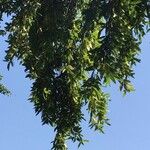
Umbellularia californica
California-laurel · California-nutmeg · California-olive · Headachetree · Pepperwood
Description
Source: leafsnapUmbellularia californica, commonly known as California bay laurel or Oregon myrtle, is a large evergreen tree native to the western United States. It belongs to the Lauraceae family and can grow up to 30 meters tall, with a trunk diameter reaching up to 60 centimeters. The tree features dark green, glossy, lance-shaped leaves that emit a strong aromatic scent when crushed. In the spring, the California bay laurel produces small yellow-green flowers that develop into small green fruits resembling olives. While these fruits are edible, they have an intense flavor and are not commonly consumed. The wood of Umbellularia californica is highly valued for its strength and durability, making it popular for use in furniture making and construction. Additionally, the leaves have been used for medicinal purposes by indigenous peoples for centuries. This plant plays a crucial role in its ecosystem, providing habitat for various animals such as birds, squirrels, deer, and bears. It also helps prevent erosion by stabilizing the soil with its extensive root system. Overall, Umbellularia californica is ecologically and culturally significant in western North America. Its unique characteristics, such as the strong aroma from its crushed leaves and its historical use by indigenous peoples, make it a standout species in the region.
🌳 The California bay laurel is a popular choice for warm temperate gardens due to its beauty, pleasant scent, and dense foliage. When left unpruned and provided with regular moisture, it can grow into a tree, making it an excellent option for a shade tree. However, in drier soil or when pruned, the plant takes on a shrub-like form. In this form, it is often used as a hedge or privacy screen.
🎭 Defense, Paranormal, Abilities, Restoration
Care Guide
💧 Water Every 7 days
The California bay laurel flourishes in humid conditions that mimic the coastal environment of California and prefers consistent moisture. Water it every 1-2 weeks, making sure not to waterlog the soil. Although it is usually grown outdoors, the plant benefits from mulching to help retain moisture and simulate the leaf litter of its natural habitat.
How should I water my California bay laurel tree?
Your California bay laurel is not demanding when it comes to watering. You can use any common watering tool, such as a watering can, hose, or cup. It is important to water the plant by applying the water directly to the soil, making sure to moisten all areas evenly to provide sufficient water to the entire root system. Using filtered water is recommended as tap water may contain harmful particles. It is also best to use water that is at or slightly above room temperature, as extremely cold or hot water can shock the plant. However, the California bay laurel typically responds well to any type of water.
What do I do if I give too much water or too little water to my California bay laurel?
When caring for outdoor plants, especially newly planted ones or seedlings, it is important to avoid under-watering. Remember to water regularly for the first few months, as young trees rely on this to establish their roots. Once the roots are established, California bay laurel plants can mostly rely on rainwater. If your California bay laurel is in a pot, over-watering is more likely to occur. If you accidentally over-water your plant, take immediate action to remedy the situation. Stop watering the plant right away to minimize the effects. Then, remove the plant from the pot and inspect the roots. If there are no signs of root rot, you can return the plant to its container. However, if you find signs of root rot, trim away the affected roots and consider applying a fungicide to prevent further damage. Finally, repot the plant using well-draining soil. On the other hand, if you notice your California bay laurel is not getting enough water, simply increase the frequency of watering. Under-watering is usually easy to fix. When the plant is under-watered, the leaves may droop, dry out, and fall off. However, with proper watering, the leaves will quickly regain their fullness. Make sure to adjust your watering schedule promptly if under-watering occurs.
How frequently do I need to water my California bay laurel?
To ensure the healthy growth of most outdoor plants, they typically rely on rainfall for their watering needs. However, if your area lacks sufficient rainfall, you should consider watering your plants every 2 weeks during the spring and fall. In the summer, when plants require more water, you will need to water them more frequently. During the slower growth period in winter, plants require less water, so you should water them sparingly and may not need to provide additional watering at all. If you have a young or newly planted California bay laurel, it is important to water it more often to help it establish and grow into a more adaptable and drought-tolerant plant. For potted plants, there are two main approaches to determine the watering frequency for your California bay laurel. One option is to follow a predetermined watering schedule, such as once every week or every other week. However, this may not always be effective as it doesn't consider the specific conditions of your plant's environment. Another approach is to adjust the watering frequency based on the moisture level of the soil. It is generally recommended to wait until the top two to four inches of soil (about ⅓ to ½ depth of the pots) have completely dried out before watering again. This method takes into account the season, as the plant's water needs are highest during the summer and may require more frequent watering.
How much water does my California bay laurel tree require?
When watering your California bay laurel, you may be surprised to learn that it doesn't always require a lot of water. Instead, if only a few inches of soil have dried since your last watering, giving it about five to ten ounces of water each time should suffice for healthy growth. You can also gauge the amount based on soil moisture. Keep track of how many inches of soil have dried out between waterings. To ensure proper moisture, water enough to moisten all the dried soil layers since the last watering. If over half of the soil has dried out, consider giving more water until you see excess water draining from the pot's holes. If your California bay laurel is planted in an area with ample rain, it may not need additional watering. When it's young or newly established, provide 1-2 inches of rain per week. As it grows and establishes itself, it can rely solely on rainwater. Only during hot weather with no rainfall for 2-3 weeks should you consider a full watering to prevent stress on the plant.
How can I know if I am watering my California bay laurel plant enough?
The California bay laurel is more often affected by overwatering, and there are several signs to watch out for when this happens. Typically, an overwatered bay laurel will have yellowing and dropping leaves. Additionally, overwatering can cause the plant to shrink and promote root rot. On the contrary, an underwatered bay laurel will also start to wilt and may have brown or brittle leaves. Regardless of whether you observe signs of overwatering or underwatering, it is important to take action and restore the health of your California bay laurel.
☀️ Light Full sun
California bay laurel performs best with plenty of sunlight, though it can tolerate locations with less sun. In its native habitat it is found where sunlight is plentiful. Too little light can diminish its vigor, and excessive exposure may stress and harm the plant, yet it is more tolerant than other species.
What are the sunlight requirements for California bay laurel?
California bay laurel requires full sun, characterized by above 6 hours of sunlight a day, but it can also tolerate partial sun, meaning about 3-6 hours of sunlight a day. It is crucial to observe the movement of sunlight through your garden to ensure that your plants get a suitable balance of light and shade. Although California bay laurel thrives best under ample sunlight exposure, it is adaptable and can survive in less sunny spots. Inadequate light may reduce the plant's vigor, while too much exposure can stress and potentially harm it. However, it generally shows more tolerance than other species.
How should artificial lighting be used for indoor California bay laurel plants?
Indoor California bay laurel plants may require artificial lighting to ensure optimal growth, especially in conditions where natural sunlight is insufficient, such as during winter or in less sunny spaces. LED lights are recommended due to their ability to provide specific wavelengths needed by the plants. Full sun plants need 30-50W per square foot of artificial light, partial sun plants need 20-30W per square foot, and full shade plants need 10-20W per square foot. The artificial light source should be placed 12-36 inches above the plant to mimic natural sunlight conditions, and plants typically require 8-12 hours of light per day.
What are the symptoms of light issues in California bay laurel?
When California bay laurel experiences light issues, it may show various symptoms. In low light, new leaves may grow smaller, and the plant may become leggier with sparse growth. There's a faster leaf drop and a pause or halt in new growth. Leaves might develop lighter colors or irregular patterns, indicating a lack of chlorophyll. Excessive sunlight can cause chlorosis, sunscald, leaf curling, wilting, and leaf scorching. Chlorosis turns leaves yellow, sunscald results in pale or necrotic patches, leaf curling reduces surface area exposure, wilting from water loss, and scorching creates brown edges or patches on leaves.
What solutions are available for California bay laurel experiencing light-related issues?
For indoor California bay laurels, gradually increase sunlight exposure to a minimum of 6 hours daily or use artificial lighting for large or immobile plants for at least 8 hours daily. Outdoor plants should be moved gradually to brighter spots to avoid sudden light intensity changes that could cause sunburn. When dealing with obstructions blocking sunlight, identify and reduce them. You might need to prune trees or transplant smaller plants during their dormant period to a sunnier location with good drainage. Note that parts of the plant damaged by insufficient light may not recover, but new growth should be healthy with improved light exposure.
🌡️ Temperature 15–35°C
The california bay laurel is native to California and is adapted to a temperate climate with temperatures between 59 and 95 ℉ (15 to 35 ℃). In summer it can withstand higher temperatures, but in warmer areas it prefers to be kept out of direct sunlight. In winter it favors temperatures around 50 to 59 ℉ (10 to 15 ℃), though it can tolerate lows down to 23 ℉ (-5 ℃). When seasons are changing, the california bay laurel may require extra watering to cope with the shifting temperatures.
What is the native climate of the California bay laurel?
The California bay laurel, or Umbellularia californica, thrives in a temperate climate native to California. It enjoys temperatures ranging from 59 to 95°F (15 to 35°C) and can withstand higher temperatures in the summertime, provided it is kept out of direct sunlight. During winter, it prefers cooler temperatures between 50 to 59°F (10 to 15°C), but it's capable of tolerating lows down to 23°F (-5°C). Transition periods between seasons may require extra watering to help the plant adjust to changing temperatures. Thanks to its strong cold resistance, special frost protection measures are typically not necessary, although precautions like wrapping the trunk with non-woven fabric may be beneficial in exceptionally cold winters.
How should the California bay laurel be cared for in varying temperatures?
In conditions of low temperature, the California bay laurel shows a notable resilience and does best when kept above certain thresholds. Despite its cold tolerance, temperatures falling below a critical lower limit, although not visibly affecting the plant in winter, may lead to brittle, dry branches and a lack of new shoots come spring. To mitigate this, dead branches should be pruned away. In contrast, high temperatures above optimal maxima can cause the leaves to lighten, tips to wither, and increase susceptibility to sunburn. Adjustments such as moving the plant to a shaded area, using shade cloth, and maintaining soil moisture through regular watering in the cooler hours of morning and evening, alongside trimming sunburned parts, can help the plant cope.
💨 Humidity
🪴 Soil 6-7
🌱 Fertilizer
Fertilize your California bay laurel in early spring to encourage healthy growth. Regular feeding boosts the plant’s overall health, leading to vigorous growth, greater resilience in challenging conditions, and enhanced resistance to diseases and pests. Adhere to a consistent fertilization schedule for your California bay laurel to keep the foliage vibrant, richly colored, and lush.
Why should I put fertilizer on my California bay laurel plant?
No matter what kind of California bay laurel you have, regular fertilization is important for the plant's health. Providing the right nutrients helps it grow stronger and better withstand unfavorable conditions, as well as resist diseases and pests. The foliage of your California bay laurel is its most attractive aspect, so it's crucial to maintain it. This involves following a specific fertilization schedule to encourage vibrant and lush leaves.
What is the best time to add fertilizer to my California bay laurel?
To keep your California bay laurel healthy and thriving, it's recommended to fertilize it twice a year. The first time should be in late winter or early spring to provide the necessary nutrients for growth as the weather warms up. If you live in a warm climate, it's also beneficial to fertilize again in early fall. This additional feeding not only supplies nutrients for the following growing season but also helps the bay laurel withstand winter cold and prevent foliage damage. Fertilizing earlier in the fall ensures that the new branches have enough time to grow and become more resilient to the cold temperatures.
When is it not a good idea to fertilize my California bay laurel?
There are certain times of the year when you should avoid fertilizing your California bay laurel. Firstly, during the early and mid-winter months when the plant is dormant and doesn't require additional nourishment. Secondly, it is not recommended to fertilize the plant in late spring and throughout the summer, as the weather tends to be hotter and drier, which can have a negative impact on the laurel if fertilized. To prevent any problems, it is best to stick to a fertilization schedule that only includes feeding in early spring and early fall.
What kind of fertilizer does my California bay laurel tree need?
The most important nutrient for a California bay laurel is usually nitrogen, but that doesn't mean phosphorus and potassium are unimportant. In fact, your bay laurel needs a good amount of all three nutrients. That's why a balanced fertilizer like 10-10-10 can be effective. However, a more specific nutrient ratio often leads to optimal growth. Fertilizers with slightly higher nitrogen content, like 10-6-4, tend to work well. When fertilizing, you can choose between granular or liquid-based fertilizers.
How should I add fertilizer to my California bay laurel plant?
To fertilize your California bay laurel, you have two options: granular or liquid fertilizer. If you choose granular fertilizer, simply sprinkle it on the soil at the right time. This slow-release fertilizer will gradually release nutrients into the soil. It's a good idea to water your bay laurel lightly before applying the granular fertilizer. Alternatively, you can use liquid fertilizer by mixing it with water and pouring the mixture around the base of your tree. However, this method is not as commonly used. Sometimes, it's helpful to conduct a soil test before fertilizing to determine if you need to adjust the pH levels.
🪴 Pot & Repot 2-3 years
When repotting California bay laurel, select a pot 1–2 inches (2.5–5.1 cm) larger with good drainage. Use a well-draining potting mix. Repot in spring or fall, making sure the root ball sits slightly lower than the rim of the flower pot. Water thoroughly after repotting and place it in a warm spot with indirect sunlight.
✂️ Pruning
To maintain the shape and improve air circulation of a California bay laurel tree, light pruning is necessary. The best time to perform this pruning is during the tree's dormant period, from early to late winter. Begin by removing any dead or damaged wood and thinning out crowded branches to prevent fungal problems and promote healthy growth. Always use clean, sharp tools to minimize stress on the tree and reduce the risk of disease.
🌿 Propagating
🐛 Diseases & pets
☠️ Toxicity
Characteristics
- Plant Type
- Tree, Shrub
- Life Cycle
- Perennial
- Genus
- Umbellularia
- Family
- Lauraceae
- Hardiness Zone
- 7-10
- Mature Height
- 29.87 m
- Mature Spread
- 7.62 m to 9.14 m
- Leaf Color
- Green
- Leaf Type
- Evergreen
- Flower Color
- Yellow, Green
- Flower Size
- 2.54 cm
- Bloom Time
- Spring
- Planting Time
- Spring, Autumn
- Harvest Time
- Mid summer, Late summer, Early fall
- Native Area
- Mexico