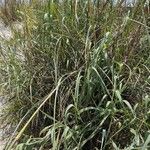
Uniola paniculata
Seaside-oats · North American sea-oats · Sea-oats · Horned lark · Spikegrass
Description
Source: leafsnapUniola paniculata, also known as sea oats, seaside oats, araña, and arroz de costa, is a tall subtropical grass that is an important component of coastal sand dune and beach plant communities in the southeastern United States, eastern Mexico and some Caribbean islands. Its large seed heads that turn golden brown in late summer give the plant its common name. Its tall leaves trap wind-blown sand and promote sand dune growth, while its deep roots and extensive rhizomes act to stabilize them, so the plant helps protect beaches and property from damage due to high winds, storm surges and tides. It also provides food and habitat for birds, small animals and insects.
🎭 Currency
Care Guide
💧 Water Every week
Sea oats thrive in coastal dunes and sandy soils, where they prefer moderate moisture and can withstand dry conditions. They benefit from weekly watering and are adapted to tolerate saltwater exposure due to their beachside habitat. This makes them resilient to changing water availability.
How should I water my Sea oats?
To ensure the health of Sea oats while watering them, it is recommended to use filtered water at room temperature. Tap water may contain harmful particles that the plant can be sensitive to, so filtered water is a safer choice. Sea oats are adapted to warm environments, so it is best to use room temperature or slightly warmer water to avoid shocking the plant. Additionally, overhead watering should be avoided to prevent foliage complications. Instead, it is advisable to saturate the soil with filtered room temperature water until it is completely soaked. This will provide the plant with the necessary moisture to support root growth and nutrient absorption.
What should I do if I give my Sea oats too much or too little water?
Overwatering and underwatering can harm your Sea oats, but overwatering is a more common problem. When Sea oats receive too much water, their stems and leaves may wilt and turn yellow. Prolonged overwatering can also cause diseases like root rot, mold, and mildew, which can be fatal for the plant. Sea oats are relatively tolerant to drought and underwatering is less likely to occur. However, when underwatering does happen, the leaves will become brittle and brown. It is important to identify signs of overwatering as soon as possible. Certain diseases caused by overwatering, such as root rot, may be irreversible if not addressed promptly. If you notice early signs of overwatering, reduce your watering schedule immediately and check the soil's drainage. If the soil drains poorly, replace it with a loose, well-draining potting mix. Conversely, if your Sea oats show signs of underwatering, increase the frequency of watering until the signs disappear.
How frequently should I water my Sea oats?
To determine if your Sea oats plant needs water, follow these guidelines based on where your plant is located. If your plant is in a pot, simply stick your finger into the soil and check if the top two to three inches are dry. If they are, it's time to water. If your Sea oats are planted in the ground, use the same method. If the first few inches of soil are dry, it's time to water. Typically, you will need to water the plant about once a week during spring and early fall. However, during hot weather, you may need to water it twice or more per week. It's worth noting that mature Sea oats have a remarkable ability to withstand drought.
How much water does my Sea oats plant require?
To properly water your Sea oats, don't be afraid to give it a generous amount. Make sure the first two to three inches of soil are dry before watering. Fully saturate the soil with enough water so that it flows out through the drainage holes at the bottom of the pot. If you don't see any excess water draining, it means you haven't given enough water. However, be cautious not to let the water accumulate in the soil, as this can harm the plant. In addition, if water doesn't drain properly from the pot, it may indicate poor soil drainage, which is not good for the plant's health. If the Sea oats are outside, one inch of rain per week will be enough.
How do I water my Sea oats at different stages of growth?
The water needs of Sea oats vary depending on their growth stages. In the first few years of their life or after being transplanted, Sea oats require more water than usual. During these stages, they focus on developing new roots to support future growth, so providing extra moisture is important. However, as Sea oats mature, their water requirements decrease. Another growth stage that requires additional water is the bloom period when the plant is producing flowers. During this time, the development of flowers requires a significant amount of moisture, meaning that you may need to water Sea oats more often.
☀️ Light Full sun
Sea oats do best in places with plentiful sunlight throughout the day. They can also survive in spots that receive sun for only part of the day. If they don't get enough sunlight, they may not grow as vigorously, and if they get too much, they can suffer sunburn.
What are the sunlight requirements for Sea oats?
Sea oats, known botanically as Uniola paniculata, require significant sunlight exposure to thrive. The plant performs best in full sun, which is defined as more than 6 hours of direct sunlight daily, but it can also grow in partial sun, receiving about 3 to 6 hours of sunlight. Sufficient sunlight is paramount for the health and growth of Sea oats, contributing to their robustness. Moreover, observing your garden's sunlight pattern is crucial for choosing the optimal locations for your plants, ensuring they receive the appropriate balance of light and shade.
How essential is sunlight for Sea oats, and what happens if the plant gets too much or too little sunlight?
Sunlight is crucial for the healthy growth of Sea oats, as it ensures robust development. These plants require ample exposure to sunlight; however, they can also adapt to partial sun exposure. Insufficient sunlight may hinder the plant's growth, while excessive sunlight can lead to sunburn. Additionally, in situations where natural light is not adequate, especially during winter or in less sunny areas, artificial lighting can be a valuable solution. Indoor plants can benefit from artificial lights, such as LEDs, which should be adjusted in wattage based on the plant's sunlight needs and positioned correctly to mimic natural sunlight conditions.
What are the symptoms of improper sunlight exposure in Sea oats?
Symptoms of inadequate sunlight exposure in Sea oats include smaller new leaves, leggy or sparse growth, faster leaf drop, slower or halted growth, and lighter-colored or pale new leaves indicating a lack of chlorophyll. In contrast, excessive sunlight can cause symptoms such as chlorosis, where leaves lose their green color, sunscald leading to damaged plant tissues, leaf curling as a defense mechanism against sunlight, wilting due to increased water loss, and leaf scorching where leaf edges become brown and dry. Recognizing these symptoms early can help in taking corrective actions to improve the plant's light exposure.
What are some solutions to address sunlight-related issues in Sea oats?
To address sunlight-related issues in Sea oats, gradual adjustment to the desired sun exposure is key. For indoor plants lacking sunlight, moving them closer to a south-facing window or utilizing artificial lights like desk lamps or grow lights for at least 8 hours daily can be beneficial. Outdoors, relocating plants to sunnier spots incrementally each week helps avoid sunburn. If sunlight is obstructed, pruning or relocating the plants may be necessary. It's important to note that parts of the plant already affected by poor light conditions may not recover, but new growth should be healthy with improved light exposure.
🌡️ Temperature 15–37.8°C
Sea oats are native to temperature zones and favor environments with temperatures ranging from 59 to 100.4 °F (15 to 38 ℃). They should be cultivated in areas where seasonal temperatures remain within this range whenever possible.
What environments are ideal for growing Sea oats?
Sea oats thrive in temperate zones and prefer environments where temperatures range between 59°F to 100.4°F (15°C to 38°C). It is important to cultivate Sea oats in areas where such seasonal temperatures are consistently maintained. This plant exhibits strong cold resistance, indicating that special frost protection measures are typically unnecessary. However, for extremely cold winters with temperatures expected to fall below -15°C, some form of cold protection, such as covering the plant with soil or straw, is advised. It's also recommended to water the plant abundantly before the first freeze in autumn to ensure the soil remains moist and frozen, helping the plant avoid drought and water scarcity during winter and early spring.
How does Sea oats react to low temperatures?
Sea oats is cold-tolerant and grows best when temperatures remain above 15°C. Throughout the winter season, it is advised to maintain temperatures above -10°C to ensure proper plant health. If temperatures fall below -15°C, Sea oats may not show immediate adverse signs during the winter, but a significant decrease in sprouting or even absence of sprouting can occur by springtime. To manage this, in spring, it is advised to remove any parts of the plant that have failed to sprout.
How should Sea oats be cared for in high temperatures?
During the summer months, it is crucial to ensure that temperatures around Sea oats do not exceed 38°C. If temperatures surpass 43°C, the plant's leaves might become lighter, curl, become prone to sunburn, and, in extreme cases, the plant might wilt and dry out entirely. To mitigate this, sunburned and dried-up parts should be trimmed away. The plant should be moved to a shaded location or shaded with a cloth during the peak sun of midday and afternoon. Additionally, watering the plant in the morning and evening is recommended to keep the soil moist and help the plant cope with the high temperatures.
💨 Humidity
🪴 Soil 5-7
🌱 Fertilizer
A single fertilizer application in spring is usually enough for Sea oats, though multiple feedings can maximize growth. Feed once every month to a month and a half. Fertilization improves leaf appearance and function, promoting consistent color and a healthy texture. It also stimulates root growth and nutrient absorption, supporting long-term plant health.
Why should I use fertilizer on my Sea oats?
Sea oats rely heavily on their leaves for their overall structure, making fertilization crucial for maintaining their appearance and function. By properly fertilizing them, their leaves will exhibit consistent color and a healthy texture. Additionally, fertilization has a beneficial impact below the soil's surface, aiding in the development of new roots and preserving existing ones. This not only promotes the plant's current health but also enhances its ability to absorb essential nutrients from the soil in the long run.
When should I fertilize my Sea oats for the best results?
If you grow Sea oats outdoors, they will start growing new leaves in early spring, which is a signal to start fertilizing. Normally, a single application of fertilizer is sufficient for Sea oats in the spring. However, if you want to maximize their growth, you can fertilize them multiple times throughout the spring and early summer, approximately every month to a month and a half.
When should I not put fertilizer on my Sea oats?
During the late fall and winter, Sea oats enter a dormant phase and stop producing new growth. It is important to avoid fertilizing them during this time. If you decide to fertilize in the spring and summer, gradually reduce the fertilization rate as summer approaches because the growth rate of Sea oats slows down. It is not advisable to fertilize Sea oats during extremely hot weather or when the soil is excessively dry as it can stress the plants and cause them to die prematurely.
What kind of fertilizer should I use for my Sea oats?
Choosing the best fertilizer for Sea oats is actually quite simple. These plants do well with a general-purpose garden fertilizer that contains equal amounts of nitrogen, phosphorus, and potassium. Look for a fertilizer with a ratio of 10-10-10 or something similar for optimal results. Avoid fertilizers with high nitrogen levels if you're uncertain. Granular fertilizers are commonly recommended for Sea oats, particularly those that are slow-release, as they are easy to apply to the soil. Additionally, using organic soil amendments like compost can also benefit your Sea oats.
How can I give my Sea oats the nutrients they need?
To ensure the best results, follow these steps for fertilizing your Sea oats. First, wait until early spring when you see the first leaves of your Sea oats emerging from the soil. Once you notice this, apply a granular slow-release fertilizer with a balanced formula to the soil around the base of your Sea oats. If you prefer, you can repeat this process later in the season. Remember to always apply the fertilizer to the soil at the base of the plant, rather than directly on the plant itself. Sometimes, you may need to move some leaves aside to access the soil above the roots. Additionally, it is a good idea to water your Sea oats before and after fertilizing.
🪴 Pot & Repot
✂️ Pruning
Sea oats thrive in sandy soils, and pruning them in early spring encourages new growth and stability. To maintain healthy plants, remove any dead or damaged stems and trim old flower stalks once the seeds have dispersed. Be sure to use clean, sharp tools to prevent disease, ensuring your plants remain healthy and maintain a neat appearance.
🌿 Propagating
🐛 Diseases & pets
☠️ Toxicity
Characteristics
- Plant Type
- Herb
- Life Cycle
- Perennial
- Genus
- Uniola
- Family
- Poaceae
- Hardiness Zone
- 7-11
- Mature Height
- 1.52 m to 2.44 m
- Mature Spread
- 30 cm to 61 cm
- Leaf Color
- Green
- Leaf Type
- Evergreen
- Flower Color
- Brown, White, Yellow, Green
- Flower Size
- 30.48 cm
- Bloom Time
- Summer
- Planting Time
- Spring, Summer, Autumn
- Harvest Time
- Late summer, Early fall, Mid fall
- Native Area
- Bahamas, Cuba, Georgia, Mexico, Haiti, Nicaragua, Dominican Republic