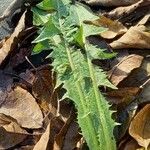
Urospermum picroides
شیر تلخک · False Hawkbit · Prickly Goldenfleece · Prickly Golden-fleece
Description
Source: leafsnapUrospermum picroides, commonly known as prickly goldenfleece or golden thistle, is a species of flowering plant belonging to the Asteraceae family. Native to Europe and western Asia, this plant thrives in various habitats such as meadows, pastures, roadsides, and waste places. The plant can grow up to 60 cm tall and features prickly stems covered with small hairs. Its leaves are deeply lobed with spiny margins, which give the plant its "prickly" common name. The bright yellow flowers have 12-20 petals arranged in a single row around the central disk. For centuries, Urospermum picroides has been valued for its medicinal properties, particularly its anti-inflammatory effects. It has also been used as an herbal remedy for liver disorders. The plant is easy to grow from seed and can also be propagated by division or cuttings. It prefers full sun but can tolerate partial shade and well-drained soil. Overall, Urospermum picroides is an attractive wildflower that adds a splash of color to any garden or natural setting while also offering medicinal benefits.
Care Guide
💧 Water Every 7 days
Prickly goldenfleece is well-suited to Mediterranean climates, flourishing with moderate moisture and occasional brief dry spells. It is an efficient water user, needing weekly watering without becoming oversaturated. Typically grown outdoors, this plant thrives in well-draining soil, which supports its healthy development during the active growing season.
How should I water my Prickly goldenfleece plant?
To water Prickly goldenfleece, there are various tools you can use such as a garden hose with a spray nozzle or a watering can. This plant is not very particular about the type of water it receives, so rainwater, tap water, or filtered water will all suffice. However, it is best to avoid watering this plant from above as it can harm the leaves and flowers and may invite disease. Instead, a drip irrigation system is recommended as it distributes water evenly and directly to the soil. For Prickly goldenfleece in containers, you can use a cup, watering can, or tap water to water the plant directly into the soil.
What should I do if I give my Prickly goldenfleece plant too much or too little water?
When your Prickly goldenfleece plant lacks moisture, the solution is simple: water it more regularly. However, overwatering can be a serious problem if not caught early. It can cause diseases that lead to the plant's decline and death. To prevent this, choose a sunny location for the plant with well-draining soil and ensure that excess water can drain properly. If you have overwatered a potted Prickly goldenfleece, consider transferring it to a pot with better drainage and loose soil to help it recover.
How often should I water my Prickly goldenfleece plant?
Prickly goldenfleece requires regular watering throughout the growing season. In the spring, water once a week. As the weather gets warmer, increase watering to two or three times per week, but be careful not to overwater. Make sure the soil remains moist but not wet. Watering a potted Prickly goldenfleece is slightly different. Potted plants tend to dry out faster, so water them a few times per week, compared to once a week for plants in the ground.
How much water does my Prickly goldenfleece plant need?
When watering your Prickly goldenfleece, there are a few ways to determine how much water to give. Some gardeners rely on feeling the soil for moisture and recommend watering until the top six inches are moist. Another approach is to use a set measurement, such as about two gallons per week, taking into account temperature and soil dryness. However, sticking strictly to these guidelines can result in overwatering if your plant requires less water. In containers, you should ensure all layers of dry soil are moistened, which you can test by feeling the soil or allowing a slight trickle of excess water through the drainage holes.
How can I know if I'm giving enough water to my Prickly goldenfleece?
Avoiding overwatering your Prickly goldenfleece can be challenging due to the plant's deep roots that require weekly watering. However, these plants are very prone to root rot and may experience browning if overwatered. Underwatering is less of a concern as these plants can survive without supplemental watering, but if left without water for too long, they will wilt and develop dry leaves.
☀️ Light Full sun
Prickly goldenfleece comes from bright, open habitats and does best in full sun. It can tolerate partial sun but favors direct sunlight for optimal growth. This plant, which may be annual or biennial, is known for its sun-loving nature.
What are the sunlight requirements for Prickly goldenfleece?
Prickly goldenfleece thrives in environments that provide full sun, requiring above 6 hours of sunlight daily. It can also tolerate partial sun, which involves about 3-6 hours of sunlight. This adaptability highlights the plant's preference for bright, open habitats. To ensure the health and happiness of your plants, it's important to monitor the movement of sunlight through your garden carefully, selecting locations that strike a perfect balance between light and shade.
How does Prickly goldenfleece respond to artificial lighting?
Indoor plants, including Prickly goldenfleece, may require artificial lighting to sustain optimal growth, especially in locations where natural sunlight is scarce, such as during winter or in less sunny spaces. LED lights are recommended for their ability to be customized to specific wavelengths needed by plants. The amount of artificial light required varies: full sun plants need 30-50W/sq ft, partial sun plants 20-30W/sq ft, and full shade plants 10-20W/sq ft. The light source should be placed 12-36 inches above the plant to mimic natural sunlight, and the duration of exposure should mimic natural daylight hours, generally 8-12 hours per day.
What are the symptoms of insufficient light in Prickly goldenfleece?
When Prickly goldenfleece is grown indoors or under inadequate light, several symptoms may appear. These include smaller new leaves, leggy or sparse growth, faster leaf drop, and slower or no new growth, indicating light deficiency. Leaves may develop irregular color patterns or appear pale due to insufficient chlorophyll and essential nutrients. Additionally, symptoms like chlorosis, where leaves turn yellow; sunscald, resulting in damaged plant tissues; leaf curling as a defense against excessive sunlight; wilting due to water loss; and leaf scorching from too much sunlight, can all signal poor light conditions or overexposure.
How can I manage light conditions for a healthier Prickly goldenfleece?
To promote the health of Prickly goldenfleece, gradually move the plant to locations with more sunlight to ensure it receives at least 6 hours of direct sunlight daily. Utilize south-facing windows and keep curtains open during daylight hours for maximum exposure. If the plant is large or not easily movable, artificial light sources such as desk or ceiling lamps, or professional plant grow lights, can provide needed light for at least 8 hours a day. Outdoors, gently adjust the plant to sunnier spots weekly to avoid sunburn. Should sunlight be obstructed, consider pruning to improve exposure or transplanting smaller plants to sunnier areas during their dormant period for better growth and health.
🌡️ Temperature 15–35°C
Prickly goldenfleece is native to temperate regions and requires considerable warmth to thrive. Its preferred temperature range is 68 to 95 °F (20 to 35 ℃). When seasons change, make sure prickly goldenfleece is kept in a climate-controlled environment to maintain this temperature.
What is the preferred temperature range for growing Prickly Goldenfleece?
Prickly Goldenfleece (Urospermum picroides) thrives in temperate regions and requires substantial heat to flourish. Its optimal growth temperature range is between 68 to 95 °F (20 to 35 °C). To ensure the plant's well-being as seasons change, it's important to maintain this temperature, potentially necessitating a climate-controlled environment.
How cold-resistant is Prickly Goldenfleece?
Prickly Goldenfleece possesses strong cold resistance, meaning that special frost protection measures are usually not necessary. However, if temperatures are expected to plummet below -15°C, it's crucial to provide some form of cold protection, such as covering the plant with soil or straw. Additionally, watering the plant abundantly before the first freeze of autumn helps keep the soil moist and protects against drought and water scarcity during colder months.
What should I do if Prickly Goldenfleece is exposed to low temperatures?
Although Prickly Goldenfleece is cold-tolerant and ideally should be kept above 0°C, exposure to temperatures below -15°C can reduce or even halt sprouting in the spring. If you notice any parts of the plant that have failed to sprout due to low temperatures, you should remove these parts come spring to help the plant recover and continue its growth.
How does Prickly Goldenfleece react to high temperatures, and what are the solutions?
In high temperatures, especially during summer when it exceeds 35°C, Prickly Goldenfleece can show signs of distress such as lighter leaf color, leaf curling, susceptibility to sunburn, and in severe cases, wilting and dryness. To mitigate these effects, it's advisable to trim away sunburned and dried-up parts of the plant, relocate it to a shaded area, or use a shade cloth to protect it from the midday and afternoon sun. Additionally, watering the plant in the morning and evening can help maintain soil moisture and prevent the plant from drying out.
💨 Humidity
🪴 Soil 6-6
🌱 Fertilizer
Once Prickly goldenfleece has opened most of its blooms to full size, resume fertilizing. Around the time blooms are at their peak, fertilize once every three to four weeks, weather permitting. Then, when Prickly goldenfleece begins producing fewer new blooms, stop fertilizing; there’s no need to feed the plant once it can’t produce additional blooms.
🪴 Pot & Repot
✂️ Pruning
Prickly goldenfleece benefits from pruning between early and late spring. To promote growth, remove any dead stems and lightly shear the plant to maintain its shape. Avoid heavy pruning, as it can stress the plant. Regular pruning improves air circulation, reduces the risk of disease, and encourages vibrant blooms. For the best results, use clean, sharp tools.
🌿 Propagating
🐛 Diseases & pets
☠️ Toxicity
Characteristics
- Plant Type
- Herb
- Life Cycle
- Annual
- Genus
- Urospermum
- Family
- Asteraceae
- Hardiness Zone
- 7-10
- Mature Height
- 30 cm to 49 cm
- Mature Spread
- 20 cm to 40 cm
- Leaf Color
- Green
- Leaf Type
- Deciduous
- Flower Color
- Yellow
- Flower Size
- 4.06 cm
- Bloom Time
- Mid spring, Late spring, Early summer
- Planting Time
- Spring, Summer, Autumn
- Harvest Time
- Summer
- Native Area
- Libya, Egypt, Turkey, Austria, Montenegro, Croatia, Slovenia, Morocco, Yemen, Iraq, Oman, Qatar, France, Portugal, Saudi Arabia, Tunisia, Sudan, Cyprus, Bulgaria, Armenia, Greece, Lebanon, Syria, Italy, Spain, Iran, Albania, Azerbaijan, Algeria, Kuwait, Turkmenistan