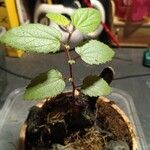
Urtica chamaedryoides
Heart-leaf nettle · Heartleaf nettle · Slim stingingnettle · Southern nettle
Description
Source: leafsnapUrtica chamaedryoides, commonly known as the creeping nettle or dwarf nettle, is a perennial herbaceous plant that belongs to the Urticaceae family. Native to Europe and Asia, it thrives in diverse habitats such as meadows, forests, and rocky areas. The plant typically grows up to 30 cm in height and has a creeping growth habit. Its square stems are covered with stinging hairs that can cause skin irritation upon contact. The leaves are opposite, ovate-shaped, and have serrated edges. From May to September, Urtica chamaedryoides produces small greenish-white flowers, which bloom in clusters on long stalks emerging from the leaf axils. This plant has been used for medicinal purposes for centuries, thanks to its anti-inflammatory properties. It is particularly useful for treating arthritis, allergies, and various other inflammatory conditions. In addition to its medicinal benefits, Urtica chamaedryoides is also utilized as a food source in some cultures. It can be cooked like spinach or added raw to salads. Overall, Urtica chamaedryoides is an intriguing perennial herb known for its distinctive stinging hairs on the stems and leaves, as well as its various medicinal applications. This makes it an important component of traditional medicine practices worldwide.
🎭 Expelling spirits, Safeguarding, Restoration
Care Guide
💧 Water Every 7 days
The heartleaf nettle flourishes in moist environments and needs consistently hydrated soil. It thrives with weekly watering and is usually cultivated outdoors. This hardy perennial adapts well to seasonal rainfall, which ensures it receives enough moisture without the risk of becoming oversaturated.
How should I water my Heartleaf nettle plant?
To water Heartleaf nettle, you have multiple options such as using a garden hose with a spray nozzle, a watering can, or any other common watering tool. Heartleaf nettle is generally not too picky about the type of water it receives and can survive with rainwater, tap water, or filtered water. However, it's best to avoid watering this plant from above as it can damage the leaves and flowers, and potentially lead to disease. Instead, setting up a drip irrigation system is often the most effective method as it ensures even and direct watering to the soil. For a Heartleaf nettle grown in a container, a similar approach can be used by using a cup, watering can, or tap water to directly water the soil.
What should I do if I give my Heartleaf nettle either too much water or too little water?
The solution to underwatering Heartleaf nettle is clear-cut. If you see that your plant is lacking moisture, simply water it more frequently. On the other hand, overwatering can be a more serious problem, particularly if you don't catch it early. If your Heartleaf nettle is overwatered, it can develop diseases that lead to its decline and death. To avoid this, choose a suitable location for growth, with ample sunlight to help the soil dry and proper drainage to prevent water from pooling and causing waterlogged soil. If you have overwatered a potted Heartleaf nettle, you may need to transfer it to a new pot. The previous container might not have had good drainage or enough drainage holes. When repotting, be sure to use loose soil and a pot that drains efficiently.
How frequently do I need to water my Heartleaf nettle?
Heartleaf nettle requires regular watering throughout the growing season. In spring, water the plant once a week. As the weather gets warmer, increase watering to two or three times a week. However, be careful not to overwater, as this can harm the plant. Keep the soil relatively moist but not wet. When watering a potted Heartleaf nettle, increase the frequency to a few times per week compared to once a week for plants in the ground, as potted soil tends to dry out faster.
How much water does my Heartleaf nettle require?
To determine how much water to give your Heartleaf nettle, there are a few approaches you can take. Some gardeners rely on the feel of the soil, watering until the top six inches is moist. Another option is to use a specific measurement, such as around two gallons per week, depending on the temperature and soil drying rate. However, strictly following these guidelines may result in overwatering if your plant needs less water. When growing in a container, a different method is necessary. You can water until all layers of soil are moist or check the soil's moisture level by sticking your finger in. Another way is to continue watering until a slight trickle of water comes out of the drainage holes.
How do I know if I am giving enough water to my Heartleaf nettle?
Avoiding overwatering your Heartleaf nettle can be somewhat challenging due to the contradictory needs of the plant. These plants have deep roots that require weekly watering to keep the soil moist. However, Heartleaf nettle is highly susceptible to root rot and excessive watering can cause browning. Underwatering is not a common issue for your Heartleaf nettle as it can survive without supplemental watering for some time. However, if you neglect to water the plant for too long, it will wilt and you may see dry leaves.
☀️ Light Full sun
Heartleaf nettle does best in full sun each day, taking in as much light as possible during daylight hours. It can also tolerate locations with a slightly shaded light condition. Too little or too much light can cause less vigorous growth and poorer health.
What kind of sunlight requirements does Heartleaf nettle have?
Heartleaf nettle requires full sun exposure to thrive, meaning it should receive above 6 hours of sunlight daily. It can also adapt to partial sun conditions, which involve around 3-6 hours of sunlight. Observing how sunlight moves through your garden helps in selecting the optimal spots that provide a balance of light and shade, ensuring the plants' well-being.
How does Heartleaf nettle respond to sunlight?
Heartleaf nettle flourishes best under the full intensity of the sun, absorbing as much light as possible during daylight hours. It has the capability to adjust to slightly shaded light conditions as well. However, both insufficient and excessive light can lead to weaker growth and diminished health. In scenarios where natural light is not enough, especially during winter or in less sunny spaces, supplementing with artificial lights like LEDs can promote healthier growth. For full sun plants, 30-50W/sq ft of artificial light is recommended, 20-30W/sq ft for partial sun plants, and 10-20W/sq ft for full shade plants. The artificial light source should be placed 12-36 inches above the plant, for 8-12 hours per day to mimic natural daylight conditions.
What are the symptoms of incorrect light exposure in Heartleaf nettle?
When Heartleaf nettle is grown indoors with inadequate light, it may show symptoms such as smaller new leaves, leggy or sparse growth, faster leaf drop, slower or no new growth, and lighter-colored new leaves. Excessive sunlight can cause chlorosis, sunscald, leaf curling, wilting, and leaf scorching. These symptoms indicate either a lack of or excess in sunlight exposure, affecting the plant's ability to photosynthesize and maintain overall health.
What are some solutions to address light exposure issues in Heartleaf nettle?
To optimize Heartleaf nettle's growth, gradually acclimatize it to receive at least 6 hours of direct sunlight by moving it closer to a sunnier spot each week. Indoors, use south-facing windows for natural light or supplement with professional grow lights for at least 8 hours a day if moving the plant isn't feasible. Outdoors, ensure a gradual adjustment to sunlight to prevent sunburn. Pruning obstructions like tree branches can also improve sunlight exposure. During transplanting, especially for smaller plants, do it during their dormant period and choose a location with ample sunlight and good drainage. Notably, parts of the plant affected by insufficient sunlight may not recover entirely, but new growth should appear healthy after adjusting light conditions.
🌡️ Temperature 0–25°C
Heartleaf nettle originates from a native growing climate with temperatures in the range of 68 to 95 °F (20 to 35 ℃). The plant prefers warmer conditions, so temperature adjustments may be necessary in colder seasons to ensure optimal growth.
What is the ideal temperature range for heartleaf nettle to thrive?
Heartleaf nettle, scientifically known as Urtica chamaedryoides, thrives in a temperature range of 68 to 95 °F (20 to 35 ℃). Originating from a climate that favors warmer conditions, it's crucial to adjust temperatures during colder seasons to ensure the plant's optimal growth. Despite its high tolerance to cold, measures should be taken, especially before the first freeze in autumn, to water the plant generously. This ensures the soil remains moist and enters a frozen state, which helps prevent drought and water scarcity for the plant during the winter and early spring.
How does heartleaf nettle react to low temperatures?
Heartleaf nettle exhibits a remarkable tolerance to low temperatures. However, maintaining the winter temperature above a certain undisclosed minimum threshold is vital. If temperatures fall below this level, the plant may not show immediate changes during winter, but a decline in sprouting, or even a complete lack of sprouting, might be observed by spring. To mitigate this, it is advised to remove any parts of the plant that have failed to sprout in the spring.
What should be done if heartleaf nettle is exposed to high temperatures?
Heartleaf nettle does not fare well in high temperatures, ceasing growth and becoming prone to rot if temperatures climb above the maximum suitable growth range. To manage this, trimming sunburned and dried-up parts of the plant is advisable. Moving the plant to a shaded location or utilizing a shade cloth can protect it from the harsh midday and afternoon sun. Additionally, watering the plant in the morning and evening to maintain soil moisture can mitigate the adverse effects of high temperatures.
💨 Humidity
🪴 Soil 5-7
🌱 Fertilizer
Heartleaf nettle benefits from regular, dilute applications of fertilizer to encourage healthy leaf development. Apply fertilizer to Heartleaf nettle about once a month during the summer. Nitrogen is important for foliage, and providing nitrogen-rich sources helps Heartleaf nettle thrive.
🪴 Pot & Repot
✂️ Pruning
The heartleaf nettle is easily recognized by its heart-shaped leaves and stinging hairs. To encourage healthy growth and prevent it from becoming overgrown, it's important to prune these plants from early to late spring. Trim one-third of the dead stems to make space for new shoots, which will also help improve air circulation and boost the plant's resistance to disease. Be sure to wear gloves during pruning to protect your skin from irritation.
🌿 Propagating
🐛 Diseases & pets
☠️ Toxicity
Characteristics
- Plant Type
- Herb
- Life Cycle
- Annual, Perennial
- Genus
- Urtica
- Family
- Urticaceae
- Hardiness Zone
- 3-5
- Mature Height
- 15 cm to 76 cm
- Mature Spread
- 20 cm to 30 cm
- Leaf Color
- Green, Dark Green
- Leaf Type
- Deciduous
- Flower Color
- Yellow, Green
- Flower Size
- 2.54 cm
- Bloom Time
- Spring
- Planting Time
- Spring, Summer
- Harvest Time
- Late spring, Early summer, Mid summer