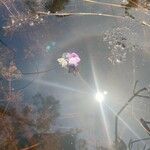
Utricularia purpurea
Eastern Purple Bladderwort · Purple Bladderwort · Greater Purple Bladderwort · Spotted Bladderwort
Description
Source: leafsnapUtricularia purpurea, the eastern purple bladderwort, is a medium-sized suspended aquatic carnivorous plant that belongs to the genus Utricularia. U. purpurea is endemic to North and Central America. It has been suggested that U. purpurea may have partially lost its appetite for carnivory. Richards (2001) did an extensive study in the field on it and noted that trapping rates of the usual Utricularia prey were significantly lower than in other species in the genus. Richards concludes that this species can still trap and digest arthropod prey in its specialized bladder traps, but does so sparingly. Instead, it harbors a community of algae, zooplankton, and debris in the bladders that indicates U. purpurea favors a mutualistic interaction in place of a predator–prey relationship.
Care Guide
💧 Water
The Eastern Purple Bladderwort thrives in moist, aquatic environments and requires high humidity to grow well. To care for this plant, water it every two weeks to mimic its natural tropical conditions. As a carnivorous plant, it thrives outdoors and needs nutrient-rich, oxygenated water to support its trapping mechanisms.
☀️ Light Full sun
The eastern purple bladderwort prospers when exposed to maximal daylight. Native to regions with abundant sunshine, it depends on plentiful light for healthy development and vernalization. Insufficient or excessive light can stall its growth or cause damage. At every phase of its growth, ample sunlight is crucial.
What are the sunlight requirements for Eastern purple bladderwort?
Eastern purple bladderwort (Utricularia purpurea) thrives with ample sunlight exposure, requiring above 6 hours of sunlight daily for optimal growth. Originating from areas with abundant daylight, it utilizes generous sunlight for healthy growth and vernalization. Inadequate or excessive light may cause growth stagnation or damage. It's important to watch how sunlight moves through your garden, choosing spots that offer a perfect balance of light and shade to ensure the plants' happiness.
Can artificial lighting be used for Eastern purple bladderwort?
Yes, artificial lighting can be a vital solution for indoor Eastern purple bladderwort plants when natural sunlight is insufficient, especially during winter or in less sunny spaces. LED lights are recommended because they can be customized to provide specific wavelengths needed by plants. For full sun plants like Eastern purple bladderwort, 30-50W/sq ft of artificial light is needed. The light source should be placed 12-36 inches above the plant, mimicking natural sunlight, for 8-12 hours per day to promote faster, healthier growth.
What are the signs of insufficient light in Eastern purple bladderwort?
Signs of insufficient light in Eastern purple bladderwort include small leaves, leggy or sparse growth, faster leaf drop, slower or no new growth, lighter-colored new leaves, and symptoms like chlorosis, sunscald, leaf curling, wilting, and leaf scorching. These symptoms indicate the plant is struggling with light deficiency, impacting its growth and overall health.
How can you mitigate light deficiency issues in Eastern purple bladderwort?
To counteract light deficiency in Eastern purple bladderwort, gradually increase the plant's exposure to sunlight. If indoors, move the plant to a sunnier location or use artificial lighting like desk lamps or professional grow lights for at least 8 hours daily. Outdoors, choose locations that gradually introduce more sunlight each week. If the issue is due to physical obstructions, consider pruning or transplanting the plant to a brighter area. Remember, parts of the plant already affected may not recover, but new growth should be healthy following these adjustments.
🌡️ Temperature 15–35°C
Eastern purple bladderwort is an ideal option for temperate settings, favoring temperatures of 68 to 95 °F (20 to 35 ℃). For optimum growth, keep temperatures within this range, adjusted for seasonal variation.
What temperature is ideal for the growth of Eastern purple bladderwort?
Eastern purple bladderwort thrives in temperate environments, preferring temperature ranges between 68 to 95°F (20 to 35°C). To ensure optimum growth, it's important to maintain temperatures within this range, taking into account seasonal variances. During winter, it's beneficial for the plant's growth to keep temperatures above 20°C, always making sure the minimum temperature stays above freezing point to avoid freezing damage. When outdoor temperatures are near or below -5°C (25°F), it's recommended to bring the plant indoors or provide protection with a temporary greenhouse or insulating materials.
How does Eastern purple bladderwort respond to low temperatures?
Eastern purple bladderwort has a moderate tolerance to low temperatures and performs best when temperatures are kept between 20°C and 35°C. It's vital to ensure that during winter, the temperature does not fall below 0°C. Exposure to temperatures below -10°C can lead to darkening of the leaves, with severe cold causing symptoms such as water-soaked necrosis, wilting, and the gradual browning of leaves. To mitigate frost damage, it's advisable to trim the frost-damaged parts, move the plant to a warmer indoor space, or provide a makeshift greenhouse for protection. Placing the plant near a south-facing window can ensure it receives enough sunlight, supplemented by artificial lighting if needed.
What should I do if Eastern purple bladderwort is exposed to high temperatures?
During the summer, it's crucial to keep Eastern purple bladderwort's environment below 35°C to prevent growth slowdown and susceptibility to sunburn, as elevated temperatures above 41°C can lighten the color of its leaves. In case the plant suffers from sunburn or dryness, trim the affected parts and relocate it to a shaded area, preferably away from the harsh afternoon sun. To keep the soil moist and support the plant's well-being, watering in the morning and evening is recommended.
💨 Humidity
🪴 Soil 5-7
🌱 Fertilizer
🪴 Pot & Repot 2-3 years
When repotting Eastern purple bladderwort, pick a pot 1-2 inches (2.5–5.1 cm) larger with good drainage. Use a well-draining potting mix. Repot in spring or fall, making sure the root ball sits slightly below the rim of the flower pot. Water thoroughly after repotting and keep it in a warm spot with indirect sunlight.
✂️ Pruning
The Eastern purple bladderwort is an aquatic carnivorous plant that needs very little pruning. To encourage healthy growth, trim any dead leaves between early and late spring. It's important to avoid heavy pruning, as this can stress the plant. Proper pruning helps improve oxygen flow, reduce algae, and enhance water quality. Make sure to use clean tools to prevent infections.
🌿 Propagating
🐛 Diseases & pets
☠️ Toxicity
Characteristics
- Plant Type
- Herb
- Life Cycle
- Perennial, Annual
- Genus
- Utricularia
- Family
- Lentibulariaceae
- Hardiness Zone
- 8-10
- Mature Height
- 3 cm to 15 cm
- Mature Spread
- 8 cm to 20 cm
- Leaf Color
- Green
- Leaf Type
- Evergreen
- Flower Color
- Pink, Purple
- Flower Size
- 1.27 cm
- Bloom Time
- Summer, Early fall, Mid fall
- Planting Time
- Spring, Summer
- Harvest Time
- Mid summer, Late summer, Fall
- Native Area
- Bahamas, Belize, Cuba, Mexico, Nicaragua, Costa Rica, Jamaica