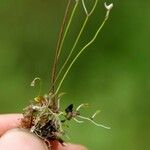
Utricularia striatula
Striped bladderwort · Tiny bladderwort
Description
Source: leafsnapUtricularia striatula is a small carnivorous plant that belongs to the genus Utricularia. It is widespread from tropical Africa to New Guinea. U. striatula grows as a lithophyte or epiphyte on wet rocks or tree trunks at altitudes from near sea level to 3,300 m (10,827 ft). It was originally described by James Edward Smith in 1819.
Care Guide
💧 Water
☀️ Light Partial sun
Striped bladderwort grows best with moderate sunlight for several hours each day, though it can tolerate an absence of light. Adjust its placement seasonally to secure optimal light, whether it’s in a container or planted in soil. Insufficient light can stunt growth or weaken its health.
What are the sunlight requirements for Striped Bladderwort?
Striped Bladderwort, botanically known as Utricularia striatula, thrives best in environments that mimic its natural habitat, which includes open bogs and sunny wetlands. The plant prefers full sun conditions but is capable of tolerating partial sun, requiring about 3-6 hours of sunlight a day. When cultivating these plants, it's important to observe the movement of sunlight through your garden to find spots that offer a balanced mix of light and shade, ensuring the plants' health and happiness.
How can artificial lighting be used for Striped Bladderwort?
When natural sunlight is insufficient for Striped Bladderwort, especially during winter or in less sunny spaces, artificial lighting serves as an effective solution to promote healthy growth. LED lights are recommended due to their ability to provide specific wavelengths needed by plants. Full sun plants should receive 30-50W/sq ft of artificial light, partial sun plants 20-30W/sq ft, and full shade plants 10-20W/sq ft. The light source should be placed 12-36 inches above the plant, ensuring they receive 8-12 hours of light per day to mimic natural daylight hours, fostering optimal growth.
What are the symptoms of insufficient lighting for Striped Bladderwort?
Striped Bladderwort shows several symptoms when subjected to insufficient lighting, which can hinder its growth and health. These include smaller new leaves, leggy or sparse growth, faster leaf drop, slower or no new growth, and lighter-colored or chlorotic leaves. Additionally, excessive sunlight can cause symptoms like sunscald, leaf curling, wilting, leaf scorching, and chlorosis, all of which negatively impact the plant's ability to thrive.
What solutions are available for Striped Bladderwort facing insufficient light?
To combat insufficient light for Striped Bladderwort, one can gradually adapt the plant to receiving more sunlight by shifting it to sunnier spots each week until it achieves 3-6 hours of direct sunlight daily. For indoor plants that are large or difficult to move, using artificial light such as desk lamps or professional grow lights for at least 8 hours a day can provide additional support. Outdoor plants should be moved gradually to avoid sunburn from sudden exposure. If obstructions like trees block sunlight, consider pruning them. For small plants, transplanting them during their dormant period to a location with ample sunlight and good drainage can be beneficial. It's crucial to understand that parts of the plant affected by insufficient sunlight might not recover, but new growth will be healthy with increased light exposure.
🌡️ Temperature 20–37.8°C
Striped bladderwort grows best in moderate temperatures, roughly those most people find comfortable. It does well in conditions that are neither excessively hot nor excessively cold. The primary concern with high temperatures is the potential for sunburn, so providing some shade in summer is recommended to avoid too much heat. When temperatures fall, Striped bladderwort goes into dormancy. If you want it to keep growing through winter, you must keep temperatures higher. Frost can harm the plant and should be avoided.
💨 Humidity
🪴 Soil 6-7
🌱 Fertilizer
🪴 Pot & Repot 2-3 years
When repotting Striped bladderwort, select a pot 1-2 inches (2.5–5.1 cm) larger with good drainage. Use a well-draining potting mix. Repot in spring or fall, making sure the root ball sits slightly lower than the rim of the flower pot. Water thoroughly after repotting and put it in a warm location with indirect sunlight.
✂️ Pruning
Striped bladderwort benefits from light pruning in the spring, either early or late, to remove dead foliage and encourage healthy growth. Trimming overgrown areas and removing spent flowers can enhance the plant's appearance and prevent overcrowding. Be sure to use clean, sharp tools to reduce the risk of disease.
🌿 Propagating
🐛 Diseases & pets
☠️ Toxicity
Characteristics
- Plant Type
- Herb
- Life Cycle
- Perennial
- Genus
- Utricularia
- Family
- Lentibulariaceae
- Hardiness Zone
- 10-12
- Mature Height
- 5 cm to 10 cm
- Mature Spread
- 10 cm to 15 cm
- Leaf Color
- Green
- Leaf Type
- Semi-evergreen
- Flower Color
- Purple, Lavender
- Flower Size
- 0.76 cm to 1.02 cm
- Bloom Time
- All year round
- Planting Time
- Spring, Summer, Autumn
- Harvest Time
- All year round
- Native Area
- Nepal, Sri Lanka, India, Malaysia, Angola, Philippines, Zambia, Nigeria, Guinea, Gabon, Uganda, Tanzania, Chad, China, Sierra Leone, Indonesia, Cambodia, Equatorial Guinea, Liberia, Cameroon, Burundi, Vietnam, Myanmar, Bhutan, Ghana, Côte d'Ivoire, Ethiopia, Congo (DRC), Thailand, Central African Republic