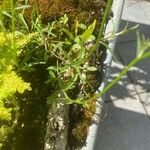
Utricularia uliginosa
Bladderwort · Purple-flower bladderwort · Asian bladderwort
Description
Source: leafsnapUtricularia uliginosa, the Asian bladderwort, is a small annual carnivorous plant that belongs to the genus Utricularia. It is native to Southeast Asia (Borneo, Burma, Cambodia, China, India, Japan, Java, Korea, Peninsular Malaysia, Sri Lanka, Sumatra, Taiwan, Thailand, and Vietnam), Oceania (Guam, New Caledonia, New Guinea, and Palau), and Australia (New South Wales, the Northern Territory, Queensland, and Western Australia). U. uliginosa grows as a terrestrial or subaquatic plant in seasonally flooded shallow pools with sandy soils or on banks and among rocky stream beds at low altitudes. It was originally described by Martin Vahl in 1804.
Care Guide
💧 Water Every 3 days
The Asian bladderwort flourishes in wetland environments where moisture levels are high. It needs constant hydration and can handle being saturated. For optimal growth, water the plant twice a week. If you're growing it indoors, it's essential to maintain good water quality and regular watering to mimic the soft, acidic waters of its natural habitat.
☀️ Light Full sun
Asian bladderwort is a sun-loving plant whose healthy growth largely relies on receiving plenty of light. In its natural surroundings, exposure to full sun supports optimal development. Although it can persist in locations that get only partial sun during the day, diminished light may constrain its growth and vigor.
What are the sunlight requirements for Asian bladderwort?
Asian bladderwort thrives in locations with full sun exposure, requiring above 6 hours of sunlight daily to ensure healthy growth. It can also grow in partial sun, which means about 3-6 hours of sunlight. However, it's essential to observe how sunlight moves through your garden to pick spots that offer a perfect balance of light and shade, ensuring the plant's happiness and optimal development. Even though Asian bladderwort can tolerate some shade, insufficient light may limit its growth and vitality.
Can artificial lighting be used for Asian bladderwort, and how?
Yes, artificial lighting can be used for Asian bladderwort, especially when natural sunlight is insufficient. This is particularly useful during winter or in less sunny spaces. LED lights are recommended because they can be customized to provide specific wavelengths needed by your plants. Full sun plants, like Asian bladderwort, require 30-50W/sq ft of artificial light. It's important to place the light source about 12-36 inches above the plant and mimic natural daylight hours, generally ensuring 8-12 hours of light per day.
What symptoms indicate insufficient sunlight for Asian bladderwort?
Asian bladderwort shows several symptoms when it doesn't get enough sunlight, including smaller new leaves, leggy or sparse growth, faster leaf drop, slower or no new growth, lighter-colored new leaves, chlorosis, sunscald, leaf curling, wilting, and leaf scorching. These symptoms indicate that the plant is not receiving the optimal light levels for its growth, leading to a reduction in overall health and vitality.
How can you remedy insufficient sunlight exposure for Asian bladderwort?
To counter insufficient sunlight for Asian bladderwort, gradually increase its exposure to sunlight. For indoor plants, move them to a south-facing window or use artificial lights like plant grow lights for at least 8 hours daily. Outdoor plants should be moved to sunnier spots gradually to avoid sunburn. Removing obstructions that block sunlight and considering transplanting to areas with better sun exposure can also help. It’s key to remember that while parts of the plant that were previously affected by low light may not recover, new growth should be healthy with improved light conditions.
🌡️ Temperature 20–37.8°C
Asian bladderwort does best in moderate temperatures—about the same range most people find comfortable. It prefers conditions that are not excessively hot or cold. The primary concern with high heat is the potential for sunburn, so providing some shade in summer is recommended to avoid overheating. When temperatures fall, the plant goes dormant; to keep it growing year-round you must keep winter temperatures higher. Frost can injure the plant and should be avoided.
💨 Humidity
🪴 Soil 5-7
🌱 Fertilizer
🪴 Pot & Repot 2-3 years
When repotting Asian bladderwort, choose a container 1-2 inches (2.5–5.1 cm) larger with good drainage. Use a well-draining potting mix. Repot in spring or fall, making sure the root ball sits slightly below the rim of the flower pot. Water thoroughly after repotting and place it in a warm spot with indirect sunlight.
✂️ Pruning
The Asian bladderwort is a carnivorous aquatic plant known for its intricate flowers and distinctive bladder-like traps. To maintain its health and enhance its aesthetic appeal, it is best to prune the plant from early to late spring. During this time, remove any old or overcrowded shoots to encourage new growth, improve light penetration, and control the plant's spread.
🌿 Propagating
🐛 Diseases & pets
☠️ Toxicity
Bladderworts is not known to be toxic, and it's considered safe to have around humans and pets
Characteristics
- Plant Type
- Herb
- Life Cycle
- Annual
- Genus
- Utricularia
- Family
- Lentibulariaceae
- Hardiness Zone
- 9-11
- Mature Height
- 5 cm to 15 cm
- Mature Spread
- 10 cm to 20 cm
- Leaf Color
- Light Green
- Leaf Type
- Deciduous
- Flower Color
- Purple, Lavender
- Flower Size
- 0.51 cm
- Bloom Time
- Summer, Early fall, Mid fall
- Planting Time
- Spring, Summer
- Harvest Time
- Late summer, Fall, Early winter
- Native Area
- Sri Lanka, India, Malaysia, Indonesia, Vietnam, Myanmar, Japan, Koppen, Singapore, South Korea, Thailand, China