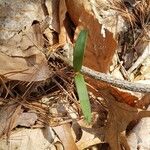
Uvularia sessilifolia
Sessile-leaf bellwort · Wild oats · Straw-lily · Sessileleaf bellwort · Sessile-leaved Bellwort
Description
Source: leafsnapUvularia sessilifolia, commonly known as the sessile-leaved bellwort, is a perennial herbaceous plant in the family Colchicaceae. Native to eastern North America, it thrives in moist woodlands and along stream banks. This plant typically reaches up to 30 cm in height with a slender stem adorned by alternate leaves that are either ovate or lanceolate in shape. The dark green leaves are smooth in texture and can grow up to 10 cm long. The bell-shaped flowers of Uvularia sessilifolia are pale yellow or cream-colored and dangle from the stem on short pedicels. They bloom from April through June, depending on the location. Uvularia sessilifolia is a valuable food source for various wildlife species, including deer, rabbits, squirrels, and birds, which feed on its leaves and fruits. Additionally, its roots have been traditionally used by Native Americans for their medicinal properties to treat ailments such as coughs and colds. With its delicate flowers that bloom early in the spring, Uvularia sessilifolia makes an attractive addition to woodland gardens. It prefers moist soil conditions but can tolerate some drought once established.
Care Guide
💧 Water Every 7 days
Wild Oats thrives in environments with moderate moisture, preferring soil that mimics the dampness of a forest floor. To keep it well-hydrated, water it weekly. Being an understory plant, it flourishes in indirect light and high humidity. Outdoors, it does well with natural rainfall and seasonal changes.
How should I water my Wild Oats plant for the best results?
To properly water the Wild Oats, use filtered water that is at room temperature or slightly warmer. Tap water may contain harmful particles, so filtered water is better. The plant comes from a warm environment, so cold water can be a shock to its system. Avoid overhead watering as it can cause foliage problems. Instead, apply filtered room temperature water directly to the soil until it is completely soaked. This helps moisten the roots and allows them to spread and gather nutrients effectively.
What should I do if I give my Wild Oats too much or too little water?
Both overwatering and underwatering can harm the health of your Wild Oats, but overwatering is more commonly a problem. Too much water can cause the stems and leaves to wilt and turn yellow, and it can also lead to root rot, mold, and mildew, which can kill the plant. Underwatering is not as common for Wild Oats because they can tolerate drought, but it can still happen, resulting in brittle and brown leaves. It is important to catch the signs of overwatering early to prevent permanent damage, and if you notice them, reduce your watering schedule and check the soil drainage. If you see signs of underwatering, simply water more regularly until the signs go away.
How often do I need to water my Wild Oats?
If your plant is in a pot, the most precise way to determine if it needs water is to check the soil moisture by sticking your finger in. If the top two to three inches of soil is dry, it's time to water. If you're growing Wild Oats in the ground, you can use the same method. When the top few inches of soil have dried out, it's time to water. In the spring and early fall, you'll likely need to water once a week. During extremely hot weather, you may have to water twice or more per week. However, mature and well-established Wild Oats can tolerate dry conditions quite well.
How much water does my Wild Oats plant require?
When watering your Wild Oats, it's important to give it a generous amount of water and not be shy about it. Make sure the first two to three inches of soil are dry before watering and give it a thorough soaking. The water should be enough to make excess water flow out through the drainage holes in the pot. If you don't see any excess water draining, it means you haven't watered enough, but be careful not to let the water accumulate in the soil as that can harm the plant. On the other hand, if water doesn't drain through the pot, it could mean the soil is poorly draining, which is not good for the plant's health. If the plant is outside, it will be enough to receive 1 inch of rain per week.
How do I give water to my Wild Oats as they grow?
The water needs of the Wild Oats can vary depending on its growth stages. In the early years of its life or when it's freshly transplanted, it requires more water to support the development of new roots. These roots need extra moisture to ensure optimal future growth. As the plant matures, its water needs decrease. However, during the bloom period, more water may be necessary due to the significant moisture utilized in flower development.
☀️ Light Partial sun
Wild Oats does best when receiving moderate sunlight. In its natural setting it typically grows beneath taller plants, which cast a dappled, softened light. It can also adjust to places with reduced illumination without harming its growth. However, in locations with strong, unfiltered sunlight it may show inhibited development or leaf discoloration.
What are the sunlight requirements for Wild Oats?
Wild Oats thrives in conditions with moderate sunlight, typically resembling the dappled light found under a canopy of taller plants. It requires about 3-6 hours of sunlight daily (partial sun) but can also grow in full shade environments where sunlight is less than 3 hours. The plant is adaptable, but intense, unfiltered sunlight can hinder its growth and cause leaf discoloration. It's crucial to observe your garden's light patterns to ensure your Wild Oats receive the ideal balance of light and shade.
How does artificial lighting affect the growth of indoor Wild Oats?
When natural sunlight is insufficient, especially during winter or in spaces with limited sunlight exposure, artificial lighting can significantly benefit the growth of indoor Wild Oats. Optimal growth is achieved by selecting the appropriate type of artificial light, such as LED lights, which can be tailored to provide specific light wavelengths needed by the plant. Full sun plants require 30-50W/sq ft of artificial light, partial sun plants need 20-30W/sq ft, and full shade plants need 10-20W/sq ft. The light source should be placed 12-36 inches above the plant, mimicking natural sunlight distance. Ideally, plants should receive about 8-12 hours of light per day to encourage healthy growth.
What are the symptoms of insufficient light in Wild Oats when grown indoors?
When Wild Oats is grown indoors under inadequate light conditions, several symptoms can manifest, indicating light deficiency. These include smaller new leaves, leggy or sparse growth, quicker leaf drop, delayed or halted growth, and lighter-colored or pale new leaves. Chlorosis, or the yellowing of leaves due to chlorophyll breakdown, sunscald, leaf curling, wilting, and leaf scorching are additional symptoms that can arise from inappropriate light levels. These symptoms highlight the importance of ensuring Wild Oats receive sufficient light, whether naturally or through artificial means.
What are the recommended solutions for managing light exposure of Wild Oats?
Managing the light exposure of Wild Oats involves a few strategic steps, whether it is grown indoors, outdoors, or in the ground. Indoors, gradually moving plants to sunnier spots or using artificial lighting for at least 8 hours daily can optimize growth. Outdoors, it’s beneficial to transition plants to locations with better sunlight exposure gradually to prevent sunburn. For plants in the ground, reducing obstructions like pruning tree branches or transplanting the plant during its dormant period to a sunnier location with ample sunlight and good drainage can significantly improve light accessibility. It's crucial to adapt these methods to the specific conditions and needs of your Wild Oats to foster healthy development.
🌡️ Temperature 5–32.2°C
Wild Oats is native to temperate regions and grows best in temperatures between 41 and 89.6 °F (5 to 32 °C). It prefers cooler climates and may require temperature adjustments, especially during hotter seasons. A cool, shaded location is recommended in summer.
What are the ideal growing conditions for Wild Oats?
Wild Oats, or Uvularia sessilifolia, is native to temperate areas and thrives in temperatures ranging from 41 to 89.6 °F (5 to 32 °C). It prefers cooler climates, making a shaded, cool location recommended during the hotter seasons. While Wild Oats exhibit strong cold resistance and typically do not require special frost protection measures, in extremely low winter temperatures below -30°C, it is crucial to provide cold protection by covering the plant with soil or straw. Additionally, watering the plant abundantly before the first freeze of autumn to keep the soil moist is recommended, as this helps prevent drought and water scarcity during winter and early spring.
How do Wild Oats react to low and high temperatures?
Wild Oats is highly cold-tolerant, best thriving above 5°C but should be managed to keep above -25°C during winter periods. If temperatures drop below -30°C, while the plant may exhibit no noticeable changes during the winter, there could be a decrease in sprouting or a failure to sprout in the spring. The solution in spring would be to remove any parts that have failed to sprout. In cases of high temperatures, especially during summer when it may rise above 32°C, the leaves can become lighter, prone to curling, susceptible to sunburn, and in severe cases, the plant may wilt and dry out completely. To manage this, it is advisable to trim the sunburned and dried up parts, move the plant to a shaded location during the midday and afternoon sun, or use a shade cloth. Additionally, watering the plant in the morning and evening to maintain soil moisture is beneficial.
💨 Humidity
🪴 Soil 5-6
🌱 Fertilizer
For Wild Oats, the primary time to apply fertilizer is in early spring when the flowers start to form. The correct fertilizer promotes better blooms and helps Wild Oats produce attractive flowers. Fertilizing in early spring ensures strong flowering during the season and supplies energy for dormant growth periods.
Why should I use plant food on my Wild Oats?
Wild Oats depend on their leaves for their main structure, and proper fertilization plays a crucial role in ensuring that the leaves not only appear great but also function effectively. By fertilizing appropriately, you can help your Wild Oats maintain consistent leaf color and a healthy texture. Fertilization also benefits the plant below the soil's surface by promoting the growth of new roots and maintaining the existing ones. This not only keeps the plant healthy in the present but also improves its ability to absorb soil nutrients in the future.
When should I fertilize my Wild Oats?
If you grow your Wild Oats outdoors each year, you'll notice new growth in early spring. This means it's time to start fertilizing. Usually, applying fertilizer once in the spring is sufficient, but if you want to maximize growth, you can fertilize multiple times in spring and early summer. In this case, feed the Wild Oats about once every month to a month and a half.
When is the best time to not fertilize my Wild Oats?
During late fall and winter, your Wild Oats will go into a dormant phase and stop growing. During this time, it's best to avoid fertilizing your Wild Oats. In spring and summer, if you choose to fertilize, start reducing the amount as summer approaches because the growth rate of your Wild Oats will also slow down. In general, it's not recommended to fertilize your Wild Oats during extremely hot weather or when the soil is excessively dry. Fertilizing in those conditions can stress your Wild Oats and lead to premature death.
What kind of fertilizer does my Wild Oats plant need?
Choosing the best fertilizer for a Wild Oats plant is actually quite simple. These plants thrive on a general-purpose garden fertilizer that contains equal amounts of nitrogen, phosphorus, and potassium. You can look for a fertilizer with a ratio of 10-10-10 or something similar, which will work well. It's important to avoid fertilizers with high nitrogen levels if you're unsure. Most of the recommended fertilizers for Wild Oats come in a granular form, which is easy to apply to the soil. These fertilizers should be slow-release, ensuring that nutrients are gradually released. Additionally, using an organic soil amendment like compost can be beneficial for feeding your Wild Oats.
How do I make my Wild Oats grow better?
To help your Wild Oats grow best, wait until the first leaves start to come out in early spring. Then, apply a balanced slow-release fertilizer to the soil around the base of the plant. You can do this again later in the season if you want. Remember to apply the fertilizer to the soil, not directly on the plant. Sometimes, you may need to move some leaves to reach the soil. It's also a good idea to water your Wild Oats before and after you fertilize it.
🪴 Pot & Repot
✂️ Pruning
Wild Oats produce delicate blooms and benefit from early spring pruning to ensure healthy growth. To encourage blooming and maintain the plant's shape, remove any dead stems and spent flowers. Regular pruning also improves air circulation and sunlight access, which enhances the plant's overall vigor and robustness.
🌿 Propagating
🐛 Diseases & pets
☠️ Toxicity
Characteristics
- Plant Type
- Herb
- Life Cycle
- Perennial
- Genus
- Uvularia
- Family
- Colchicaceae
- Hardiness Zone
- 4-8
- Mature Height
- 10 cm to 30 cm
- Mature Spread
- 30 cm
- Leaf Color
- Green
- Leaf Type
- Deciduous
- Flower Color
- Yellow, Cream
- Flower Size
- 2.54 cm
- Bloom Time
- Early spring, Mid spring
- Planting Time
- Spring, Autumn
- Harvest Time
- Early summer, Mid summer