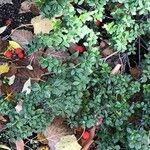
Vaccinium deliciosum
Cascade bilberry · Cascade Blueberry · Blue-leaved huckleberry · Cascade huckleberry · Rainier blueberry
Description
Source: leafsnapVaccinium deliciosum, commonly known as the Cascade huckleberry, is a species of evergreen shrub that belongs to the heath family. Native to the Pacific Northwest region of North America, this plant thrives in moist coniferous forests and subalpine meadows. Typically, Vaccinium deliciosum grows to a height of 1-3 meters and features dark green leaves that are glossy on top and pale underneath. The plant produces small, bell-shaped flowers that are pinkish-white in color, with five petals, blooming from May to July. The fruit of Vaccinium deliciosum is a small berry that turns dark blue-black when ripe. These berries are edible and possess a sweet-tart flavor, making them popular for use in jams, jellies, pies, or enjoyed fresh. For centuries, Native American tribes have utilized Vaccinium deliciosum for both food and medicinal purposes, thanks to its high nutritional value, which includes antioxidants like anthocyanins. Overall, Vaccinium deliciosum is an important plant species both ecologically and culturally. It provides food for wildlife such as bears and birds, and it has been a significant resource for Native American tribes who have depended on it for generations.
Care Guide
💧 Water Every 7 days
Cascade bilberry thrives in a moderately humid environment and needs consistent moisture. It should be watered every 2-3 weeks. While it can tolerate short periods of dryness, regular watering is essential to maintain its evergreen foliage, especially when grown outdoors where rainfall may be unpredictable.
☀️ Light Full sun
The cascade bilberry needs plenty of sunlight to grow best, though it can cope in dimmer conditions if required. Its natural habitat is one with abundant sunshine. Still, both too much and too little light can negatively affect the plant's growth and health.
What are the sunlight requirements for cascade bilberry?
Cascade bilberry thrives in environments with ample sunlight, requiring above 6 hours of full sun exposure for optimal growth. However, it can also tolerate partial sun conditions, which means about 3-6 hours of sunlight. It's important to observe how sunlight moves through your garden to choose the best spots for your plants, ensuring a balance of light and shade to promote their health and happiness.
How do you adjust the lighting for cascade bilberry if natural light is insufficient?
If natural sunlight is insufficient, particularly in indoor settings or during less sunny seasons, artificial lighting can be an effective solution. Indoor plants benefit from adequate lighting provided by artificial light sources, including LEDs which offer customizable light wavelengths. For full sun plants, 30-50W/sq ft of artificial light is recommended, 20-30W/sq ft for partial sun plants, and 10-20W/sq ft for full shade plants. The artificial light source should be placed 12-36 inches above the plant and turned on for 8-12 hours per day to mimic natural daylight conditions and support healthy plant growth.
What are the symptoms of improper lighting for cascade bilberry?
Cascade bilberry can show several symptoms if it's not receiving the appropriate amount of light. These include smaller new leaves, leggy or sparse growth, faster leaf drop, slower or halted growth, lighter-colored new leaves, chlorosis (yellowing leaves), sunscald, leaf curling, wilting, and leaf scorching. Leaf curling, chlorosis, and leaf scorching are particularly indicative of too much light, whereas the other symptoms typically indicate insufficient light.
What solutions can be applied if cascade bilberry is not receiving optimal sunlight?
To address insufficient sunlight, consider gradually moving your plants to sunnier locations, ensuring at least 6 hours of direct sunlight daily. For indoor plants, use a south-facing window and keep curtains open during the day or supplement with artificial lighting, such as desk lamps or plant grow lights, for at least 8 hours daily. For outdoor and ground-planted cascade bilberries, it's crucial to gradually adapt them to increased sunlight to prevent sunburn, which might involve pruning trees that block sunlight or transplanting smaller plants to more suitable locations during their dormant periods. Remember, parts of the plant that have already been negatively affected by light issues might not recover, but new growth should be healthy following these adjustments.
🌡️ Temperature 5–35°C
Cascade bilberry is a fauna-loving species that thrives in temperatures of 41 to 95 °F (5 to 35 ℃). Commonly encountered in its native habitats with moderate climates, it favors cooler conditions to promote growth. During extreme seasonal shifts, consider maintaining the temperature between 41 to 95 °F.
What is the optimal temperature range for Cascade bilberry?
Cascade bilberry thrives best in temperatures ranging from 41 to 95 °F (5 to 35 °C). It prefers cooler conditions within this range to foster growth. Proper regulation of temperature is recommended during extreme seasonal changes to maintain this optimal range. This plant has strong cold resistance, making special frost protection measures unnecessary in most cases. However, in regions where winter temperatures might drop below -25°C, providing cold protection by wrapping the trunk and branches with materials like non-woven fabric or cloth is advised. Before the onset of the first freeze in autumn, it's beneficial to water the plant abundantly to keep the soil moist, which helps prevent drought and water scarcity during winter and early spring.
How does Cascade bilberry react to low temperatures?
Cascade bilberry is notably cold-tolerant, ideally thriving when the temperature remains above 5°C. It can generally withstand winter temperatures above -20°C. Should temperatures fall below -25°C, while there may not be immediate visible damage during the winter, the plant could experience brittleness and dryness in its branches come spring, potentially preventing the emergence of new shoots. To counteract damage from such low temperatures, it is recommended to prune away any dead branches that have failed to produce new leaves in the spring.
How should Cascade bilberry be cared for during high temperatures?
During the summer months, it is important to keep the temperature below 35°C for Cascade bilberry. Exposure to temperatures above 38°C can cause the leaves to lighten in color and become dry and withered at the tips, increasing the risk of sunburn. To mitigate these effects, sunburned and dried parts of the plant should be trimmed away. Moving the plant to a shaded location or employing a shade cloth can protect it from the harsh midday and afternoon sun. Additionally, watering the plant in the morning and evening can help maintain soil moisture and prevent heat stress.
What is the botanical name of Cascade bilberry?
The botanical name of Cascade bilberry is Vaccinium deliciosum.
💨 Humidity
🪴 Soil 4-6
🌱 Fertilizer
The Cascade bilberry plant needs adequate nutrients for optimal fruit production. Fertilize in early spring to support new growth and bloom development. Regular fertilization helps the plant remain healthy, produce more flavorful fruit, and prevents nutrient-deficiency problems like yellow leaves and poor fruit production.
🪴 Pot & Repot
✂️ Pruning
Cascade bilberry benefits from annual pruning during its dormant winter period. To improve the plant's health and airflow, remove any dead, diseased, or crossing branches. Thinning out older stems encourages new growth and increases berry yield. To ensure precise cuts and boost both vigor and productivity, use sharp, clean tools.
🌿 Propagating
🐛 Diseases & pets
☠️ Toxicity
Characteristics
- Plant Type
- Shrub
- Life Cycle
- Perennial
- Genus
- Vaccinium
- Family
- Ericaceae
- Hardiness Zone
- 5-9
- Mature Height
- 30 cm to 91 cm
- Mature Spread
- 30 cm to 91 cm
- Leaf Color
- Green, Dark Green
- Leaf Type
- Evergreen
- Flower Color
- Pink, White
- Flower Size
- 0.76 cm
- Bloom Time
- Mid spring, Late spring
- Planting Time
- Spring, Summer, Autumn
- Harvest Time
- Late summer, Early fall, Mid fall