Vaccinium fuscatum
Hairy highbush blueberry · Downy swamp-huckleberry · Black highbush blueberry
Description
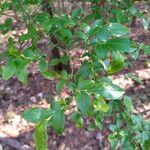
Source: leafsnapVaccinium fuscatum, commonly known as the black highbush blueberry, is a deciduous shrub from the Ericaceae family. Native to North America, it is found in regions such as the eastern United States and Canada. This plant typically grows between 2 to 3 meters in height and has a spreading habit. The leaves of Vaccinium fuscatum are oval-shaped and dark green, with serrated edges. Its flowers are small and either white or pinkish-white, featuring bell-shaped corollas that bloom from late spring to early summer. The fruit is a dark blue-black berry that ripens from mid-summer through early fall. Vaccinium fuscatum prefers acidic soil with good drainage and full sun exposure but can also tolerate partial shade. It requires regular watering during its growing season but should be watered sparingly during winter dormancy. The black highbush blueberry has several uses, including as an important commercial crop for its fruit, which is used in making jams, jellies, or eaten fresh. Additionally, its high antioxidant content gives it medicinal properties, helping to prevent various diseases such as cancer and heart disease. Overall, Vaccinium fuscatum is an attractive shrub with ornamental value due to its beautiful fall foliage colors. Its ease of growth makes it an excellent addition to gardens and landscapes alike.
Care Guide
💧 Water Every 7 days
The black highbush blueberry is well-suited to varying moisture levels and thrives with moderate watering every 2-3 weeks to prevent overwatering. When growing this plant outdoors, it is important to consider natural rainfall patterns. This allows growers to coordinate additional watering with seasonal cycles, promoting optimal growth.
☀️ Light Full sun
The black highbush blueberry is native to open habitats, like sunny meadows and forest margins, where plentiful light is available. It performs best in Full Sun but can tolerate Partial Sun, showing adaptability to different light conditions.
What are the sunlight requirements for Black highbush blueberry?
Black highbush blueberry thrives best in full sun conditions, requiring more than 6 hours of sunlight daily, but it can also grow well in partial sun, with about 3-6 hours of sunlight. It's essential to watch how sunlight moves through your garden to find spots that offer a healthy balance of light and shade. Whether planted in garden spaces open to the sky or along forest edges and sunny meadows, this plant adapts well to the available light, echoing its natural habitat preferences.
How can artificial lighting be used for Black highbush blueberry indoor plants?
Indoor Black highbush blueberry plants benefit from adequate artificial lighting when natural sunlight is not sufficient, especially during winter or in less sunny spaces. LED lights are ideal as they can be adjusted to provide specific light wavelengths necessary for plant growth. Full sun plants require 30-50W per square foot, partial sun plants 20-30W per square foot, and full shade plants need 10-20W per square foot of artificial light. The light source should be placed 12-36 inches above the plant to simulate natural sunlight, and plants typically need between 8-12 hours of light per day.
What are the symptoms of light deficiency in Black highbush blueberry?
Light deficiency in Black highbush blueberry plants can lead to various symptoms, including smaller new leaves, leggy or sparse growth, faster leaf drop, slower or no new growth, lighter-colored new leaves, chlorosis, sunscald, leaf curling, wilting, and leaf scorching. These symptoms indicate that the plant is not receiving enough sunlight, leading to a reduction in chlorophyll and essential nutrients, which affects the plant's overall health.
What solutions can address insufficient sunlight for Black highbush blueberry?
To combat insufficient sunlight for Black highbush blueberry, gradually move plants to sunnier locations to receive at least 6 hours of direct sunlight daily. If moving large indoor plants is not feasible, consider using artificial light, such as a desk or ceiling lamp, for at least 8 hours a day, or invest in professional plant grow lights. For outdoor plants, avoid sudden changes in light intensity to prevent sunburn. Minimize obstructions by pruning trees that block sunlight, and consider transplanting smaller plants to areas with ample sunlight and good drainage during their dormant period. Remember that parts of the plant affected by low light may not recover, but new growth after increasing light exposure will be healthy.
🌡️ Temperature 5–35°C
Black highbush blueberry is highly adaptable to a wide range of climates, from scorching summers to cold winters. Nevertheless, it has a preferred temperature band for growth. If temperatures become too high, the plant is vulnerable to heat and humidity stress, which can kill it. In areas where temperatures near the lower limit of its cold tolerance, it is necessary to provide insulation to protect the plant.
What is the Black highbush blueberry?
The Black highbush blueberry, known botanically as Vaccinium fuscatum, is a species of blueberry. This plant belongs to the genus Vaccinium and is recognized by its distinctive characteristics, though specific details about its essentials or symptoms of interest were not provided. As such, information related to the general care, cultivation, or potential issues associated with this plant species remains unspecified.
💨 Humidity
🪴 Soil 6-7
🌱 Fertilizer
The Black highbush blueberry plant needs adequate nutrients to achieve optimal fruit production. Apply fertilizer in early spring to support new growth and bloom development. Regular feeding keeps the plant healthy, produces more delicious fruit, and prevents nutrient deficiency problems like yellowing leaves and poor fruit production.
🪴 Pot & Repot
✂️ Pruning
Pruning black highbush blueberries is essential for maintaining healthy and productive plants. This should be done annually during early to late winter, when the plant is dormant. Begin by removing dead branches and thinning out older canes. This process enhances air circulation, reduces the risk of disease, and boosts fruit production, leading to an abundance of tart berries.
🌿 Propagating
🐛 Diseases & pets
☠️ Toxicity
Characteristics
- Plant Type
- Shrub
- Life Cycle
- Perennial
- Genus
- Vaccinium
- Family
- Ericaceae
- Hardiness Zone
- 5-9
- Mature Height
- 0.91 m to 3.66 m
- Mature Spread
- 0.91 m to 3.05 m
- Leaf Color
- Green, Dark Green
- Leaf Type
- Evergreen
- Flower Color
- Pink, White
- Flower Size
- 2.54 cm
- Bloom Time
- Early spring, Mid spring
- Planting Time
- Spring, Summer
- Harvest Time
- Summer