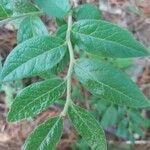
Vaccinium myrtilloides
Canada blueberry · Sourtop · Sourtop blueberry · Velvetleaf blueberry · Low bush blueberry
Description
Source: leafsnapVaccinium myrtilloides, commonly known as the velvetleaf huckleberry or sour top blueberry, is a deciduous shrub in the heath family. Native to North America, it thrives in various habitats, including bogs, swamps, and moist woods. The plant typically reaches heights of 1-2 meters and has a spreading growth habit. The leaves of Vaccinium myrtilloides are oval-shaped, with a glossy dark green upper surface and a pale green underside. Its bell-shaped flowers, featuring pinkish-white petals, bloom from May to June. The plant produces edible, though sour-tasting, blueberries that ripen from July through September. Vaccinium myrtilloides holds several medicinal uses among Native American tribes, including treatments for diarrhea, dysentery, stomachaches, and sore throats. The plant is notable for its high levels of antioxidants, which can help prevent cell damage caused by free radicals. Overall, Vaccinium myrtilloides is an attractive shrub, valued for its ornamental appeal due to its glossy leaves that turn red in autumn before shedding for the winter dormancy period. Its edible fruit also makes it an important food source for wildlife, such as birds and bears, during the fall season when other food sources become scarce.
🎭 Security
Care Guide
💧 Water Every 7 days
The velvetleaf huckleberry flourishes in areas with high humidity, commonly found in forest understories. It needs moderate watering, ideally every three weeks, and cannot tolerate drought conditions. To ensure proper growth, adjust the watering schedule according to the growing season to align soil moisture with the patterns of seasonal rainfall.
☀️ Light Full sun
Velvetleaf huckleberry does well when it receives abundant sunlight for most of the day. It can tolerate some light shading. In its native habitat it favors conditions with a substantial amount of light. While it can adjust to somewhat shaded settings, growth may be impeded if sunlight is significantly lacking or extreme.
What are the sunlight requirements for Velvetleaf huckleberry?
Velvetleaf huckleberry thrives in full sun conditions, requiring more than 6 hours of sunlight daily, but it can also tolerate partial sun, which is about 3-6 hours of sunlight. In its natural habitat, it enjoys abundant sunlight for most of the day, although it can adapt to some modest shading. However, growth may be hindered if the plant is placed in significantly shaded or extremely lacking sunlight conditions. It's vital to observe the movement of sunlight through your garden to find spots that offer the right balance of light and shade, ensuring the plant's health and happiness.
How can artificial lighting be used for Velvetleaf huckleberry indoors?
Indoor Velvetleaf huckleberry plants require adequate lighting for optimal growth, especially when natural sunlight is insufficient, such as during winter or in less sunny locations. Artificial lights can provide a vital solution to promote faster, healthier growth. LED lights are a popular choice for indoor plant lighting because they offer customizable wavelengths needed by the plants. Full sun plants need 30-50W/sq ft of artificial light, partial sun plants need 20-30W/sq ft, and full shade plants need 10-20W/sq ft. The light source should be placed 12-36 inches above the plant to mimic natural sunlight, and most plants need 8-12 hours of light per day.
What are the symptoms of light deficiency in Velvetleaf huckleberry?
When Velvetleaf huckleberry is subjected to suboptimal lighting conditions, it may show symptoms such as smaller new leaves than the previous ones, leggy or sparse growth, faster leaf drop, slower or no new growth, and lighter-colored new leaves. These symptoms indicate a deficiency in light, which is crucial for the plant's health and growth. Conversely, symptoms of excessive light exposure include chlorosis, where leaves lose their green color, sunscald, characterized by pale or necrotic areas on the plant, leaf curling as a defense mechanism, wilting due to increased water loss, and leaf scorching marked by brown, dry edges on leaves.
How can I alleviate symptoms of light deficiency or excess in Velvetleaf huckleberry?
To mitigate symptoms of light deficiency or excess in Velvetleaf huckleberry, consider the following solutions: For indoor plants, gradually move them to sunnier locations each week until they receive at least 6 hours of direct sunlight daily. Utilize a south-facing window and keep curtains open during the day for maximum sunlight. If the plant is large or not easily movable, supplement with artificial light, keeping a desk or ceiling lamp on for at least 8 hours daily or investing in professional plant grow lights. For outdoor plants, gradually move them to sunnier spots weekly to avoid sunburn. It's also crucial to minimize obstructions such as trees by pruning branches to let sunlight through. Smaller plants can be transplanted during their dormant period, usually late winter or early spring, to a location with ample sunlight and good drainage. Note that parts of the plant affected by insufficient sunlight may not recover, but new growth post adjusting light exposure should be healthy.
🌡️ Temperature 5–32.2°C
Velvetleaf huckleberry is indigenous to regions where temperatures range from 32 to 70 °F (0 to 21 ℃). It performs best in these temperate conditions. Seasonal temperature changes are usually unnecessary for its vigorous growth.
💨 Humidity
🪴 Soil 4-5
🌱 Fertilizer
The Velvetleaf huckleberry plant needs adequate nutrients to achieve the best fruit production. Fertilize in early spring to encourage new growth and flower development. Regular feeding keeps the plant healthy, yields more flavorful fruit, and prevents nutrient deficiency problems like yellowing leaves and poor fruit production.
🪴 Pot & Repot
✂️ Pruning
The velvetleaf huckleberry is a deciduous shrub known for its vibrant, edible berries and soft, velvety leaves. To promote better air circulation and increase berry production, it is best to prune the shrub in early spring. Make sure to remove any dead branches and use clean tools to prevent the spread of disease. Regular pruning helps maintain the shrub's shape and vigor, ensuring an optimal fruit yield.
🌿 Propagating
🐛 Diseases & pets
☠️ Toxicity
Characteristics
- Plant Type
- Shrub
- Life Cycle
- Perennial
- Genus
- Vaccinium
- Family
- Ericaceae
- Hardiness Zone
- 2
- Mature Height
- 30 cm to 52 cm
- Mature Spread
- 61 cm to 91 cm
- Leaf Color
- Green, Dark Green
- Leaf Type
- Deciduous
- Flower Color
- White
- Flower Size
- 2.54 cm
- Bloom Time
- Early spring, Mid spring
- Planting Time
- Spring, Summer
- Harvest Time
- Mid summer, Late summer, Early fall