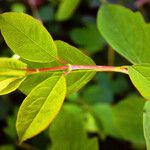
Vaccinium ovalifolium
Early blueberry · Oval-leaf bilberry · Oval-leaf blueberry · Oval-leaf-huckleberry · Alaska blueberry
Description
Source: leafsnapVaccinium ovalifolium, commonly known as oval-leaf huckleberry, is a deciduous shrub belonging to the Ericaceae family. Native to North America, it thrives in a variety of habitats such as forests, meadows, and rocky slopes. The plant typically grows to a height of 1 to 3 meters and features an upright habit with multiple stems. The leaves of Vaccinium ovalifolium are elliptical or ovate in shape, with a glossy dark green upper surface and a pale green underside. The plant produces small white or pinkish bell-shaped flowers that bloom from May to July. These blooms are followed by edible blue-black berries that ripen between July and September. Vaccinium ovalifolium serves as an important food source for wildlife, including birds, bears, deer, and small mammals. Additionally, the plant boasts medicinal properties due to its high antioxidant content, which helps in preventing various diseases. The shrub prefers well-drained, acidic soils and can thrive in both partial shade and full sunlight. It can be propagated through seeds or stem cuttings, although it requires patience as it takes several years to reach maturity. Overall, Vaccinium ovalifolium is a beautiful shrub that offers both aesthetic appeal and ecological benefits, making it an excellent addition to gardens and natural landscapes alike.
🎭 Security
Care Guide
💧 Water Every 7 days
The Oval-Leaved Blueberry thrives in high humidity and moist soil, although it can withstand short periods of dryness. Water the plant every three weeks, being careful not to overwater it. In cooler climates, this outdoor plant benefits from seasonal rainfall. During the growing season, keep the soil slightly moist, making sure it doesn't become waterlogged.
☀️ Light Full sun
The oval-Leaved Blueberry prefers locations with abundant daylight. Sunlit conditions support its healthy growth by supplying the energy required for photosynthesis. This kind of setting mirrors its native habitat, where sunlight is plentiful. Care should be taken to avoid excessive exposure, as too much light can harm the plant. It can also persist in less brightly lit areas.
What are the sunlight requirements for Oval-Leaved Blueberry?
The Oval-Leaved Blueberry needs specific sunlight conditions to thrive optimally. It requires full sun, which is above 6 hours of sunlight daily, or partial sun, about 3-6 hours of sunlight daily. It's essential to watch how sunlight moves through your garden to find the perfect balance of light and shade for these plants, ensuring they grow happily in their environment.
What essentials should be considered for the healthy growth of Oval-Leaved Blueberry?
For healthy growth, the Oval-Leaved Blueberry prefers surroundings that are well-lit with plenty of daylight, akin to its native habitat. This lighting is vital for energy and photosynthesis. However, care should be taken to avoid overexposure to strong light. Artificial lighting can be a solution for indoor plants, especially when natural light is insufficient. Good practice includes choosing the right type of light, like LED lights, determining proper light distance and duration, which might range from 8-12 hours per day.
What are some symptoms of light deficiency or overexposure in Oval-Leaved Blueberry?
Symptoms of light deficiency in Oval-Leaved Blueberry include smaller new leaves, leggy or sparse growth, faster leaf drop, slower or halted growth, lighter-colored new leaves, and symptoms of overexposure include chlorosis, sunscald, leaf curling, wilting, and leaf scorching. These symptoms signal that the plant is not receiving its optimal light conditions, either too little or too much, affecting its health and growth.
How can I ensure my Oval-Leaved Blueberry gets enough light?
To ensure your Oval-Leaved Blueberry receives sufficient light, consider moving indoor plants gradually to sunnier locations until they receive at least 6 hours of direct sunlight, using south-facing windows for maximum exposure. Artificial lighting can supplement sunlight for large or immovable plants. For outdoor plants, shift them to optimal sunlight spots gradually to prevent sunburn. Pruning or relocating plants can help reduce obstructions and ensure better sunlight exposure. Remember that parts of the plant affected by poor light may not recover, but new growth will be healthier with improved light conditions.
🌡️ Temperature 0–32.2°C
Oval-Leaved Blueberry is native to temperate areas and favors a climate that is not extreme. It does best in temperatures from 32 to 90 °F (0 to 32 ℃). Seasonal measures may be needed, especially in warmer regions, to keep the plant within its preferred temperature range.
What climate does the Oval-Leaved Blueberry prefer?
The Oval-Leaved Blueberry, botanically known as Vaccinium ovalifolium, thrives in temperate regions. It prefers a climate with temperatures ranging from 32 to 90 °F (0 to 32 °C). Despite its high tolerance for cold, it does not require additional frost protection measures during the winter. However, before the onset of the first freeze in autumn, it is beneficial to water the plant generously to ensure the soil remains moist through into the frozen state, aiding in preventing drought and water scarcity during the winter and early spring months.
How does low temperature affect Oval-Leaved Blueberry?
The Oval-Leaved Blueberry exhibits exceptional cold tolerance, enduring winter temperatures down to -35°C without immediate damage. However, if temperatures fall below this threshold, the plant may not show any noticeable issues during the winter, but come spring, the branches may become brittle, dry, and fail to produce new growth. In such a case, pruning away the dead branches in spring that do not produce new leaves is recommended to help the plant recover.
What should be done if the Oval-Leaved Blueberry experiences high temperatures?
High temperatures can be quite detrimental to the Oval-Leaved Blueberry. When temperatures exceed 32°C, the plant may suffer significant leaf drop or, in extreme cases, the entire plant may wither and die. To mitigate such stress, remove any parts of the plant that are sunburned and dried up. Additionally, relocating the plant to a shaded area during the midday and afternoon sun or using a shade cloth can help. Ensure the soil is kept moist by watering in the morning and evening.
💨 Humidity
🪴 Soil 4-6
🌱 Fertilizer
The Oval-Leaved Blueberry plant needs adequate nutrients to achieve optimal fruit production. Fertilize in early spring to promote new growth and flower development. Consistent fertilization keeps the plant healthy, encourages production of more flavorful fruit, and prevents nutrient deficiency problems like yellowing leaves and reduced fruit production.
🪴 Pot & Repot
✂️ Pruning
The oval-leaved blueberry benefits greatly from strategic pruning during the winter months, from early to late in the season. To improve air circulation and light penetration, remove any dead wood and thin out older branches. This process enhances fruit yield and maintains the plant's structure and vigor. Regular annual pruning is essential for optimizing the shrub's overall health and productivity.
🌿 Propagating
🐛 Diseases & pets
☠️ Toxicity
Characteristics
- Plant Type
- Shrub
- Life Cycle
- Perennial
- Genus
- Vaccinium
- Family
- Ericaceae
- Hardiness Zone
- 3-7
- Mature Height
- 1.22 m
- Mature Spread
- 61 cm
- Leaf Color
- Green, Dark Green
- Leaf Type
- Deciduous
- Flower Color
- Pink, White
- Flower Size
- 0.51 cm to 0.76 cm
- Bloom Time
- Early spring, Mid spring
- Planting Time
- Autumn, Winter, Spring, Summer
- Harvest Time
- Mid summer, Late summer, Early fall
- Native Area
- Russia, Japan