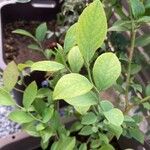
Vaccinium virgatum
Southern black blueberry · Swamp blueberry · Rabbit-eye blueberry · Smallflower blueberry
Description
Source: leafsnapVaccinium virgatum, commonly known as the southern mountain cranberry or deerberry, is a deciduous shrub in the Ericaceae family. Native to eastern North America, it thrives in various habitats such as forests, meadows, and wetlands. The plant typically reaches a height of 2-3 meters and exhibits an upright growth habit with multiple stems. The leaves of Vaccinium virgatum are simple, alternate, and elliptical with finely serrated margins. They are dark green on the top with a lighter underside. From May to June, the shrub produces small, white or pinkish, bell-shaped flowers. The fruit of Vaccinium virgatum is an edible berry that ripens from August through September. When ripe, the berries are round or oblong, dark blue-black in color, and have a sweet taste. For centuries, Native Americans have used Vaccinium virgatum for medicinal purposes due to its anti-inflammatory properties, which can help alleviate pain caused by arthritis or other inflammatory conditions. Overall, Vaccinium virgatum is an attractive shrub that offers both ornamental value and edible fruit. Its potential medicinal benefits make it an excellent addition to any garden landscape.
🎭 Recovery
Care Guide
💧 Water Every 7 days
The Rabbiteye blueberry thrives in humid environments and needs consistent moisture, but it should not be waterlogged. Watering it weekly can help mimic its natural habitat. In temperate regions, when grown outdoors, mulching is helpful for retaining soil moisture, especially during the high water demand of the fruiting season.
☀️ Light Full sun
The rabbiteye blueberry performs best with abundant sunlight, doing well in locations where the sun's rays reach for most of the day. It can tolerate limited light, although that may impede its growth. Too much or too little sunlight can damage the plant or reduce its vigor.
What are the sunlight requirements for a Rabbiteye Blueberry plant?
The Rabbiteye Blueberry (Vaccinium virgatum) thrives in full sun conditions, preferring above 6 hours of direct sunlight a day. However, it can also grow in partial sun, which means about 3-6 hours of sunlight daily. Monitoring the movement of sunlight through your garden helps in selecting spots that offer an optimal balance of light and shade, ensuring the plants' well-being.
How essential is sunlight for the growth of Rabbiteye Blueberry?
Sunlight plays a crucial role in the growth and health of the Rabbiteye Blueberry. While it flourishes under abundant sunlight, the plant can also tolerate limited sunlight conditions, albeit with potential growth impairment. Both insufficient and excessive sunlight can lead to adverse effects on the plant's vitality.
Can artificial light support the growth of indoor Rabbiteye Blueberry plants?
Yes, when natural sunlight is insufficient, especially during winter or in less sunny locations, artificial lighting can be beneficial. LED lights are recommended for their ability to be tailored to provide specific wavelengths needed by plants. The intensity of artificial light required varies depending on the type of plant, with full sun plants needing 30-50W/sq ft, partial sun plants 20-30W/sq ft, and full shade plants 10-20W/sq ft. The light source should be positioned 12-36 inches above the plant, and the lighting duration should mimic natural daylight hours, generally 8-12 hours per day.
What are the symptoms of inadequate sunlight in Rabbiteye Blueberry plants?
Symptoms of insufficient sunlight in Rabbiteye Blueberry include new leaves growing smaller in size, leggy or sparse growth, faster leaf drop, slower or halted new growth, and leaves appearing lighter in color or showing chlorosis. Excessive sunlight can lead to sunscald, leaf curling, wilting, and leaf scorching, indicating that monitoring and adjusting the plant's light exposure is crucial for its health.
How can I alleviate insufficient sunlight conditions for my Rabbiteye Blueberry plant?
To address insufficient sunlight, gradually move your plant to a sunnier location, aiming for at least 6 hours of direct sunlight daily. For indoor plants, consider using a south-facing window or artificial grow lights to supplement light. Outdoors, gradually transition plants to brighter areas, being mindful of sudden changes to prevent sunburn. Reducing obstructions, such as trimming trees that block sunlight, and transplanting smaller plants to sunnier spots may also help enhance light exposure. Note that parts of the plant affected by low light may not recover, but new growth should thrive with improved light conditions.
🌡️ Temperature 0–32.2°C
Rabbiteye blueberry is native to temperate areas and needs a cool climate. Its preferred temperature range is 32 to 90 ℉ (0 to 32 ℃), but it can tolerate temperatures as low as -20 ℉ (-29 ℃) during winter dormancy. The plant adjusts to temperature changes by becoming dormant in cold winters and producing leaves in warm springs.
What is the native climate and preferred temperature range for Rabbiteye blueberry?
Rabbiteye blueberry is native to temperate regions and thrives best within a temperature range of 32 to 90 °F (0 to 32 °C). It is highly adaptable to temperature changes, entering dormancy during cold winters and producing leaves in warm springs. This plant possesses strong cold resistance and can endure temperatures as low as -20 °F (-29 °C) through its winter dormancy period.
Are there any specific cold protection measures required for Rabbiteye blueberry?
While Rabbiteye blueberry is generally cold-hardy and does not typically need frost protection, in conditions expecting temperatures below -35°C, it is advisable to take preventative measures. Wrapping the trunk and branches with insulating materials like non-woven fabric or cloth can provide necessary protection. Also, watering the plant abundantly before the first freeze of autumn to maintain soil moisture helps prevent drought and water scarcity during winter and early spring.
How does Rabbiteye blueberry react to temperatures below its cold tolerance limit?
If temperatures drop below -35°C, Rabbiteye blueberry plants may not show immediate damage during winter, but come spring, branches might become brittle, dry, and unable to produce new shoots. To address this, pruning dead branches that fail to produce new leaves in spring is recommended.
What are the effects of high temperatures on Rabbiteye blueberry and how can they be mitigated?
High temperatures, specifically above 35°C, can cause the leaves of Rabbiteye blueberry to lighten in color, lead to dry, withered tips, and increase susceptibility to sunburn. Mitigation measures include trimming sunburned and dried parts, relocating the plant to a shaded location or using a shade cloth to protect against the midday and afternoon sun, and ensuring the plant is watered in the morning and evening to keep the soil moist.
What is the botanical name of Rabbiteye blueberry?
The botanical name of Rabbiteye blueberry is Vaccinium virgatum.
💨 Humidity
🪴 Soil 4-5
🌱 Fertilizer
Rabbiteye blueberry plants need adequate nutrients to achieve optimal fruit production. Fertilize in early spring to support new growth and bloom development. Regular feeding maintains plant health, increases production of tasty fruit, and prevents nutrient-deficiency issues such as yellowing leaves and poor fruit set.
🪴 Pot & Repot 2-3 years
When repotting a Rabbiteye blueberry, select a pot 1–2 inches (2.5–5.1 cm) larger that has ample drainage. Use a well-draining potting mix. Repot in spring or fall, making sure the root ball is set slightly lower than the rim of the flower pot. Water thoroughly after repotting and place it in a warm spot with indirect sunlight.
✂️ Pruning
Rabbiteye blueberries produce small, sweet berries and benefit significantly from winter pruning before new growth begins. To encourage healthy development, remove any dead wood, thin out crowded branches, and cut back the oldest canes. This practice not only enhances fruit yield but also helps maintain the plant's shape and improves both air circulation and sunlight exposure.
🌿 Propagating
🐛 Diseases & pets
☠️ Toxicity
Characteristics
- Plant Type
- Shrub
- Life Cycle
- Perennial
- Genus
- Vaccinium
- Family
- Ericaceae
- Hardiness Zone
- 3-8
- Mature Height
- 0.91 m to 1.83 m
- Mature Spread
- 91 cm
- Leaf Color
- Green
- Leaf Type
- Deciduous
- Flower Color
- White
- Flower Size
- 2.54 cm
- Bloom Time
- Early spring, Mid spring
- Planting Time
- Spring, Summer
- Harvest Time
- Summer
- Native Area
- North America