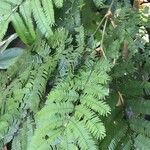
Vachellia cornigera
Bullhorn acacia · Swollen-thorn acacia · Bullhorn wattle · Bull-Horn Acacia · Cockspur
Description
Source: leafsnapVachellia cornigera, commonly known as Bullhorn Acacia or Bull's Horn Thorn, is a tree species native to Central America and Mexico. It belongs to the Fabaceae family and is renowned for its unique symbiotic relationship with ants. The tree offers shelter and food to ants, which in return protect it from herbivores. Bullhorn Acacia can reach heights of up to 20 meters and have a trunk diameter of up to 60 cm. The bark is grayish-brown, rough, and fissured. The leaves are bipinnate with small, oval-shaped leaflets. The most distinctive feature of this plant is its thorns, which can grow up to 10 cm in length and resemble bull's horns, hence the name "Bullhorn Acacia." These thorns serve as a defense mechanism against herbivores such as giraffes and elephants. The flowers of Vachellia cornigera are small, yellowish-white spheres that bloom from February to April. They produce pods containing seeds that serve as food for animals such as birds and monkeys. Overall, Vachellia cornigera plays a crucial role in its ecosystem by providing shelter and sustenance for ants, while also serving as a food source for various other animals.
🎭 Secret affection; Friendship; Beauty in retirement. Rose or white: Elegance; Friendship. Yellow: Secret affection.
Care Guide
💧 Water Every 7 days
The bullhorn acacia, native to arid regions, is highly drought-tolerant and needs very little moisture. It is best to water the plant once every 2 to 3 weeks, focusing on infrequent but deep watering. Ensure the soil drains well. This plant thrives in warm climates with rainfall patterns that resemble its original dry habitat.
How should I water my Bullhorn acacia plant in the best way?
Here are some tips for watering your plants effectively: 1. Place a garden hose at the base of the plant for better root development. Avoid spraying water directly on the leaves. 2. If your plants are outdoors and in direct sunlight, the leaves will need more watering. 3. Consider using bubblers or soaker hoses to keep the roots moist. Soaker hoses can cover the entire garden or bed, which is useful when adding or removing plants. 4. After watering, make sure to drain any excess water and wait for the soil to dry before watering again. 5. Water at ground level to prevent diseases. On a sunny day, you can spray the entire bush with water. 6. Whether your plant is in a pot or in the ground, remember that Bullhorn acacia prefers deep watering rather than light sprinkling.
What do I need to do if I give too much or too little water to the Bullhorn acacia?
If a Bullhorn acacia is overwatered, it may develop yellow, wilting leaves that eventually fall off. The plant may also look dull and unhealthy, with mushy stems. When these signs appear, it is advised to adjust your watering schedule as needed. Similarly, wilting can also indicate under watering, where leaves become crispy and dry. In such cases, check the soil for dryness and provide a thorough watering. However, it's important to note that even with proper watering, the plant may still exhibit dryness and yellowing leaves due to root damage. Once the plant returns to normal, the yellowing of leaves will cease. When growing a Bullhorn acacia indoors, always check the moisture levels and avoid overwatering. If you notice black spots, allow the soil in the pot to dry by refraining from watering for a few days. Overwatering can lead to root rot, which may require transferring the plant to a different pot if discolored and slimy roots are present. It is important to prevent root rot by preventing excessive moisture in the soil. When planting a Bullhorn acacia outdoors, ensure the soil is adequately moist by checking its dryness with your fingers. If it feels too dry, it may indicate underwatering, and the plant will benefit from proper watering.
How frequently should I water my Bullhorn acacia plant?
The Bullhorn acacia prefers deep and infrequent watering, especially when planted in pots. To prevent the soil from drying out too quickly, it is recommended to soak the plant in a gallon of water each time. If you live in a cold region, watering every 3 to 5 days is necessary. It is best to water the plant early in the morning when the soil is dry, whether it is located outdoors or indoors. You can also check the soil inside the pot to determine if watering is needed - if the top 2-3 inches of soil are dry, it is time to give the plant a full watering. During hot days, it may be necessary to check the moisture daily, as the heat can quickly dry out the soil in the pot. If you have a garden, irrigation of the soil is required as well. When living in a hot climate, watering once a week is recommended. Only water the plants when you notice that about 2 to 3 inches of soil have become too dry, both indoors and outdoors. Be mindful of rainfall and avoid overwatering to prevent root rot. Bullhorn acacia generally grows during spring and fall, so adding mulch about 3 to 4 inches deep when the plant is outdoors can help conserve water. Sandy soil drains faster and may require more frequent watering, whereas clay soil needs less frequent watering to avoid root rot. It may be helpful to mark the date on the calendar whenever you water the plants and pay attention to any drooping leaves, which could indicate a need for watering.
How much water should I give my Bullhorn acacia?
The Bullhorn acacia typically requires around a gallon of water on a regular basis. For potted plants, it's best to water them deeply until you notice water dripping from the bottom of the pot. Allow the soil to dry out before watering again. To determine how much water you've given your plant in a week, you can use a water calculator or a moisture meter. During the flowering period, it's important to provide ample water but allow the moisture to evaporate afterwards to prevent root rot. If the Bullhorn acacia is planted outdoors and receives sufficient rainfall, additional watering may not be necessary. However, when the Bullhorn acacia is young or newly planted, it should receive 1-2 inches of rain per week. As the Bullhorn acacia grows, it can rely solely on rainfall. Only in hot weather or during periods of no rainfall for 2-3 weeks should you consider giving the Bullhorn acacia a thorough watering during cooler parts of the day to prevent heat damage. Additional watering may be needed during prolonged dry spells.
Should I change how often I water my Bullhorn acacia based on the time of year or the weather?
The Bullhorn acacia is an outdoor plant that prefers rainwater, but can be watered during persistent dry weather. During the spring and fall, it needs moist soil but not soggy, with alternating dry and moist conditions being beneficial. In the summer, hot weather and lack of rainfall may require more frequent watering to keep it moist. During winter, the plant needs less water as it goes dormant and drops its leaves. A well-draining soil mixture can help water evaporate quicker. Once the plant starts to leaf out in the spring, watering can be skipped and it can rely on fall and winter rains. Good drainage is important at all times, especially during winter. If the plant is in a pot, it has limited root growth and needs regular watering during summer. Deep soakings at least once or twice a week, depending on the weather, are best. Shallow sprinkles should be avoided as they encourage fungi growth and don't reach the roots. The plant should not be allowed to dry out completely in fall or winter, even during dormancy. Overwatering should be avoided, as sitting in water for too long can harm the plant. Applying mulch can help reduce stress, conserve water, and promote healthy blooms.
☀️ Light Full sun
Bullhorn acacia thrives in full sun, like its native sunny habitat. It develops strong growth without needing any shade. Excessive or insufficient sunlight, however, can negatively affect the plant’s health.
What are the sunlight requirements for Bullhorn acacia?
Bullhorn acacia requires significant exposure to sunlight to thrive, ideally resembling its natural environment where it is accustomed to basking in the sun's rays. It needs a location that provides full sun, which is above 6 hours of sunlight, or partial sun, about 3-6 hours of sunlight a day. Ensuring the right balance of light and shade is crucial for the plant's health, as both overexposure and underexposure to sunlight can have adverse effects. When selecting a spot for your Bullhorn acacia, observe how sunlight moves through your garden to find an area that offers an ideal mix of light and shade.
How does artificial lighting help indoor Bullhorn acacia plants?
Indoor Bullhorn acacia plants require adequate lighting to maintain optimal growth, especially when natural sunlight is insufficient, such as during winter or in less sunny indoor spaces. Artificial lights, particularly LED lights that can be customized to provide specific wavelengths, serve as an essential solution to this challenge. For plants that need full sun, 30-50W/sq ft of artificial light is recommended, while partial sun plants require 20-30W/sq ft, and full shade plants need 10-20W/sq ft. The artificial light source should be placed 12-36 inches above the plant to mimic natural sunlight and be kept on for 8-12 hours per day to simulate the length of natural daylight hours, promoting faster and healthier growth.
What are the key symptoms of light deficiency in Bullhorn acacia?
Bullhorn acacia may display several symptoms when suffering from light deficiency, including smaller new leaves, leggy or sparse growth, premature leaf drop, halted or no new growth, and pale or irregularly colored new leaves due to insufficient chlorophyll. Additional signs include chlorosis, or the yellowing of leaves from excessive sunlight, sunscald marked by pale or necrotic areas on the plant, leaf curling as a defense against extreme sunlight, wilting from excessive water loss, and leaf scorching characterized by brown, dry edges on leaves caused by too much sunlight. These symptoms collectively indicate that the plant is not receiving the adequate light it needs for healthy growth.
What solutions are available for addressing light deficiency in Bullhorn acacia?
To counteract light deficiency in Bullhorn acacia, gradual adaptation to sunlight is critical. For indoor plants, move them progressively each week to a sunnier location until they receive at least 6 hours of direct sunlight daily, utilizing a south-facing window for maximum exposure. If needed, use desk lamps or invest in professional grow lights for at least 8 hours a day. Outdoors, gradually relocate your plants to sunnier spots while avoiding sudden light intensity changes to prevent sunburn. Minimizing obstructions like pruning tree branches can also help, as can transplanting smaller plants during their dormant period to locations with better sunlight and drainage. It's important to note that while some parts of the plant affected by light deficiency may not fully recover, new growth following these adjustments will be healthy.
🌡️ Temperature 15–37.8°C
Bullhorn acacia is native to habitats with temperatures ranging from 59 to 100 °F (15 to 38 °C). It favors temperate conditions and may need temperature adjustments, particularly during extreme seasonal fluctuations.
What is the native environment of the Bullhorn acacia?
The Bullhorn acacia is native to environments where temperatures range from 59 to 100 °F (15 to 38 °C). It thrives in temperate conditions but requires adjustments during extreme seasonal changes due to its preference for heat. It is extremely sensitive to cold temperatures, so it's recommended to bring the plant indoors during autumn to a spot near a bright window, albeit away from heaters, to maintain temperatures above 15°C. Exposing the plant to temperatures around or below -5°C can be harmful.
How does low temperature affect Bullhorn acacia and what are the solutions?
Bullhorn acacia thrives in warm temperatures and is not tolerant of cold conditions, thriving best above 15°C and needing protection from temperatures below -5°C. Exposure to temperatures below -10°C may cause the leaves to lighten in color before frost damage turns them brown or black, alongside wilting and drooping. To remedy this, it's important to trim off frost-damaged parts and move the plant to a warm indoor environment, preferably near a south-facing window for sunlight, while avoiding placement near heaters or air conditioning vents to prevent air dryness.
What should be done if the Bullhorn acacia experiences high temperature?
During the summer, it's crucial to ensure the Bullhorn acacia does not remain in temperatures above 38°C, as exceeding 43°C can lighten leaf colors and increase susceptibility to sunburn. To address this, trim the sunburned and dried-up parts of the plant and relocate it to a spot that is shaded from the midday and afternoon sun. It's also beneficial to water the plant in the morning and evening to maintain soil moisture, helping the plant cope with high temperatures.
💨 Humidity
🪴 Soil 6-7
🌱 Fertilizer
Fertilizing is essential for caring for Bullhorn acacia. Consistent feeding during the growing season preserves the energy required for its showy foliage and aids overall growth. Skipping fertilization can lead to unhealthy leaves, reduced ornamental value, and stunted or weak growth that is prone to breaking.
🪴 Pot & Repot
✂️ Pruning
Pruning bullhorn acacia in early spring enhances its shape, improves air circulation, and removes dead branches. By trimming crossing branches, you can create an open canopy that stimulates new growth and maintains the plant's health. Regular inspections and trimmings help the bullhorn acacia retain its unique appearance and prevent overgrowth.
🌿 Propagating
🐛 Diseases & pets
☠️ Toxicity
Characteristics
- Plant Type
- Tree
- Life Cycle
- Perennial
- Genus
- Vachellia
- Family
- Fabaceae
- Hardiness Zone
- 8-12
- Mature Height
- 10.06 m
- Mature Spread
- 2.13 m to 4.88 m
- Leaf Color
- Green, Dark Green
- Leaf Type
- Deciduous
- Flower Color
- Yellow
- Flower Size
- 0.51 cm to 1.02 cm
- Bloom Time
- Late spring, Summer, Early fall
- Planting Time
- Spring, Summer, Autumn
- Harvest Time
- Late summer, Fall
- Native Area
- Belize, Honduras, Mexico, Guatemala, El Salvador, Nicaragua, Costa Rica