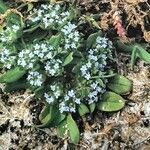
Valeriana carinata
Care Guide
💧 Water
☀️ Light Full sun
European cornsalad is native to habitats with plentiful sunlight, such as open fields and sunny meadows. It prefers full sun but can also tolerate partial sun.
🌡️ Temperature 5–35°C
European cornsalad does best in moderate temperatures, roughly the same range people typically find comfortable. It prefers conditions that are neither too warm nor too cool. High temperatures mainly pose a sunburn risk, so in summer it's recommended to give it some shade to prevent excessive heat. When temperatures decline, European cornsalad goes dormant; if continuous growth is wanted, warmer conditions must be maintained through the winter. Frost can harm the plant and should be avoided.
💨 Humidity
🪴 Soil 6-7
🌱 Fertilizer
To maximize yield and flavor of European cornsalad, provide sufficient nitrogen throughout the entire growth cycle, including before planting and at harvest. Plants that are properly watered and fertilized produce plentiful, healthy leaves and have reduced bitterness. Before planting, improve the soil with organic matter such as compost or manure, ideally 2 to 8 weeks beforehand.
🪴 Pot & Repot
✂️ Pruning
🌿 Propagating
🐛 Diseases & pets
☠️ Toxicity
Characteristics
- Plant Type
- Herb
- Life Cycle
- Annual
- Genus
- Valeriana
- Family
- Caprifoliaceae
- Hardiness Zone
- 5-9
- Mature Height
- 10 cm to 40 cm
- Mature Spread
- 10 cm to 20 cm
- Leaf Color
- Light Green
- Leaf Type
- Semi-evergreen
- Flower Color
- White
- Flower Size
- 0.10 cm to 0.15 cm
- Bloom Time
- Early spring, Mid spring
- Planting Time
- Spring, Summer, Autumn
- Harvest Time
- Late spring, Early summer
- Native Area
- Turkey, Austria, Slovakia, Montenegro, Croatia, Slovenia, Russia, Iraq, Germany, Romania, Belgium, Portugal, Netherlands, France, Czech Republic, Cyprus, Bulgaria, Poland, Armenia, Greece, Ukraine, Lebanon, Serbia, Syria, Italy, Spain, Switzerland, Iran, Albania, Ireland, United Kingdom, Hungary, Azerbaijan