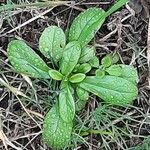
Valerianella eriocarpa
Narrow-fruit cornsalad · Italian cornsalad · Hairy-fruit cornsalad · Hairy-fruited Cornsalad · Wall Cornsalad
Description
Source: leafsnapValerianella eriocarpa is a plant species in the family Caprifoliaceae.
Care Guide
💧 Water
Italian corn salad thrives in consistently moist conditions, requiring weekly watering to prevent waterlogging while emulating its natural hydration process. Typically cultivated outdoors, this plant benefits from seasonal rainfall patterns that support its growth cycle, mirroring its adaptation to regular moisture in its native habitat.
How should I water my Italian corn salad?
To water Italian corn salad, you have a few options. You can use a garden hose with a spray nozzle, a watering can, or any other watering tool you have available. Italian corn salad isn't too particular about the type of water it receives - it can survive on rainwater, tap water, or filtered water. It's generally best not to water this plant from above, as it can harm the leaves and flowers and potentially lead to diseases. A good method for watering is to set up a drip irrigation system, which evenly and directly applies water to the soil. If you're growing Italian corn salad in a container, you can use a similar approach but with different tools. A cup, watering can, or your tap can be used to apply water directly to the soil in the container.
What should I do if I give my Italian corn salad too much water or too little water?
To improve the growth of Italian corn salad, it's important to address both underwatering and overwatering. When you notice that your plant lacks moisture, the solution is simple: water it more regularly. On the other hand, overwatering can be a more serious issue. If you don't catch it early, it can lead to diseases and even the death of your Italian corn salad. To prevent this, choose a growing location with ample sunlight to dry the soil and good drainage to prevent water from accumulating. If you have overwatered your potted Italian corn salad, consider switching it to a new pot with better drainage and loose soil.
How frequently should I water my Italian corn salad?
To grow Italian corn salad successfully, it is important to water it regularly. In the spring, watering once a week is sufficient. However, as the weather gets warmer, you may need to increase watering to two or three times a week. It's crucial not to exceed this rate as it can harm the plant. Additionally, the soil should be kept moist but not wet at all times, regardless of the watering schedule. If you are growing Italian corn salad in a pot, you will need to water it more frequently. Potted plants tend to dry out faster than those in the ground, so watering a few times per week is generally necessary.
How much water does my salad with corn and Italian ingredients need?
Determining the correct amount of water for your Italian corn salad can be approached in a few different ways. One method is to assess the moisture of the soil by touching it. This suggests that you should water until the top six inches of soil feels moist. Another approach is to use a specific measurement, such as two gallons of water per week, taking into account the temperature and rate of soil dryness. However, following strict guidelines could result in overwatering if your plant requires less water. When growing Italian corn salad in a container, you will need to adjust your watering method. In this case, you should water enough to moisten all dry layers of soil. To check, simply insert your finger into the soil to feel for moisture or water until you see a small amount of excess water draining from the pot's holes.
How do I know if I am watering my Italian corn salad enough?
Avoiding overwatering your Italian corn salad can be challenging due to conflicting needs. On one hand, the plants have deep roots that require weekly moistening. On the other hand, Italian corn salad is extremely prone to root rot, which can cause browning of the plant. Underwatering is less of a concern as these plants can survive without extra water for some time. However, if you wait too long to water, the plant may wilt and exhibit dry leaves.
☀️ Light Partial sun
Italian corn salad occurs in habitats like forest understories or rocky sites that receive natural shade. It prefers partial sunlight but can also tolerate full sun when necessary. This flexibility enables it to thrive under a range of sunlight conditions.
What are the sunlight requirements for Italian corn salad?
Italian corn salad, scientifically known as Valerianella eriocarpa, thrives in environments with varying sunlight conditions. It prefers partial sun, which means it requires about 3-6 hours of sunlight daily. However, it can also tolerate full sun conditions, where it would receive more than 6 hours of sunlight per day. This versatility allows the plant to adapt to different garden spots, making it essential to observe how sunlight moves through your garden to choose the perfect balance for your plants.
How to provide adequate light for Italian corn salad indoors?
When growing Italian corn salad indoors, it's vital to ensure it receives adequate lighting, especially when natural sunlight is insufficient. Artificial lighting can be a crucial solution, particularly during winter or in less sunny spaces. Opt for the right type of artificial light, like LED lights, which can be customized to provide specific wavelengths needed by your plants. Full sun plants require 30-50W/sq ft, partial sun plants need 20-30W/sq ft, and full shade plants need 10-20W/sq ft of artificial light. Position the light source 12-36 inches above the plant and mimic natural daylight hours by keeping the lights on for 8-12 hours per day.
What are the symptoms of inadequate light for Italian corn salad?
Inadequate light can lead to several symptoms in Italian corn salad, including smaller new leaves, leggy or sparse growth, faster leaf drop, slower or halted new growth, pale or irregularly colored new leaves, chlorosis, sunscald, leaf curling, wilting, and leaf scorching. These symptoms indicate that the plant is struggling with the light conditions, affecting its health and development. Adjusting the plant's exposure to light, either by moving it to a sunnier spot or using artificial lighting, can help mitigate these issues.
How can I manage Italian corn salad's exposure to sunlight?
Managing Italian corn salad's exposure to sunlight entails a gradual adaptation to changing light conditions. For indoor plants, consider shifting them to increasingly sunnier spots each week until they receive the desired 3-6 hours of direct sunlight daily. Using a desk or ceiling lamp for at least 8 hours daily or investing in professional plant grow lights can provide additional light for larger or less movable plants. For outdoor plants, gradually moving them to sunnier locations every week helps them adapt without the risk of sunburn. Reducing obstructions or transplanting to a location with better sunlight and drainage can also optimize growth. Note that parts of the plant affected by insufficient sunlight may not recover, but new growth will be healthy after improving light exposure.
🌡️ Temperature 5–35°C
Italian corn salad performs best in moderate temperatures — roughly the same range most people find comfortable. It does well in conditions that are neither too warm nor too cold. The primary concern with high temperatures is the risk of sunburn, so providing some shade in summer is recommended to avoid excessive heat. When temperatures fall, Italian corn salad becomes dormant. If you want it to grow continuously, you need to keep temperatures higher in winter. Frost can harm the plant and should be avoided.
💨 Humidity
🪴 Soil 6-7
🌱 Fertilizer
To maximize the yield and flavor of Italian corn salad, provide sufficient nitrogen throughout the entire growth period, from before planting through harvest. Well-watered, well-fertilized plants produce plentiful, healthy leaves and reduce bitterness. Before planting, improve the soil with organic matter such as compost or manure, ideally 2 to 8 weeks beforehand.
🪴 Pot & Repot
✂️ Pruning
Italian corn salad features tender, edible leaves and thrives in cooler seasons. For best results, prune it from early to late spring, removing any faded leaves to encourage new growth. Keep the soil moderately moist and maintain balanced fertility to ensure the plant's optimal health. Regular pruning improves vitality, enhances airflow, and reduces the risk of pests and diseases.
🌿 Propagating
🐛 Diseases & pets
☠️ Toxicity
Characteristics
- Plant Type
- Herb
- Life Cycle
- Annual
- Genus
- Valerianella
- Family
- Caprifoliaceae
- Hardiness Zone
- 5-9
- Mature Height
- 18 cm
- Mature Spread
- 15 cm to 25 cm
- Leaf Color
- Green
- Leaf Type
- Semi-evergreen
- Flower Color
- Pink
- Flower Size
- 0.10 cm to 0.20 cm
- Bloom Time
- Early spring, Mid spring
- Planting Time
- Spring, Summer, Autumn
- Harvest Time
- Late spring, Early summer
- Native Area
- Libya, Turkey, Montenegro, Pakistan, Croatia, Slovenia, Morocco, Uzbekistan, Russia, Iraq, Germany, Belgium, France, Portugal, Saudi Arabia, Tajikistan, Tunisia, Cyprus, Bulgaria, Armenia, Greece, Lebanon, Serbia, Afghanistan, Syria, Italy, Spain, Switzerland, Iran, Albania, Azerbaijan, United Kingdom, Algeria, Turkmenistan