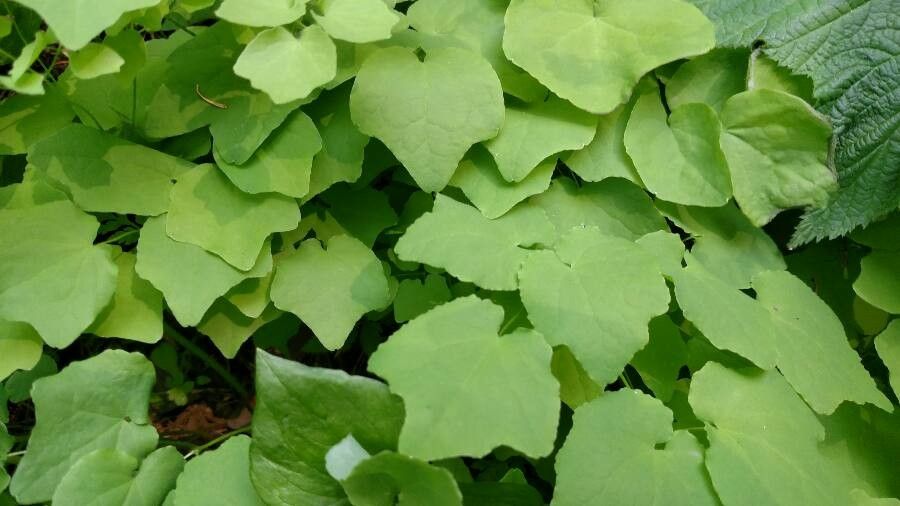
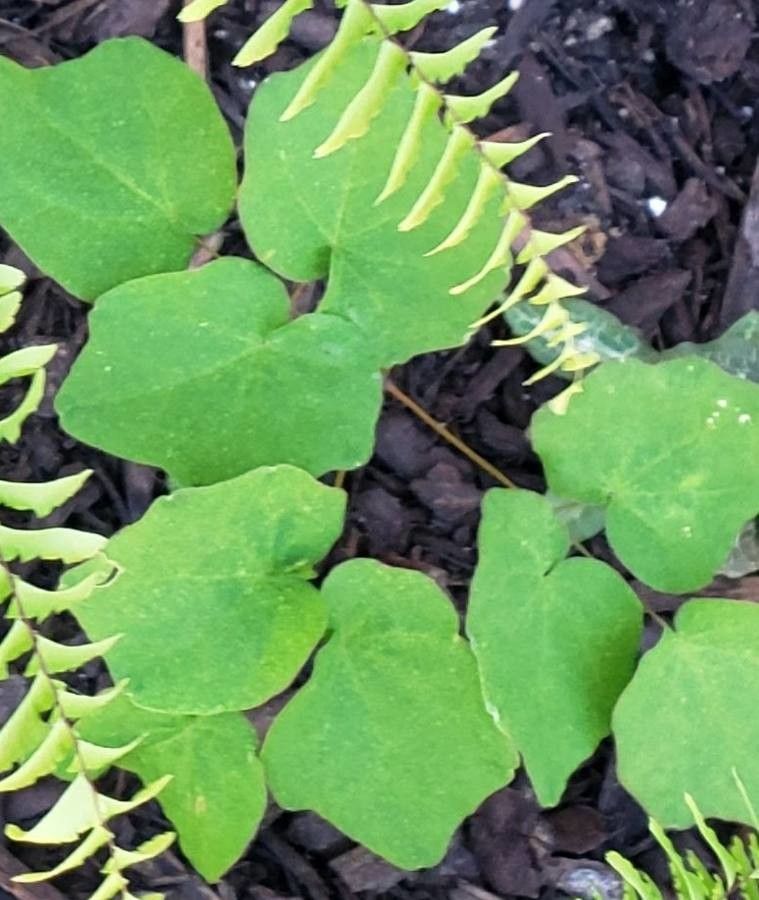
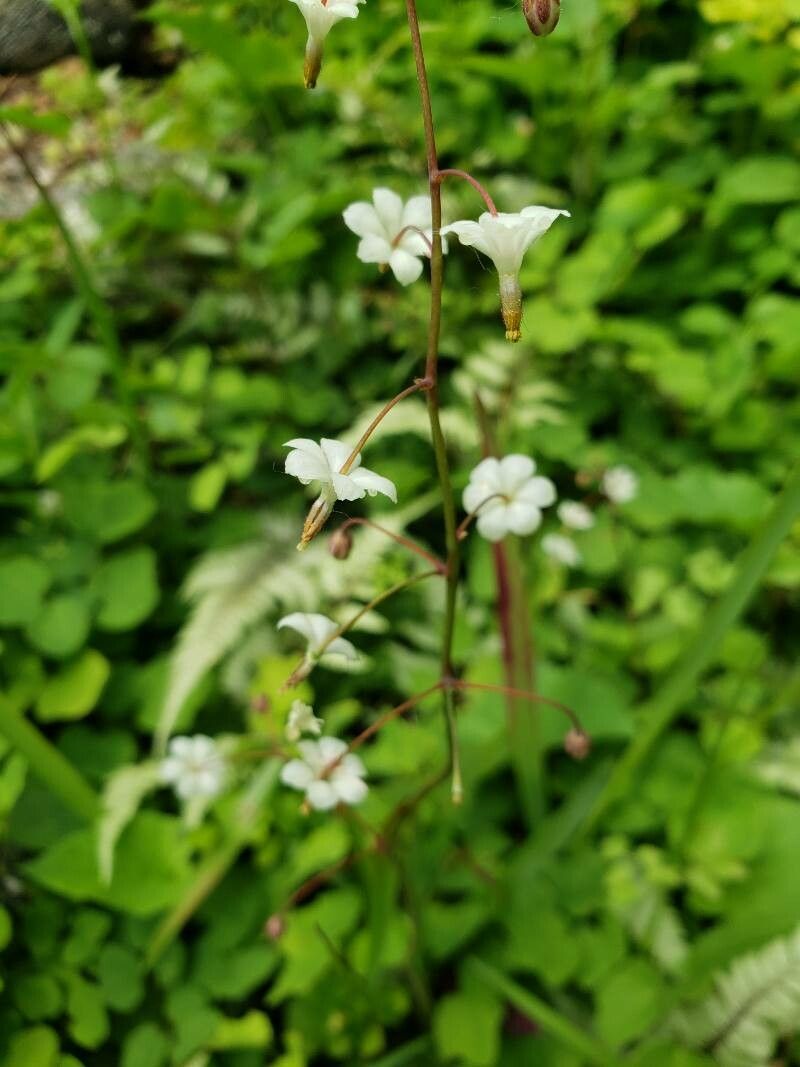
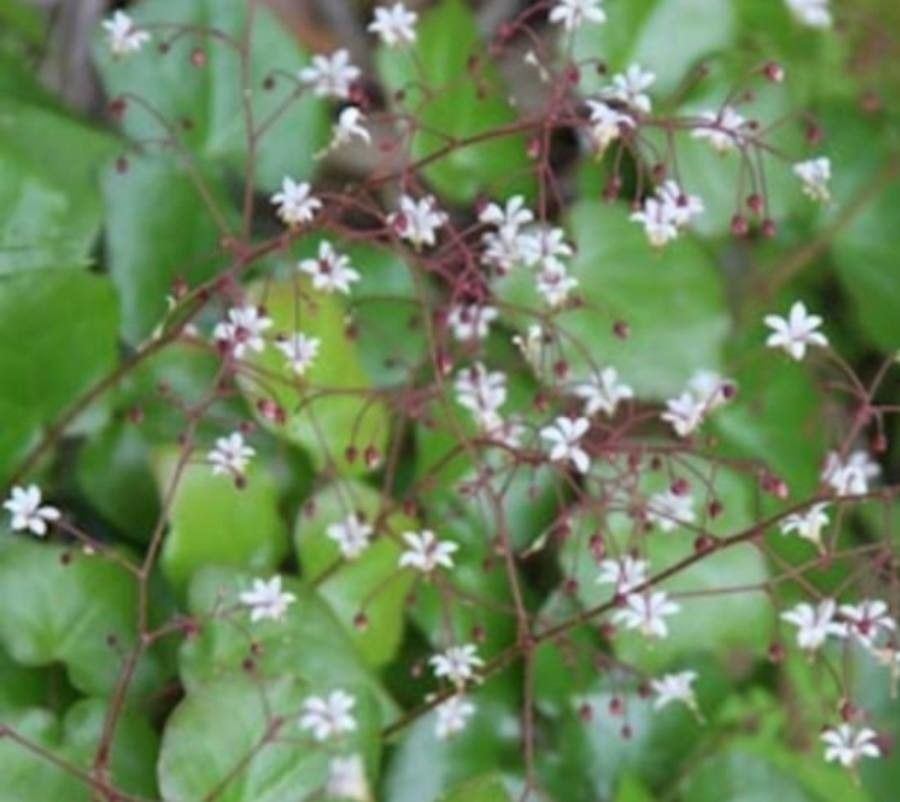
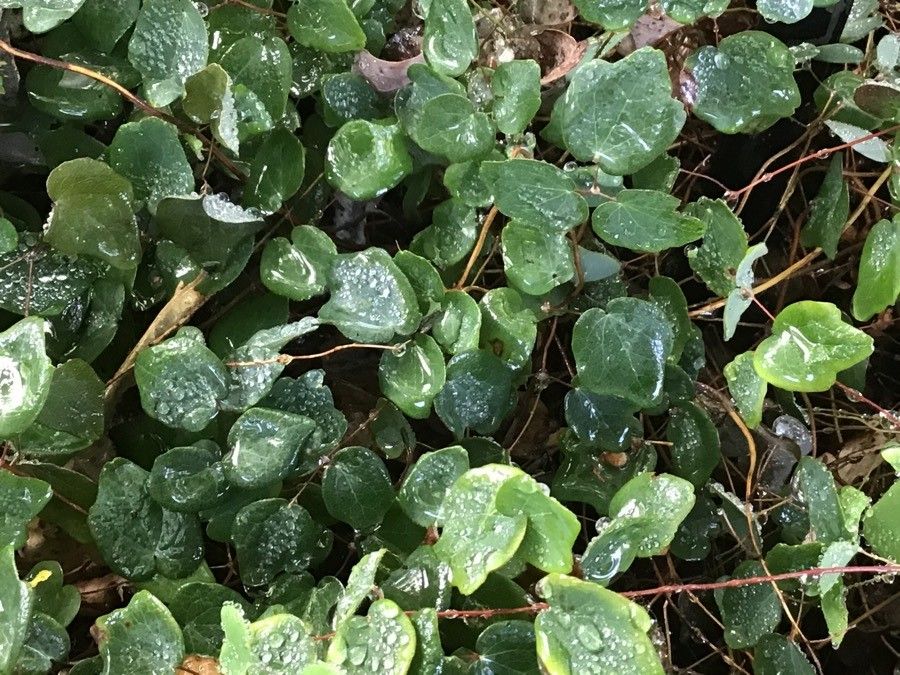
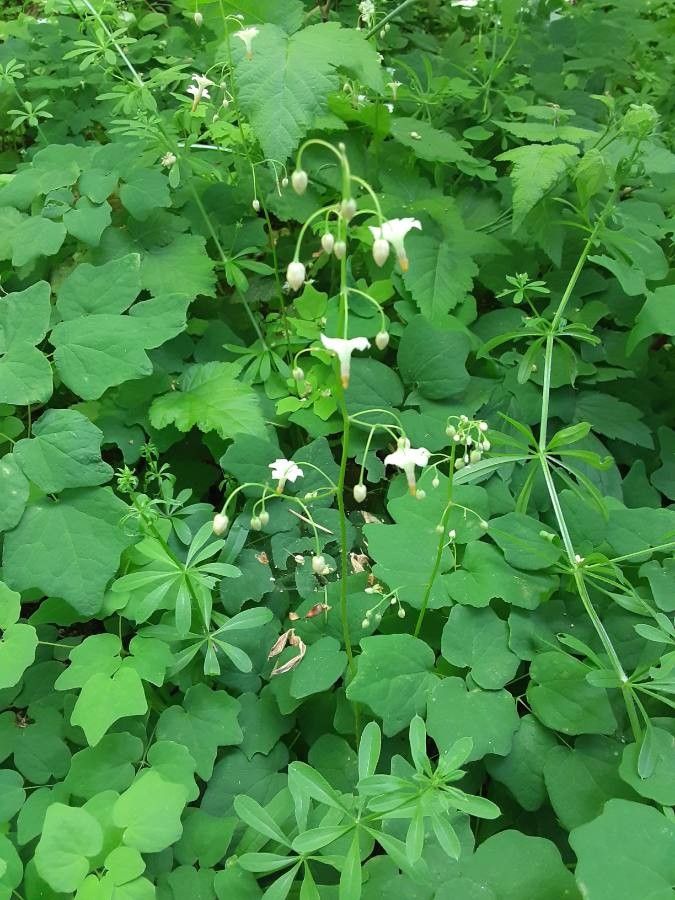
Vancouveria hexandra, the white inside-out flower, is a perennial herb in the barberry family Berberidaceae. It is found in southwestern British Columbia, western Washington and Oregon and northwestern California and is a common understory herb in moist, shady Douglas fir forests.This plant grows 20–40 centimetres (8–16 in) high with compound leaves in triplets and is usually found in dense patches. It gets its name from the small delicate white flowers with petal-like sepals that are swept back abruptly as if in the process of turning inside out. The genus honors George Vancouver, the 18th-century explorer of the Pacific Northwest.
White inside-out flower shows strong resistance to disease and is generally unlikely to suffer from illnesses. Still, it can be affected by pests and diseases present in its environment. Such problems are usually mild. Regarding upkeep, this plant needs moderate maintenance. It should be pruned regularly to preserve a neat appearance and support healthy growth. Fertilizing can also encourage flowering. White inside-out flower is appropriate for anyone with outdoor space, such as a garden or patio, and does not demand extensive care experience. It may need more attention when kept indoors.
How to keep Vancouveria Hexandra.
Light
The white inside-out flower thrives with moderate sunlight yet can endure periods of low light. The ambient light found in its natural habitat, without strong direct sun, supports healthy growth. Excessive light can be damaging, while insufficient light can hinder growth or lead to a deficiency in photosynthesis.
Water
The white inside-out flower, native to the understory of the Pacific Northwest, thrives in moist, well-drained soil with consistent humidity. During its active growing season, water it twice a week to promote lush foliage and delicate flowers. Once established, the plant demonstrates moderate drought tolerance.
Temperature
White inside-out flower can tolerate a wide range of temperatures, but its distribution may still be restricted by different combinations of water and heat. It performs best in warm summer climates with sufficient rainfall or watering. Long stretches of cloudy, rainy weather and extended high temperatures both raise the chance that the White inside-out flower will die. In winter, providing proper protection from cold increases the plant's survival rate.
Fertilizer
The best time to fertilize a White inside-out flower is in early spring, as it comes out of dormancy and begins active growth. Fertilizing supplies essential nutrients needed for healthy development. Although the White inside-out flower has relatively low fertilizer requirements, applying fertilizer annually can improve its survival and encourage better, longer-lasting blooms.
Pruning
The white inside-out flower is characterized by its delicate white blooms and flourishes when pruned in early spring. To promote better air circulation and sunlight exposure, remove dead stems and thin out overcrowded areas. Using clean and sharp tools is crucial for preventing disease, which in turn enhances both the plant's health and aesthetic appeal while encouraging more flowering.
Pot & Repot
When repotting White inside-out flower, select a pot 1-2 inches (2.5–5.1 cm) larger that has good drainage. Use a well-draining potting mix. Repot in spring or fall, making sure the root ball sits slightly below the rim of the flower pot. Water thoroughly after repotting and place it in a warm spot with indirect sunlight.
Botanical profile.
- Plant Type
- Herb
- Life Cycle
- Perennial
- Genus
- Vancouveria
- Family
- Berberidaceae
- Hardiness Zone
- 5-9
- Mature Height
- 20 cm to 40 cm
- Mature Spread
- 40 cm
- Leaf Color
- Green, Blue
- Leaf Type
- Deciduous
- Flower Color
- White
- Flower Size
- 0.76 cm to 1.02 cm
- Bloom Time
- Mid spring, Late spring
- Planting Time
- Spring, Summer, Autumn
- Harvest Time
- Mid summer, Late summer
Other names.
Reader questions.
What are the sunlight requirements for the White inside-out flower?
The White inside-out flower, known botanically as Vancouveria hexandra, thrives in various sunlight conditions. It performs well in partial sun, requiring about 3-6 hours of sunlight daily, but can also grow in full shade, where it receives less than 3 hours of sunlight. It's essential to observe the way sunlight moves through your garden to find spots that offer an ideal balance of light and shade, ensuring the plant's well-being.
What are the essentials for growing a healthy White inside-out flower?
A healthy White inside-out flower flourishes under moderate sunlight but can adapt to lower light conditions. Its growth is optimal in environments that mimic its natural ambient light conditions, devoid of intense sunlight. While excessive light exposure can be detrimental, insufficient light may lead to stunted growth or a deficiency in photosynthesis. Adequate lighting, particularly during winter or in less sunny areas, can be supplemented with artificial light, such as LED lights. For optimal growth, full sun plants require 30-50W/sq ft, partial sun plants need 20-30W/sq ft, and full shade plants need 10-20W/sq ft of artificial light. The light source should be placed 12-36 inches above the plant, and it should mimic natural daylight hours, with most plants needing 8-12 hours of light per day.
What are some common symptoms of light deficiency in White inside-out flowers?
White inside-out flowers show several symptoms when exposed to inadequate light, including smaller new leaves, leggy or sparse growth, faster leaf drop, slower or no new growth, lighter-colored new leaves, and conditions such as chlorosis and sunscald. Chlorosis is marked by the loss of green color and yellowing of the leaves due to a breakdown of chlorophyll from excessive sunlight, negatively impacting photosynthesis. Sunscald appears as pale, bleached, or necrotic spots on plant tissue due to intense sunlight exposure. Leaf curling, wilting, and leaf scorching are other symptoms that indicate a plant's struggle with either too much or too little light.
How can you address and prevent light deficiency symptoms in White inside-out flowers?
To optimize growth and counteract light deficiency in White inside-out flowers, gradually increase their exposure to sunlight. For indoor plants, move them to sunnier spots weekly until they receive 3-6 hours of sunlight per day, or use artificial lighting if the plant is large or not easily movable, keeping lights on for at least 8 hours daily. For outdoor plants, it's crucial to transition them to sunnier locations gradually to prevent sunburn. Reducing obstructions like tree branches can allow more sunlight to reach the plants. For smaller plants, consider transplanting during their dormant period to a location with better sunlight and drainage. It's important to note that parts of the plant affected by prior inadequate sunlight may not recover, but new growth should be healthy with improved light conditions.