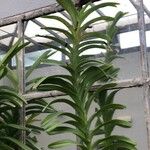
Vanda coerulea
Blue orchid · Blue Vanda · Orchid · ꯀ꯭ꯋꯥꯛꯂꯩ
Description
Source: leafsnapVanda coerulea, commonly known as the Blue Vanda or Sapphire Vanda, is a breathtaking orchid species native to Southeast Asia. This plant is highly valued for its vibrant blue flowers, which can reach up to 10 centimeters in diameter. The Blue Vanda typically blooms during the spring and summer months, producing up to 20 flowers per stem. The plant features long, thin leaves growing from a central stem and thrives in warm, humid environments with plenty of bright, indirect sunlight. In its natural habitat, it grows on trees or rocks, allowing for ample air circulation. Vanda coerulea requires regular watering but should not be overwatered, as this can lead to root rot. It also benefits from regular fertilization during its growing season. Due to its stunning beauty and unique coloration, the Blue Vanda is a popular choice among orchid enthusiasts worldwide. However, it should be noted that this plant requires specific care and may not be suitable for beginners in orchid cultivation. Overall, Vanda coerulea is an exquisite orchid species with striking blue flowers that are sure to impress anyone who encounters them, whether in person or through photographs.
Care Guide
💧 Water Every 7 days
Originating from tropical rainforests, the blue orchid flourishes with consistent moisture and demonstrates moderate drought tolerance. This plant requires weekly watering and benefits from regular misting to replicate its humid natural environment. This approach allows its aerial roots to absorb sufficient moisture without becoming waterlogged.
What do I do if I give my Blue orchid too much or too little water?
When a Blue orchid is overwatered, it shows symptoms such as limp and wrinkled leaves, yellowing or decay, and overall failure to thrive. Some Blue orchid owners mistakenly believe that limp and shriveled leaves indicate a lack of water, so they continue to water the plant. However, this only worsens the problem. It is important to examine the roots to determine the real issue. Healthy Blue orchid roots are silvery green, green, or white and feel firm. Overwatered roots will appear mushy, limp, and brown or black in color. To rescue an overwatered Blue orchid, remove any rotted roots with a sterile knife or garden shears and repot the plant in a new growing medium. It is best to avoid overwatering in the first place, as root rot may not be reversible. Therefore, it is recommended to be cautious with watering to prevent this issue. On the other hand, underwatering and overwatering in Blue orchids can have similar initial symptoms. To determine how much water is being retained, check the moisture level of the growing medium using your finger or a moisture meter. Adjust the watering frequency if necessary. To differentiate between underwatering and overwatering, examine the roots. Underwatered roots appear crisp, brown, and brittle, while healthy roots are pliable and green. If the Blue orchid still has healthy roots, it can be easily revived. Remove any dried up or dead root pieces and repot the plant, watering it thoroughly. Within a week or two, the leaves should start to firm up and appear healthy. If the leaves are too damaged to recover, they can be pruned to make way for new growth.
How frequently do I need to water my Blue orchid?
To properly care for your Blue orchid, it's important to water it when the potting mix is mostly dry, but not completely dry. The frequency of watering may differ depending on the environment, but typically it should be done once or twice a week during summer and as infrequently as once every 2 weeks during winter.
How do I water a Blue orchid?
Blue orchids are unique because they don't grow in soil like most plants. To ensure your Blue orchid thrives, it's important to choose the right growing medium. Regardless of the medium you choose, the container should have good drainage holes. Blue orchid pots are designed specifically for this purpose and allow air to circulate around the roots. One popular growing medium for Blue orchids is bark, sourced from fir trees, as it drains well. However, bark requires more frequent watering as it tends to dry out quickly. Another common medium is sphagnum moss, which is lightweight and allows nurseries to water less often. However, moss can lead to root rot if not used properly. When it comes to watering, less is more and it's important to avoid splashing water on the leaves, stem, and flowers. Instead, water from below by placing the pot in a container of water for 10-15 minutes. Stop when the surface of the moss is wet, and ensure thorough drainage before putting the Blue orchid back in its place.
☀️ Light Partial sun
Native to areas where sunlight is present but not strong, the blue orchid grows best in moderate light. Excessive sunlight may cause leaves to discolor, while too little light can postpone flowering. During every stage of growth, steady, moderately intense light is important for its development and vibrancy.
What are the sunlight requirements for Blue Orchid?
Blue Orchid, botanically known as Vanda coerulea, thrives best in conditions of partial sun, requiring about 3-6 hours of sunlight daily. It's crucial to observe the movement of sunlight through your garden to identify spots that offer the ideal balance of light and shade. This ensures your Blue Orchid receives the perfect amount of light for optimal growth without the risk of damage from too much direct sunlight.
What are the essentials for growing a healthy Blue Orchid?
The essentials for growing a healthy Blue Orchid include understanding its need for moderate light conditions, indicative of its origin in habitats where sunlight is present yet not overly intense. Overexposure to sunlight can lead to leaf discoloration, while insufficient light may delay flowering. Throughout its different growth stages, Blue Orchid benefits from consistent, moderate-intensity light. When natural sunlight is insufficient, especially during winter or in less sunny locations, artificial lighting, such as LEDs which provide specific wavelengths needed by the plant, becomes crucial. The correct wattage for artificial lighting ranges based on plant type - full sun, partial sun, or full shade requirements.
What symptoms indicate a Blue Orchid is getting too much or too little light?
Symptoms indicating that a Blue Orchid is receiving too much or too little light include small or lighter-colored new leaves, leggy or sparse growth, faster leaf drop, slower or halted growth, chlorosis, sunscald, leaf curling, wilting, and leaf scorching. These symptoms can manifest as a result of either excessive sunlight exposure leading to damage and stress or insufficient sunlight causing delays in growth and a reduction in plant health. Adjusting the plant's exposure to light, either by moving it to a location with suitable sunlight or by using artificial lighting, can help mitigate these issues.
What solutions can help a Blue Orchid thrive in terms of sunlight exposure?
To help a Blue Orchid thrive in terms of sunlight exposure, consider the following solutions: For indoor plants, gradually shift them to sunnier spots each week until they receive 3-6 hours of sunlight daily, or use artificial lights such as professional plant grow lights for at least 8 hours a day if direct sunlight exposure isn't feasible. For outdoor plants, gradually move them to sunnier locations while avoiding sudden changes in light exposure to prevent sunburn. If the plant is surrounded by obstructions that limit sunlight, consider pruning surrounding trees or transplanting the plant during its dormant period to a location with better sunlight and drainage.
🌡️ Temperature 20–37.8°C
Blue orchid originates in habitats with temperatures of 68 to 100 °F (20 to 38 ℃). It prefers those temperatures for optimal growth. Depending on where you are, you may need to make seasonal adjustments to recreate these conditions.
What is the ideal temperature range for the growth of Blue orchid?
The Blue orchid, known botanically as Vanda coerulea, thrives in environments where the temperature ranges from 68 to 100 °F (20 to 38 °C). To achieve optimal growth, it is crucial to maintain these temperature conditions. Depending on your geographic location, seasonal adjustments may be necessary to mimic these environmental conditions adequately. Since the Blue orchid is a tropical plant, providing the right temperature and humidity resembles its natural habitat, enhancing its growth and health.
What should I do with my Blue orchid during winter?
In the winter, if the temperature drops below 0°C, it is highly recommended to bring the Blue orchid indoors to protect it from the cold. Keeping indoor temperatures above 20°C will greatly benefit the plant. Placement near a south-facing window is ideal to ensure it receives ample sunlight. Additionally, to simulate the orchid's tropical environment, regularly mist the plant or use a humidifier to maintain appropriate humidity levels. For orchids needing to overwinter outdoors, ensure they are positioned in a sheltered area that receives sunlight. In colder conditions, consider setting up a temporary greenhouse or wrapping the plants with plastic film or fabric to shield them from the cold.
How does low temperature affect Blue orchid and what are the solutions?
Blue orchid prefers warm environments and does not tolerate low temperatures well. The plant thrives when the temperature stays above 20°C, requiring special attention during the winter to keep it above 0°C. Exposure to temperatures below -5°C can cause the leaves to suffer from extensive water-soaked necrosis, leading to wilting and drooping. To mitigate these effects, any frostbitten areas should be trimmed off and the plant should be immediately brought indoors to a warm environment. Placing the orchid near a south-facing window will ensure it receives sufficient sunlight. It's also advisable to avoid placing the plant near heaters or air conditioning vents as they can cause the air around the plant to become excessively dry.
How does high temperature affect Blue orchid and what are the solutions?
During the summer, it is crucial to monitor the temperature around your Blue orchid, ensuring it stays below 38°C. Temperatures exceeding 43°C will inhibit the plant's growth, and its leaves will begin to wilt. At such high temperatures, the Blue orchid becomes more prone to issues like root rot and sunburn, especially if exposed to direct sunlight for extended periods. To protect the plant, trim away any sunburned or dried-up parts, and relocate it to an area that provides shade during the midday and afternoon sun. Watering the plant in the morning and evening will help keep both the plant and its environment properly moist, aiding in its overall health and well-being.
💨 Humidity high (>60%)
This plant needs special care because it loves high humidity levels of 60-80% or more. The best way to achieve this is by placing a humidifier near the plant. Daily misting is also essential! Make sure the room has good ventilation.
🪴 Soil 5-6
🌱 Fertilizer
Proper fertilization is essential for the Blue orchid's health and appearance. Fertilize the Blue orchid during summer, repeating the treatment monthly throughout the season. Nutrients support growth and sustain the plant's structures. Fertilization improves the Blue orchid's floral display, ensuring the best blooms.
Why should I put fertilizer on my Blue orchid plant?
Fertilizer and soil nutrients are like fuel for your Blue orchid, helping it grow and stay healthy. Plants in general extract nutrients from the soil to grow and maintain their existing parts. For the Blue orchid, fertilization is particularly important for enhancing the beauty of its flowers. Since the flowers are what make this plant attractive, gardeners strive to ensure they look their best. Fertilization is a reliable method for helping your Blue orchid produce the most stunning blooms.
When should I fertilize my Blue orchid?
The Blue orchid experiences two main phases annually. The first phase, known as the dormant phase, occurs during winter and involves minimal new growth. The second phase, called the active growth phase, takes place in spring and fall, when the Blue orchid requires the most fertilization. In spring, it is advisable to start fertilizing the Blue orchid and continue doing so once a month until the end of summer. As fall approaches, you can gradually decrease the frequency of fertilization.
When is it best to not put fertilizer on my Blue orchid?
To support the growth of your Blue orchid without causing root burn, it is important to understand its seasonal needs. Your plant is most active during the spring and summer, and this is when it requires additional nutrients. However, in the fall and winter, your plant enters a dormant stage, so it is best to refrain from fertilizing during this time.
What kind of fertilizer should I use for my Blue orchid?
To help your Blue orchid thrive, it's best to use a fertilizer that provides a balanced mix of the three main plant nutrients, with slightly more phosphorus. Another option is to improve the soil by adding organic materials like compost, worm castings, and manure. There are different types of fertilizers available, but liquid or powdered forms tend to be the most effective for Blue orchids. No matter which form you choose, remember to dilute the fertilizer and apply it while watering your Blue orchid.
How do I help my Blue orchid grow better?
To easily apply fertilizer to your Blue orchid, first find a suitable fertilizer and learn the optimal fertilization schedule. Once you have done that, the most reliable method is to mix the liquid fertilizer with water before applying it to the soil. Each fertilizer may have different feeding directions, so it's best to follow the manufacturer's guidance. This should include instructions on correctly diluting the fertilizer to avoid overfertilization. Mixing the fertilizer in water is a simple process, and after that, you just need to pour the mixture into the soil where your Blue orchid is planted.
🪴 Pot & Repot Every 12 months
When repotting a blue orchid, select a slightly larger pot with good drainage, ideally a clear orchid pot. Use a well-draining, orchid-specific mix that contains bark or moss. Carefully clean the roots and trim any that are dead or rotting. Repot after flowering, usually in spring or fall, water thoroughly, and place in bright, indirect light. Once repotted, avoid disturbing the roots.
✂️ Pruning
The blue orchid is known for its striking blue flowers and benefits greatly from selective pruning. To encourage optimal growth, remove dead leaves and spent spikes from late winter to early spring. Make clean cuts and be cautious not to over-prune, as this helps reduce stress, improve air circulation, and enhance the plant's vitality.
🌿 Propagating
🐛 Diseases & pets
☠️ Toxicity
The blue orchid is not poisonous to either people or pets. Some cultures might even use this plant for its medicinal properties. Regardless, it is a lovely and safe houseplant to have in any household.
Characteristics
- Plant Type
- Herb
- Life Cycle
- Perennial
- Genus
- Vanda
- Family
- Orchidaceae
- Hardiness Zone
- 9-11
- Mature Height
- 0.76 m to 1.52 m
- Mature Spread
- 49 cm
- Leaf Color
- Green
- Leaf Type
- Evergreen
- Flower Color
- White, Pink, Blue, Yellow, Purple
- Flower Size
- 1.78 cm to 2.54 cm
- Bloom Time
- Summer, Fall
- Planting Time
- Summer
- Harvest Time
- Winter, Spring
- Native Area
- Myanmar, India, Thailand, China