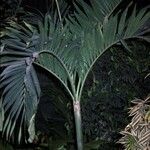
Veitchia merrillii
Manila palm · Adonidia palm · Dwarf royal palm · Christmas palm · Palm tree
Description
Source: leafsnapVeitchia merrillii, commonly known as the Manila palm or Christmas palm, is a tropical plant native to the Philippines. This small to medium-sized palm tree can reach up to 20 feet in height and 10 feet in width. It features slender trunks covered with brown fibers and pinnate green leaves that can grow up to 6 feet long. The Manila palm is a popular ornamental plant due to its attractive appearance, low maintenance needs, and ability to thrive in warm climates. It prefers well-drained soil with regular watering but can tolerate periods of drought once established. During the summer, the tree produces small yellow flowers, which are followed by red or orange fruit clusters in the winter. Often used as an accent or specimen tree in landscapes, gardens, parks, and streetscapes, the Manila palm also makes an excellent indoor plant when grown in bright light conditions. Overall, Veitchia merrillii is an attractive tropical plant that enhances any setting with its beauty while being easy to care for, making it an ideal choice for gardeners of all experience levels.
🌳 Beyond its decorative value, the manila palm stands out as a symbol of tropical vibrancy in landscapes, improving the appearance of gardens and cityscapes. Interestingly, in tropical areas during the holidays it is commonly used as a living Christmas tree because of its conifer-like look, a tradition that adapts the plant’s natural beauty into holiday decoration. The palm is not harvested for spice, essential oil, or fiber; its main noteworthy use remains its striking visual contribution to the environment and cultural practices.
Care Guide
💧 Water Every 7 days
☀️ Light Full sun
The Manila palm requires abundant sunlight and performs best in strong sun. It can also grow satisfactorily with moderate sunlight. The intensity of the sun is important for its health and affects how lush the fronds are. In its native environment it is accustomed to intense sunshine. Both too little and too much sunlight can damage it or hinder its growth.
🌡️ Temperature 20–37.8°C
The Manila palm is native to warm climates and does best when temperatures range from 68 to 100 °F (20 to 38 ℃). Seasonal adjustments might be necessary to keep temperatures within this range to ensure the plant's optimal health.
💨 Humidity dry (<40%)
This plant prefers dry conditions, so don't mist it. However, watering it less often can also thrive in higher humidity.
🪴 Soil 6-7
🌱 Fertilizer
The best time to fertilize a Manila palm is in early spring, as it comes out of dormancy. This encourages overall growth and flower development. Fertilization improves the foliage, stems, and branches, while encouraging large, vibrant, and long-lasting flowers. It helps transport nutrients from the roots to the flowers and enhances the plant's health and resistance to disease.
🪴 Pot & Repot
✂️ Pruning
🌿 Propagating
🐛 Diseases & pets
☠️ Toxicity
Characteristics
- Plant Type
- Tree
- Life Cycle
- Perennial
- Genus
- Veitchia
- Family
- Arecaceae
- Hardiness Zone
- 10-11
- Mature Height
- 4.57 m to 7.62 m
- Mature Spread
- 1.83 m to 2.44 m
- Leaf Color
- Green
- Leaf Type
- Evergreen
- Flower Color
- White
- Flower Size
- 2.54 cm
- Bloom Time
- Early summer, Mid summer
- Planting Time
- Spring, Autumn
- Harvest Time
- Mid summer, Late summer, Fall
- Native Area
- Philippines, Malaysia