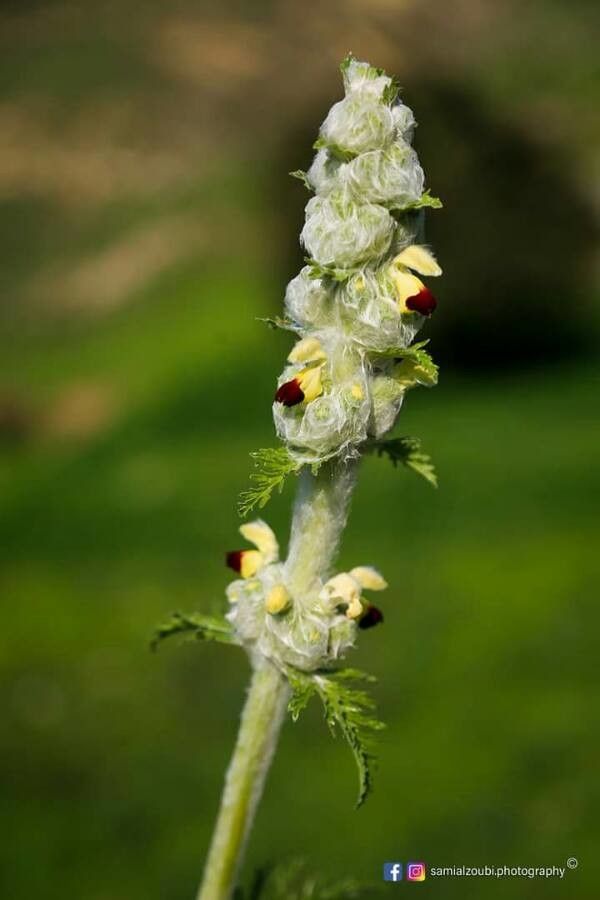
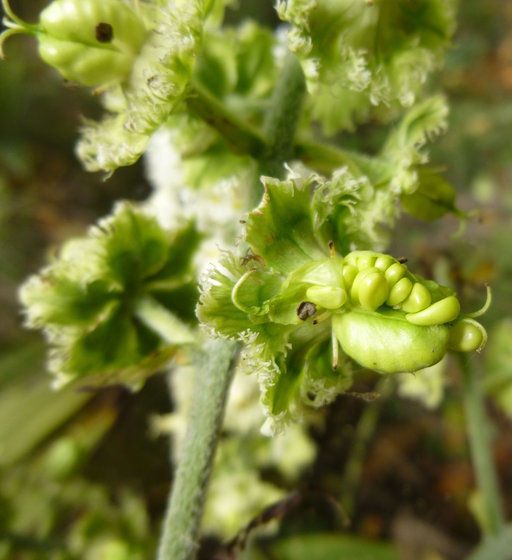
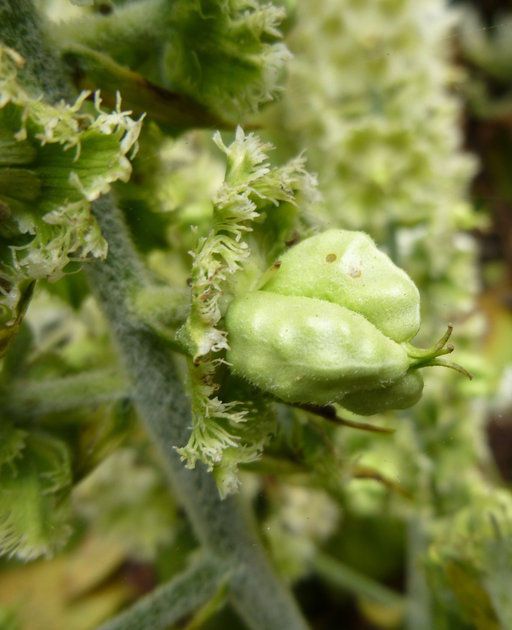
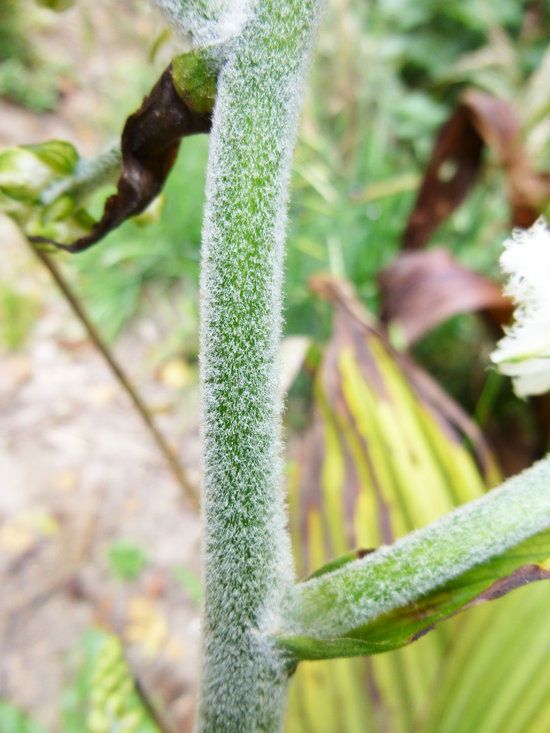
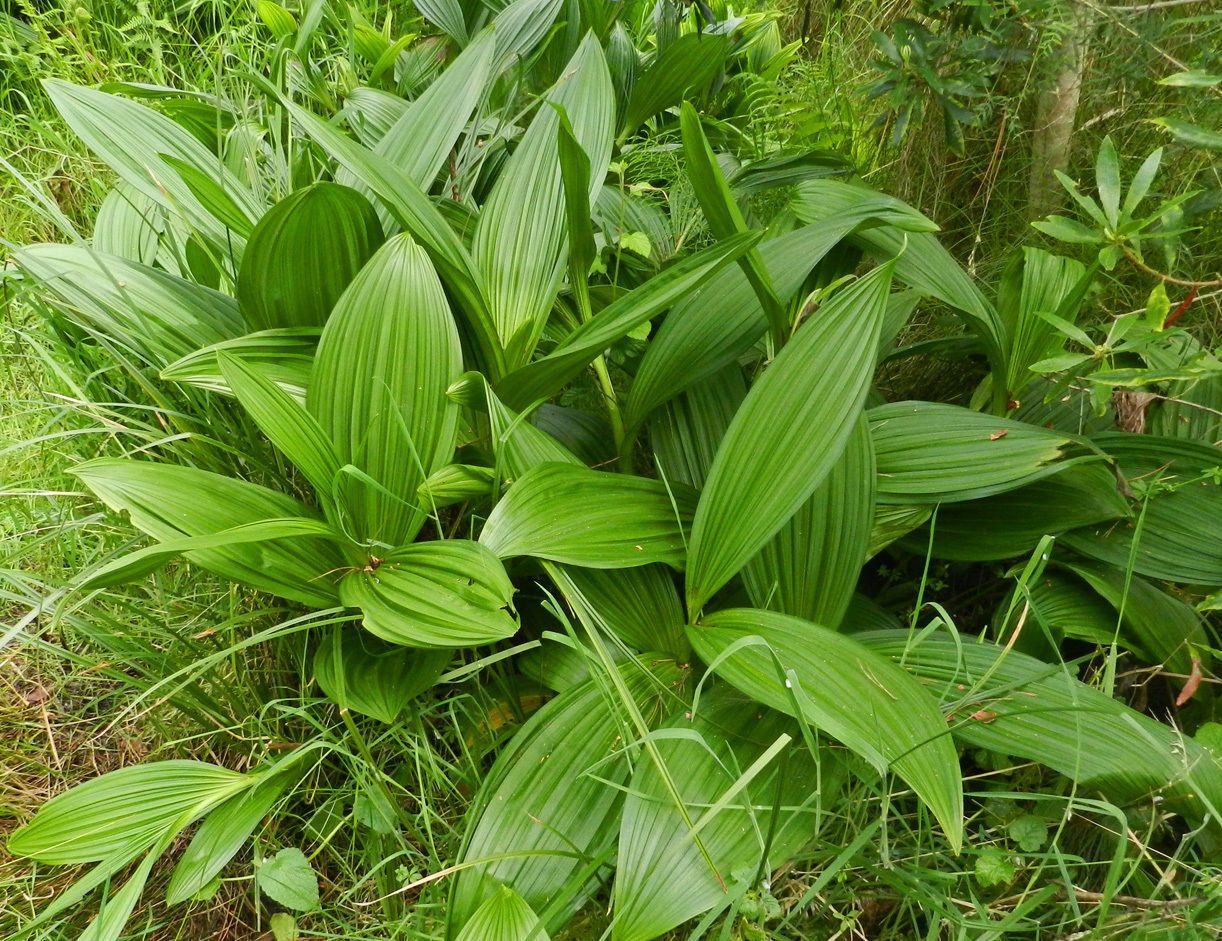
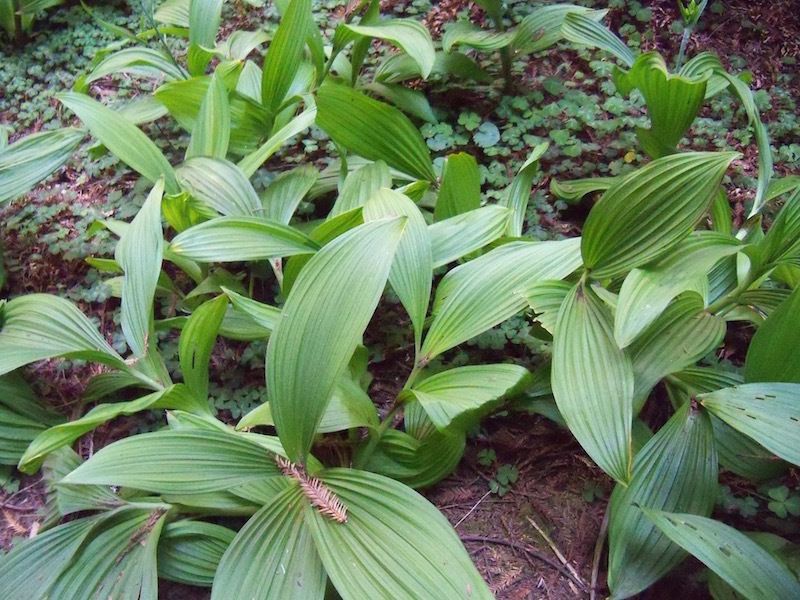
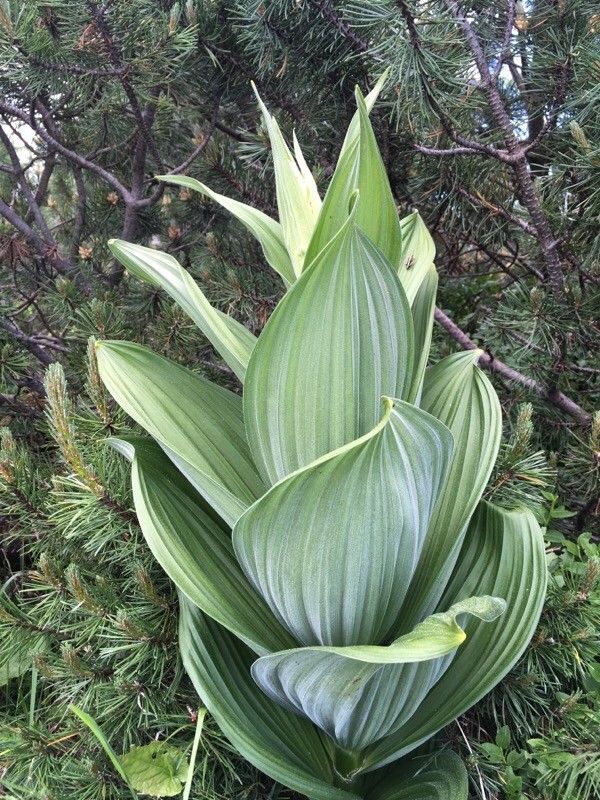
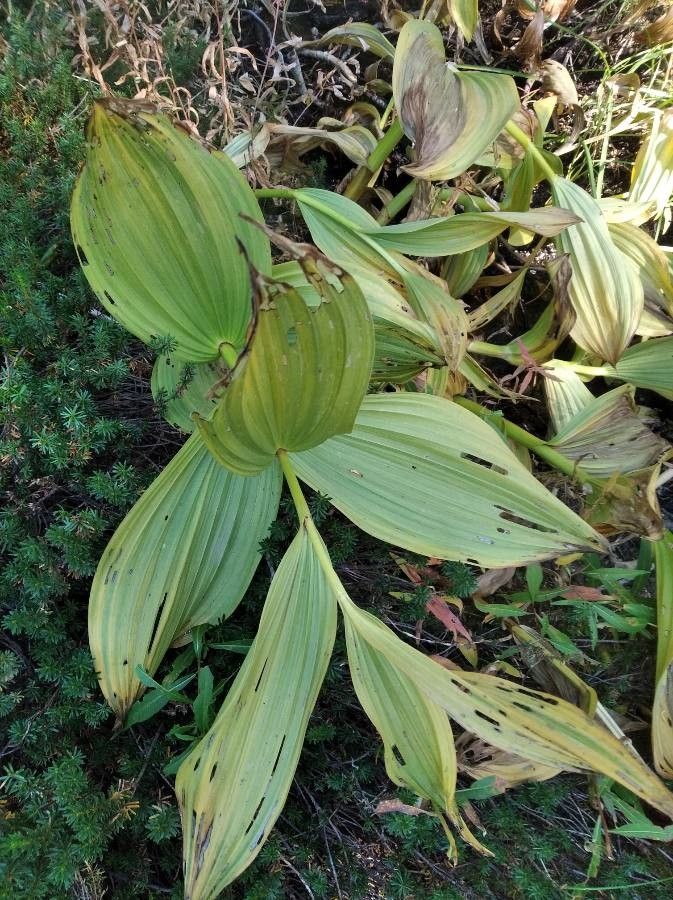
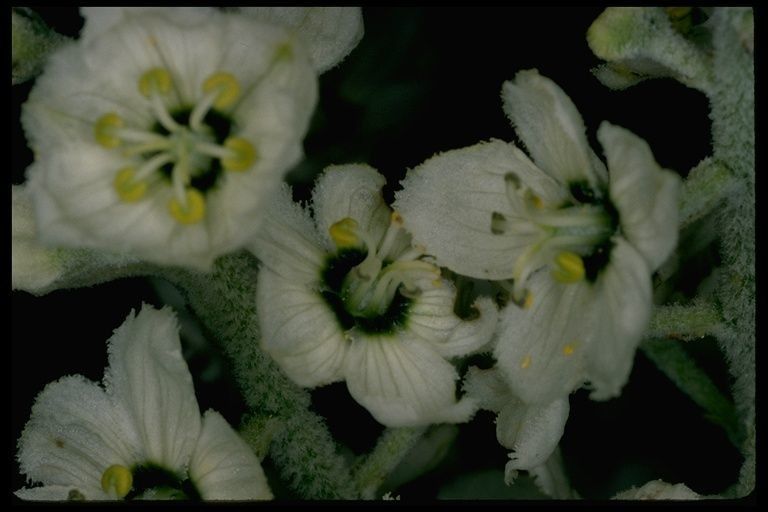
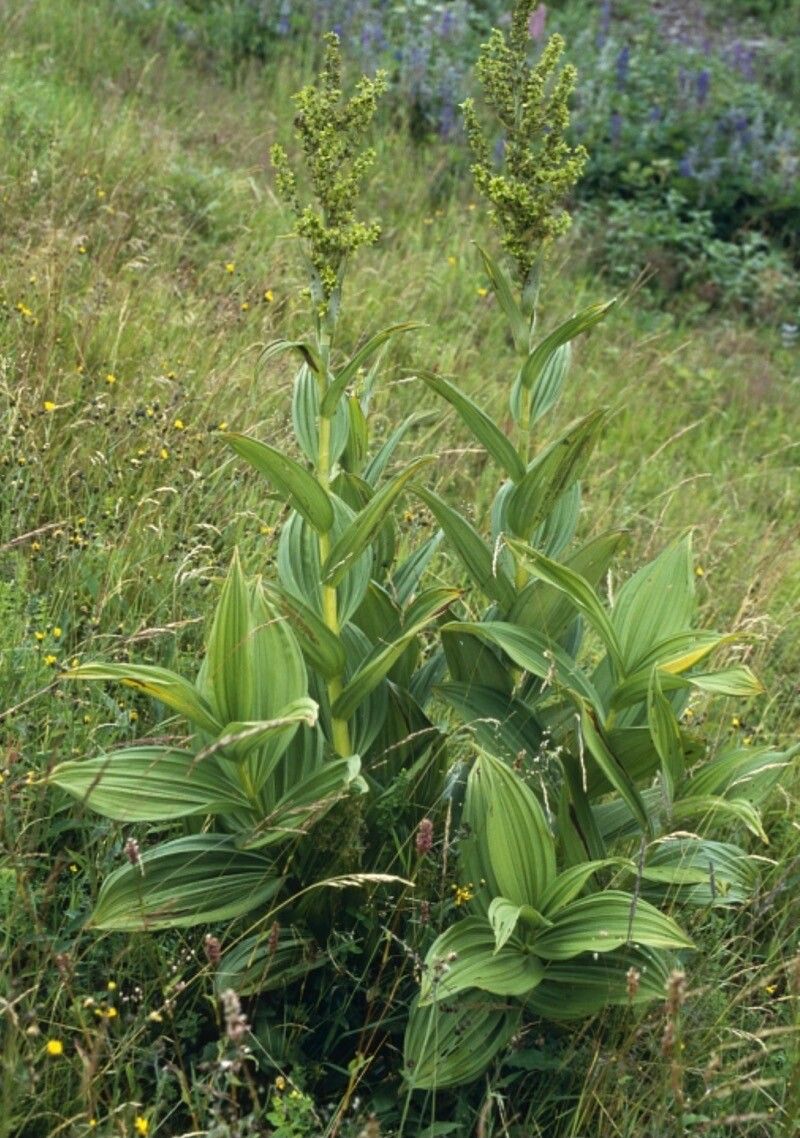
Veratrum fimbriatum is an uncommon species of false hellebore, a type of plant closely related to the lily. Its common names are fringed false hellebore and fringed corn lily. It is endemic to California where it is a rare resident of the northern coastal scrub plant communities of Mendocino and Sonoma Counties. This flowering plant is a stout, hollow-stemmed perennial growing from a thick rhizome. The erect flowering plant bears several large, flat, green leaves near the base of the green stem. The large panicle inflorescence is packed with many distinctive, lacy-fringed flowers each up to a centimeter wide. The flower bud is club-shaped before it opens into a bloom of six frilly tepals, each of which bears two bright green or gold glands. The ovary and sepals extend straight outward as one thick stalk. The fruit is an oval-shaped capsule just under a centimeter long containing the seeds.
Fringed false hellebore is fairly disease-resistant and generally not likely to suffer from illnesses. Still, it can be affected by pests and diseases present nearby, though such infections tend to be mild. Carewise, the plant needs a moderate level of attention. It should be pruned on a regular basis to preserve its appearance and support healthy growth. Applying fertilizer can also encourage flowering. This species is appropriate for anyone who has an outdoor area, like a garden or patio, and does not demand extensive plant-care experience. When kept indoors, it may need more attentive care.
How to keep Veratrum Fimbriatum.
Light
Fringed false hellebore is native to habitats such as forest understories and rocky areas, where it grows in natural shade. It prefers partial sun but can tolerate full sun or full shade, illustrating its versatile and hardy nature.
Water
Fringed false hellebore flourishes in moist, humid settings, often found near streams or wetlands. To maintain optimal health, it needs regular watering, ideally on a weekly basis. As a deciduous plant that grows outdoors, it thrives in cooler climates and retains more water during the colder months.
Temperature
Fringed false hellebore can tolerate a wide range of temperatures, but its distribution may still be restricted by different combinations of moisture and heat. It does best in warm summers with sufficient rainfall or watering. Extended periods of overcast, rainy weather or sustained high temperatures can raise the chance of Fringed false hellebore dying. In winter, protecting the plant from cold can increase its likelihood of survival.
Fertilizer
The best time to fertilize a Fringed false hellebore is in early spring, as it comes out of dormancy and begins active growth. Fertilizing supplies essential nutrients for healthy development. While Fringed false hellebore has relatively low fertilizer requirements, applying fertilizer annually can improve its survival and encourage better, longer-lasting flowers.
Pruning
The fringed false hellebore, known for its uniquely fringed leaves, benefits greatly from annual pruning. Essential practices include trimming away dead growth and thinning the plant to improve air circulation. The best time to prune is from early to late spring, which helps control the plant's size and promotes healthy new growth. This, in turn, boosts the plant's vigor and resistance to disease.
Botanical profile.
- Plant Type
- Herb
- Life Cycle
- Perennial
- Genus
- Veratrum
- Family
- Melanthiaceae
- Hardiness Zone
- 5-9
- Mature Height
- 0.91 m to 2.13 m
- Mature Spread
- 30 cm to 61 cm
- Leaf Color
- Green, Dark Green
- Leaf Type
- Deciduous
- Flower Color
- White
- Flower Size
- 1.02 cm
- Bloom Time
- Early summer, Mid summer
- Planting Time
- Spring
- Harvest Time
- Late summer, Early fall
Other names.