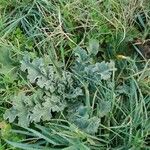
Verbascum sinuatum
گل ماهور مواج، گل ماهور مدیترانهای، · Wavy-leaved Mullein · Black-leaved mullein · Wavyleaf mullein · Mediterranean mullein
Description
Source: leafsnapVerbascum sinuatum, commonly known as Wavy-leaved Mullein, is a biennial or short-lived perennial plant belonging to the Scrophulariaceae family. Native to Europe and Western Asia, it has also been introduced and naturalized in many parts of North America. The plant reaches a height of 1-2 meters and features a basal rosette of large, wavy-edged leaves covered in soft hairs. Its erect stem is similarly covered in fine hairs. Tall spikes, reaching up to 1 meter in height, produce yellow flowers that bloom from June through August. These yellow flowers, with five petals fused at the base, form a cup-shaped corolla approximately 2-3 cm wide. Five stamens with yellow anthers protrude from the flowers, giving them their distinctive appearance. Verbascum sinuatum thrives in well-drained soils under full sun or partial shade, although it can also tolerate poor soils. It is commonly found growing on roadsides, in disturbed areas, meadows, pastures, and open woodlands. Historically, this plant has been utilized for its anti-inflammatory properties, making it beneficial for treating respiratory ailments such as coughs and bronchitis. Verbascum sinuatum is not only an attractive ornamental plant that adds beauty to any garden, but it also offers medicinal benefits. Its dual role for both aesthetic appeal and health purposes makes it a valuable addition to any garden.
Care Guide
💧 Water Every 7 days
Wavyleaf mullein, which originates from the Mediterranean, thrives in well-drained soil and moderate rainfall, and it adapts well to drier conditions. For optimal growth, it requires weekly watering, particularly during the growing season when it needs more water due to increased temperatures and exposure to sunlight.
How should I water my Wavyleaf mullein plant?
To properly water the Wavyleaf mullein, use filtered water that is at room temperature. Tap water may contain harmful particles, so it's best to avoid it. The plant prefers warm water because it is adapted to a warm environment and cold water can be a shock. Avoid overhead watering as it can cause issues with the foliage. Instead, water the soil directly with filtered room temperature water until it is completely soaked. This helps to moisten the roots and promote their growth and nutrient absorption.
If I give my Wavyleaf mullein too much or too little water, what should I do?
Overwatering is a more common issue for the health of your Wavyleaf mullein compared to underwatering. When the plant receives excessive water, its stems and leaves can wilt, turn yellow, and even develop diseases like root rot, mold, and mildew, which can be fatal. While underwatering is less likely with this plant due to its drought tolerance, there is still a chance of it happening, resulting in brittle, brown leaves. It is crucial to identify and address signs of overwatering promptly, as certain diseases caused by overwatering, such as root rot, may be irreparable if not addressed early. If you notice early signs of overwatering, reduce watering immediately and check the soil's drainage. If the soil drains poorly, replace it with a loose, well-draining potting mix. Conversely, if your Wavyleaf mullein shows signs of insufficient water, increase your watering frequency until the signs improve.
How many times should I water my Wavyleaf mullein?
If your Wavyleaf mullein plant is in a pot, you can check if it needs water by sticking your finger in the soil. If the top two to three inches of soil is dry, it's time to water it. If you have your Wavyleaf mullein planted outside in the ground, you can use the same method to test the soil. When the first few inches of soil have dried out, it's time to water it. Generally, during the spring and early fall, watering once a week is sufficient. However, during extremely hot weather, you may need to water the plant two or more times per week. Keep in mind that mature and well-established Wavyleaf mullein plants can endure dry spells quite well.
How much water does my Wavyleaf mullein plant need?
When watering your Wavyleaf mullein, don't hold back on the amount of water you use. Make sure the top two to three inches of soil are dry before watering, and give the plant a deep soak. The water should be enough to saturate the soil completely, and any excess should drain out of the pot through the holes at the bottom. If you don't see water draining out, it means you haven't watered enough, but be careful not to let the water accumulate inside the soil as this can harm the plant. On the other hand, if the water doesn't drain well, it could mean the soil is poorly draining, which is bad for the plant's health. When the plant is outside, 1 inch of rain per week is sufficient.
How do I water my Wavyleaf mullein as it grows?
The water needs of the Wavyleaf mullein can vary depending on its growth stages. During the first few years or when you have recently transplanted it, you should give it more water than usual. This is because the Wavyleaf mullein is focused on growing new roots, which require additional moisture for optimal performance. As the plant matures, it will require less water. However, during its bloom period, when flowers are developing, it may need more water to support this process.
☀️ Light Full sun
Wavyleaf mullein comes from bright, open habitats and performs best in full sun. It can endure some partial shade but prefers direct sunlight to grow optimally. This species, which may be annual or biennial, is recognized for its affinity for strong sunlight.
What are the sunlight requirements for Wavyleaf mullein?
Wavyleaf mullein requires 'Full sun' which means it thrives in conditions that offer above 6 hours of sunlight daily. It can also tolerate 'Partial sun', which is about 3-6 hours of sunlight per day. It's essential to watch how sunlight moves through your garden to choose spots that provide a perfect balance of light and shade for your plants, ensuring their happiness.
What are the essentials for growing Wavyleaf mullein?
Wavyleaf mullein originates from bright, open environments and prefers full sun for optimal growth, although it can tolerate partial sun. This plant, being an annual and biennial, emphasizes its sun-loving nature. For indoor plants that can't access natural sunlight, especially during winter or in less sunny spaces, artificial lighting becomes crucial. LED lights are recommended for indoor plants as they can be customized for the specific wavelengths needed by the plants. Full sun plants need 30-50W/sq ft, partial sun plants need 20-30W/sq ft, and full shade plants need 10-20W/sq ft of artificial light. The light source should be placed 12-36 inches above the plant, and most plants require 8-12 hours of light per day.
What symptoms indicate that Wavyleaf mullein isn't receiving enough light?
When Wavyleaf mullein doesn't receive adequate light, it may display symptoms such as small leaves, leggy or sparse growth, faster leaf drop, slower or no new growth, lighter-colored new leaves, chlorosis (leaves turning yellow), sunscald, leaf curling, wilting, and leaf scorching. These symptoms stem from insufficient sunlight which affects the plant's ability to photosynthesize efficiently.
What solutions can alleviate light deficiency symptoms in Wavyleaf mullein?
To combat light deficiency symptoms in Wavyleaf mullein, gradually move the plants to sunnier locations until they receive at least 6 hours of direct sunlight daily, utilizing south-facing windows for indoor plants. Artificial light can also supplement sunlight for large or immovable plants. For outdoor plants, avoid sudden changes in light intensity to prevent sunburn. Reduce obstructions like overhanging branches to allow more sunlight and consider transplanting smaller plants to sunnier locations during their dormant period for better sunlight exposure and drainage. Note, parts of the plant affected by insufficient sunlight may not recover, but new growth will be healthy after adjusting light exposure.
🌡️ Temperature 0–32.2°C
Wavyleaf mullein originates from habitats where temperatures range from 68 to 95 °F (20 to 35 °C). It performs best in these warm conditions, though the exact temperature may require slight seasonal adjustments. For season-specific guidance, consult a horticulturist.
What is the ideal temperature range for Wavyleaf mullein?
Wavyleaf mullein, scientifically known as Verbascum sinuatum, is native to environments with temperatures ranging from 68 to 95 °F (20 to 35 °C). It thrives best within this temperature range, although specific seasonal adjustments may be necessary. For season-specific advice, consulting with a horticulturist is recommended. The plant possesses strong cold resistance, meaning special frost protection measures aren't usually required. However, in regions where winter temperatures are anticipated to drop below -35°C, providing cold protection by covering the plant with soil or straw is important. Before the first freeze of autumn, it's advisable to water the plant abundantly to ensure the soil is moist and enters a frozen state, which helps prevent water scarcity during the colder months.
How does Wavyleaf mullein react to low temperatures?
Wavyleaf mullein is notably cold-tolerant, thriving best when temperatures are above 20°C. During the winter, it's important to maintain temperatures above 0°C for the plant. In conditions where temperatures fall below -35°C, Wavyleaf mullein may not show immediate changes; however, these conditions can lead to decreased sprouting or a complete absence of it come springtime. To address this, any parts of the plant that have failed to sprout by spring should be removed.
What should I do if Wavyleaf mullein is exposed to high temperatures?
In summer, it's crucial to keep Wavyleaf mullein below 35°C to prevent heat stress. Exposure to temperatures above 38°C can result in the plant's leaves becoming lighter, prone to curling, suffering from sunburn, and in extreme cases, the entire plant may wilt and dry out. The best response to such stress includes trimming away the sunburned and dried parts of the plant, moving it to a location protected from the harsh midday and afternoon sun, or employing a shade cloth to provide necessary shade. Additionally, watering the plant in the morning and evening will help keep the soil consistently moist, aiding in its survival during high temperatures.
💨 Humidity normal (40-60%)
This plant will thrive in moderate humidity, which is probably the level in your home. However, misting it a few times a week can be very beneficial. Make sure the room has good ventilation.
🪴 Soil 6-7
🌱 Fertilizer
Wavyleaf mullein requires regular fertilization to encourage flowering but does not tolerate too much. It should be given small amounts of fertilizer frequently throughout its life, especially during the peak of active growth and while it is flowering. You should continue feeding your Wavyleaf mullein until it stops blooming.
🪴 Pot & Repot
✂️ Pruning
To improve the health and appearance of wavyleaf mullein, it's best to prune by removing spent flowers and damaged leaves in early to late spring. This helps encourage healthy growth and flowering. Make sure your cuts are clean to prevent disease, and be careful not to over-prune, as this can cause stress to the plant. By doing so, you'll promote a neat appearance and vigorous growth.
🌿 Propagating
🐛 Diseases & pets
☠️ Toxicity
Mullein plants contain toxic principles that are potentially harmful to people and pets. These can be found in the root, seeds, and leaves. Although some people may use mullein for medicinal purposes with minimal risk of side effects, a higher concentration can cause reactions, like irritation, itching, and rashes.
Characteristics
- Plant Type
- Herb
- Life Cycle
- Biennial
- Genus
- Verbascum
- Family
- Scrophulariaceae
- Hardiness Zone
- 3-8
- Mature Height
- 1.22 m to 1.52 m
- Mature Spread
- 40 cm to 61 cm
- Leaf Color
- Green, Blue
- Leaf Type
- Semi-evergreen
- Flower Color
- Yellow
- Flower Size
- 2.03 cm to 3.05 cm
- Bloom Time
- Summer
- Planting Time
- Spring, Summer
- Harvest Time
- Late summer, Early fall, Mid fall
- Native Area
- Libya, Egypt, Turkey, Croatia, Morocco, Russia, Iraq, France, Portugal, Tunisia, Cyprus, Bulgaria, Armenia, Greece, Ukraine, Serbia, Lebanon, Syria, Italy, Spain, Iran, Albania, Algeria, Turkmenistan