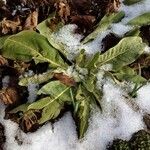
Verbascum thapsus
Mullein · Lambs ear · Great Mullein · Common mullein · Wild tobacco
Description
Source: leafsnapVerbascum thapsus, the great mullein, greater mullein or common mullein is a species of mullein native to Europe, northern Africa, and Asia, and introduced in the Americas and Australia.It is a hairy biennial plant that can grow to 2 m tall or more. Its small, yellow flowers are densely grouped on a tall stem, which grows from a large rosette of leaves. It grows in a wide variety of habitats, but prefers well-lit, disturbed soils, where it can appear soon after the ground receives light, from long-lived seeds that persist in the soil seed bank. It is a common weedy plant that spreads by prolifically producing seeds, and has become invasive in temperate world regions. It is a minor problem for most agricultural crops, since it is not a competitive species, being intolerant of shade from other plants and unable to survive tilling. It also hosts many insects, some of which can be harmful to other plants. Although individuals are easy to remove by hand, populations are difficult to eliminate permanently. Although commonly used in traditional medicine, no approved drugs are made from this plant. It has been used to make dyes and torches.
🌳 Beyond its common uses, common mullein also functions as an ecological indicator and can act as a fish narcotic. It signals disturbed soil, which assists in evaluating environmental health and land management practices. Interestingly, some Native American tribes discovered that saponins in the plant's seeds could be used to stun fish, making them easier to catch without affecting their edibility — a reflection of common mullein's unexpected versatility in traditional ecological knowledge.
🎭 Resilience, bravery, defense, well-being
Care Guide
💧 Water
Common mullein thrives in dry, sandy soils and is highly tolerant of drought. Watering it once a week is sufficient, as this mimics its natural conditions. Being a biennial plant, its growth cycle is largely dependent on rainfall, which reduces the need for additional watering during its growing season.
When Should I Water My Common Mullein?
Watering your common mullein is crucial for its health and development, impacting its growth, flower production, and disease resistance. The ideal time to water common mullein is when the top 1 to 2 inches of soil around the plant feel dry to the touch. Pay attention to the leaves; if they appear wilted or lose their vibrant color, it's a sign the plant needs water. Drooping leaves and stalled growth are additional indicators of insufficient watering. During warm temperatures and high sunlight exposure, common mullein's water requirements increase. Be cautious not to water too early or too late to avoid risks like root rot from over-watering or plant death from dehydration.
How Should I Water My Common Mullein?
Common mullein requires careful watering due to its drought tolerance and preference for dry, well-drained soils. The best watering method is deep watering, ensuring that the moisture reaches the deep roots to promote strong growth. Use tools such as a long-spouted watering can or a hose with a soft-spray nozzle for this purpose, and consider using a moisture meter to accurately gauge when the plant needs water. Watering should be concentrated at the plant's base to avoid wetting the foliage, which could lead to fungal diseases. For container-planted common mullein, monitor soil moisture more closely as these may dry out faster.
How Much Water Does Common Mullein Really Need?
The common mullein, adapted to a range of soil moisture conditions, requires moderate watering. Approximately 2 centimeters of water per week is ideal, ensuring the soil remains moist but not waterlogged. Proper hydration results in healthy, vibrant green leaves and sturdy stems. Watering should be adjusted based on factors like pot size, root depth, and plant size to avoid over-watering, which can cause root rot, or under-watering, which can hinder growth and flowering. Planting in well-draining soil and ensuring good drainage are essential for preventing waterlogged conditions.
What Kind of Water is Best for Common Mullein?
Common mullein thrives with rainwater, benefiting from its natural minerals, but it can also tolerate distilled, filtered, or tap water. While it can handle chlorine present in tap water, letting the water sit out for 24 hours before use or using filtered water can improve growth. Common mullein tolerates a range of minerals and fluoride levels, though excessive amounts of certain minerals should be avoided. Temperature extremes in water should also be avoided; room temperature water is ideal for common mullein.
How Do Common Mullein's Watering Needs Change with the Seasons?
Watering needs for common mullein vary seasonally. In spring, as temperatures rise and growth increases, water if the season is dry, ensuring well-draining soil. Summer, with its semi-dormant state, requires less frequent watering; only water when the soil is excessively dry. Autumn leads to reduced watering needs as the plant prepares for dormancy. In winter, common mullein requires minimal water, relying mostly on natural precipitation, unless the winter is unusually dry. Avoid over-watering to prevent root rot and other issues related to excess moisture.
☀️ Light Full sun
Common mullein does best when soaked in sunlight for most of the day. It can, however, tolerate spots with reduced light. Native to sunny settings, it favors as much sun as possible; still, too much sun can damage its growth, while too little light can restrict its growth and development.
What are the sunlight requirements for Common Mullein?
Common Mullein requires full sun, defined as more than 6 hours of sunlight per day, to thrive optimally. However, it can also grow in partial sun, which means about 3-6 hours of sunlight. It's crucial to observe how sunlight moves through your garden to find spots that offer the right balance of light and shade. This ensures your plants receive the conditions they need for healthy growth.
How does sunlight affect the growth of Common Mullein?
Sunlight plays a significant role in the growth of Common Mullein. Originating from environments abundant in sunlight, the plant thrives best with generous exposure to sun rays throughout the day. While it can adapt to less sunny areas, insufficient sunlight can lead to limited growth and development. Conversely, excessive exposure to sun rays might impair its growth. For indoor plants, artificial lighting serves as an essential alternative, especially during winter or in less sunny spaces, ensuring optimal growth.
What are some important symptoms of light deficiency in Common Mullein?
When Common Mullein is cultivated indoors or in conditions with inadequate light, several symptoms may indicate light deficiency. These include smaller new leaves, leggy or sparse growth, faster leaf drop, slower or no new growth, lighter-colored new leaves, chlorosis, sunscald, leaf curling, wilting, and leaf scorching. These symptoms highlight the plant's struggle to adapt to suboptimal light conditions, affecting its overall health and development.
How can I address light deficiency issues in Common Mullein?
To counteract light deficiency in Common Mullein, gradually increase its sunlight exposure. For indoor plants, move them to a south-facing window or use artificial light sources such as desk lamps or plant grow lights for at least 8 hours a day. For outdoor plants, choose a sunnier location gradually to avoid shock. Reducing obstructions like tree branches can also help. In case of severe sunlight obstruction, consider transplanting the plant during its dormant period to a sunnier spot. Remember, while parts of the plant that suffered from insufficient light may not recover, new growth should be healthy with improved light conditions.
🌡️ Temperature 5–35°C
Common mullein is native to regions where temperatures range from 68 to 95 °F (20 to 35 °C). Remember that this perennial plant favors warm conditions. In colder seasons, temperature adjustments may be needed.
What is the indigenous temperature range for Common Mullein?
Common mullein thrives in areas where the temperature ranges between 68 to 95°F (20 to 35°C). This shows that the plant prefers warm conditions. To ensure the plant's well-being, it might be necessary to make adjustments to its environment during colder seasons to keep it within its preferred temperature range.
Does Common Mullein need frost protection in winter?
Common mullein possesses strong cold resistance, meaning special frost protection measures are not typically needed during winter. Nonetheless, if winter temperatures are anticipated to drop below -30°C, it's important to provide the plant with cold protection. This can be done by covering the plant with soil or straw. Additionally, watering the plant abundantly before the first freeze in autumn is recommended to keep the soil moist. This preparation helps prevent drought and water scarcity for the plant during the colder months and into early spring.
How does Common Mullein respond to low temperatures?
Common mullein is cold-tolerant and thrives best in temperatures above 20°C. During the winter, it's advisable to keep the plant's environment above 0°C. When temperatures fall below -30°C, you might not observe any immediate changes during the winter. However, there could be a decrease in sprouting, or in some cases, the plant may not sprout at all in the spring. To address this situation, it is recommended to remove any parts of the plant that have failed to sprout come springtime.
What should be done if Common Mullein is exposed to high temperatures?
In the summer, it's important to keep the temperature around Common Mullein below 35°C. Exposure to temperatures exceeding 41°C can cause the plant's leaves to lighten in color, become prone to curling, susceptible to sunburn, and in severe cases, the plant may wilt and dry out completely. To mitigate heat stress, trim away the sunburned and dried-up parts of the plant. Moving the plant to a shaded location or using a shade cloth can protect it from the harsh midday and afternoon sun. Additionally, watering the plant in the morning and evening can help maintain soil moisture and alleviate heat stress.
💨 Humidity dry (<40%)
This plant prefers dry conditions, so don't mist it. However, watering it less often can also thrive in higher humidity.
🪴 Soil 6-7
🌱 Fertilizer
Common mullein are considered heavy feeders with respect to nutrients. They need frequent, low doses of nitrogen and potassium fertilizers and periodic applications of phosphorus, micronutrients, sulfur, and magnesium to maintain good growth and bright coloration. Continuous fertilization throughout the growing season prevents deficiency symptoms and maintains optimal growth.
🪴 Pot & Repot Every 12 months
✂️ Pruning
🌿 Propagating
🐛 Diseases & pets
☠️ Toxicity
Characteristics
- Plant Type
- Herb
- Life Cycle
- Biennial, Perennial, Annual
- Genus
- Verbascum
- Family
- Scrophulariaceae
- Hardiness Zone
- 4-10
- Mature Height
- 1.52 m
- Mature Spread
- 6 cm
- Leaf Color
- Green, Gray, Silver
- Leaf Type
- Deciduous
- Flower Color
- Yellow
- Flower Size
- 2.03 cm
- Bloom Time
- Early summer, Mid summer
- Planting Time
- Spring, Summer, Autumn, Winter
- Harvest Time
- Mid summer
- Native Area
- India, Austria, Turkey, Sweden, Slovakia, Montenegro, Pakistan, Slovenia, Morocco, Belarus, Russia, Germany, Jordan, Estonia, Romania, Latvia, Belgium, Moldova, Portugal, Nepal, Netherlands, France, Tajikistan, Czech Republic, Cyprus, Poland, Ukraine, Serbia, Lebanon, Lithuania, Norway, China, Afghanistan, Syria, Kyrgyzstan, Kazakhstan, Italy, Spain, Switzerland, Denmark, Finland, Israel, Bhutan, Iran, Ireland, United Kingdom, Hungary, Algeria, Azerbaijan, Turkmenistan